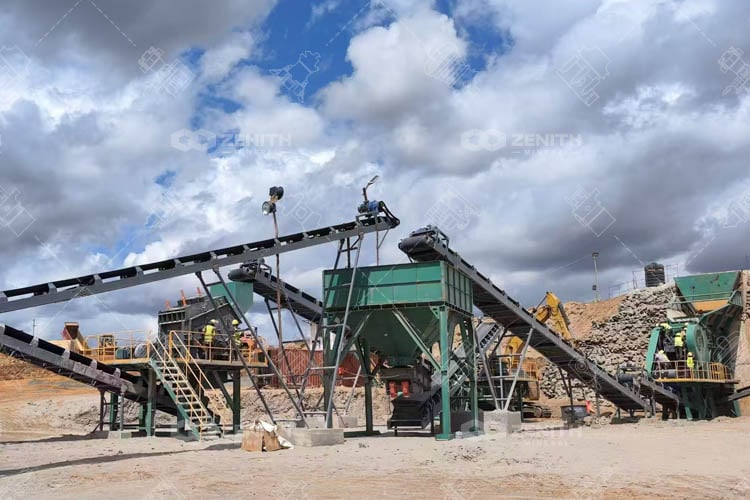
In one granite crushing plant, coarse crushing is the first stage. The primary crusher breaks large granite rocks to smaller, more manageable sizes, preparing them for further processing. For granite coarse crushing, jaw crushers and gyratory crushers are the most commonly used options. So, what are the differences between jaw crusher and gyratory crusher for granite coarse crushing? How to choose the proper one?
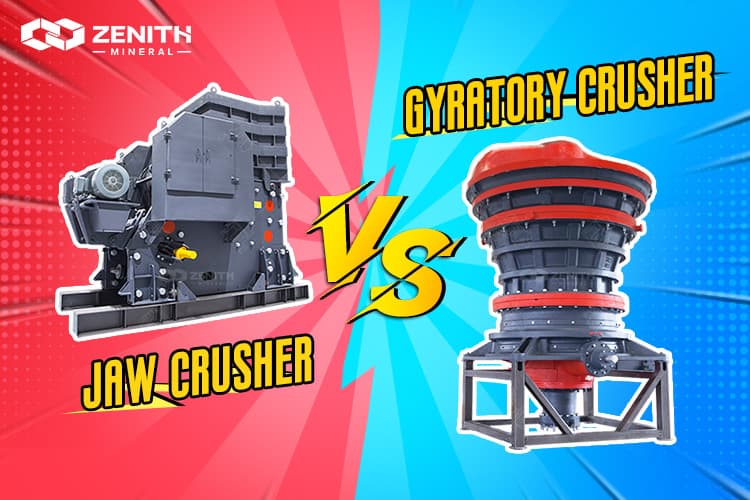
The jaw crusher operates on an intermittent crushing principle and breaks granite through the reciprocating squeezing motion between the fixed and movable jaws. When the movable jaw moves toward the fixed jaw, the volume of the crushing chamber decreases, and the granite inside is compressed or squeezed. As the movable jaw moves away from the fixed jaw, the chamber volume increases, allowing the crushed granite particles to be discharged.
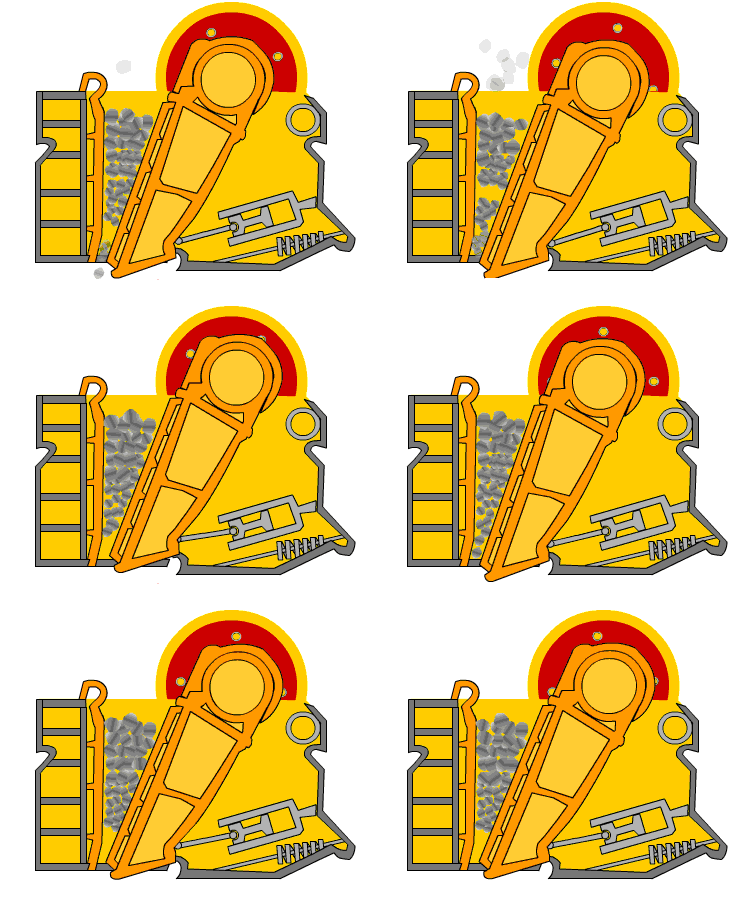
In contrast, the gyratory crusher works on a continuous crushing principle. An electric motor drives a horizontal shaft, which, through a set of gears, rotates an eccentric sleeve. The eccentric sleeve then causes the moving cone to perform a circular oscillation, enabling continuous compression and crushing of the granite.
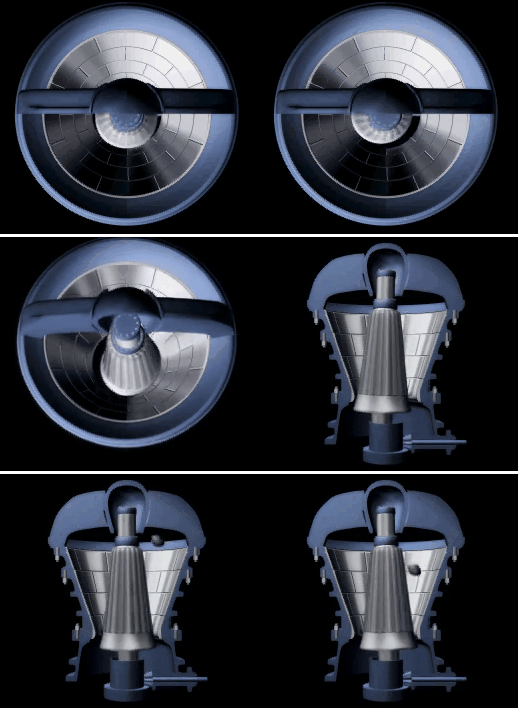
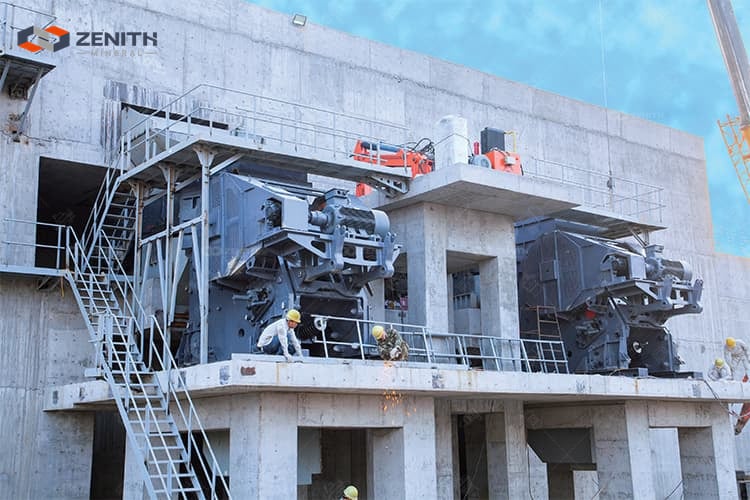
There are several types and various models of ZENITH granite jaw crusher, with production capacity ranging from 15 to 1,510 t/h, making them suitable for granite coarse crushing in small, medium, and large scale granite crushing plants.
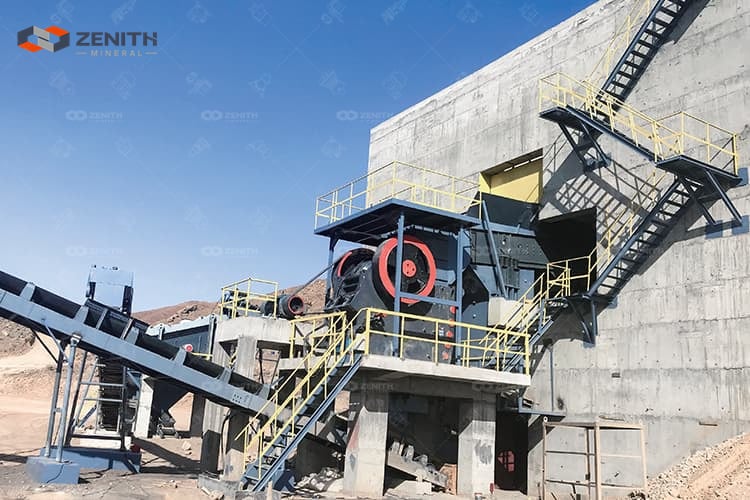
ZENITH HGT gyratory crusher, with a capacity of 2,015 to 8,895 t/h, is especially well-suited for large and extra-large scale granite coarse crushing. However, this superior capacity comes with substantial capital investment requirements and large amount of civil engineering works.
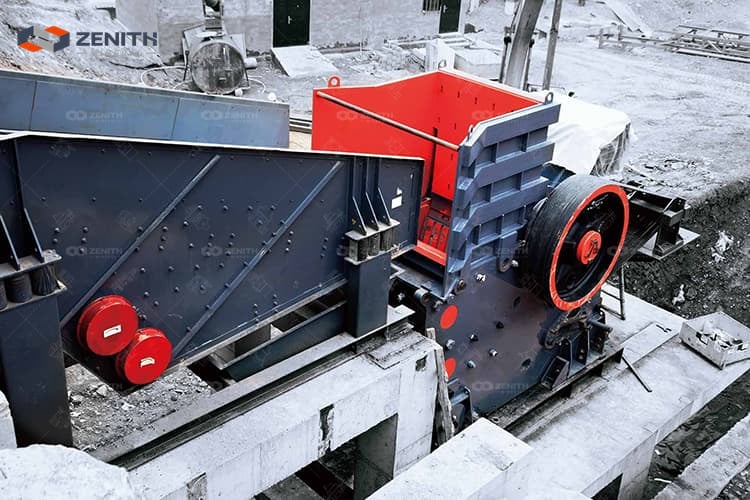
The max feeding size of ZENITH jaw crusher is 1200mm. But it generally needs a vibrating feeder for optimal performance.
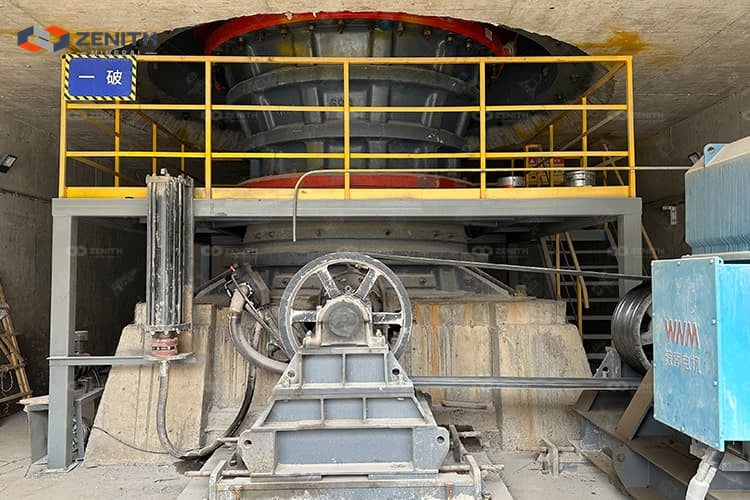
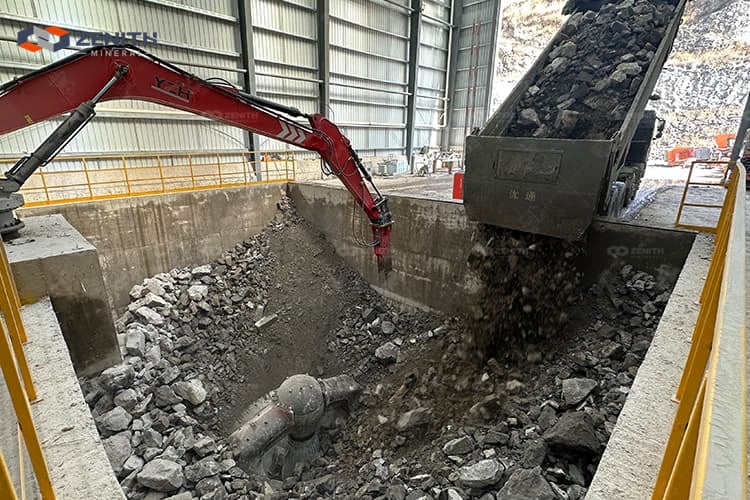
ZNEITH gyratory crusher excels in granite coarse crushing with max feeding size of 1350mm and can accept direct dump truck loading without feeding equipment.
The discharge openings of both the granite jaw crusher and gyratory crusher can be adjusted to meet specific requirements.
The discharge opening of the ZENITH granite jaw crusher can be adjusted from 20 mm to 300 mm, while the ZENITH granite gyratory crusher offers an adjustable range from 140 mm to 250 mm.
Granite jaw crushers feature a simple structure that facilitates simple operation, easier maintenance and lower component replacement costs.
In contrast, gyratory crushers have more complex systems, requiring higher technical expertise from operators and longer maintenance intervals. However, they offer significantly higher processing capacity, making them ideal for large-scale coarse granite crushing operations.
Both jaw crushers and gyratory crushers have their own advantages in a granite crushing plant. So, how do you choose the right one? Here are some tips:
Choose jaw crusher for granite coarse crushing when:
Choose gyratory crusher for granite coarse crushing when:
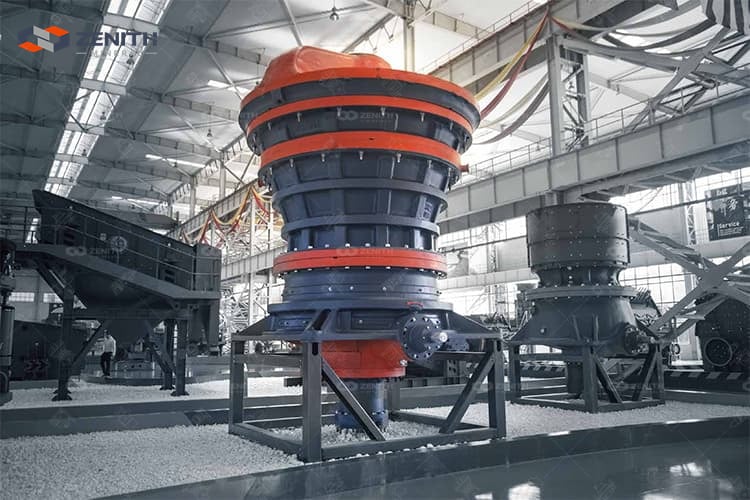
For a detailed technical comparison between our various Jaw Crusher models and the HGT Gyratory Crusher for granite coarse crushing, our crushing specialists are ready to provide expert guidance and help you select the most suitable solution!


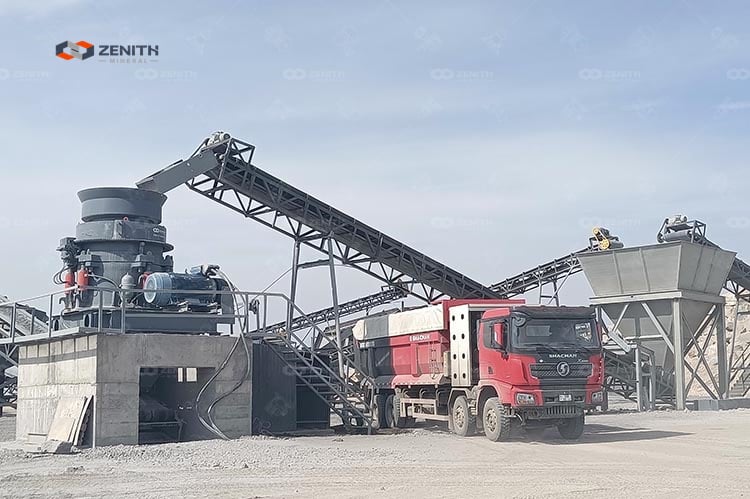
Lean how to select the proper granite coarse crusher, medium & fine crusher. When selecting granite crusher equipment and crushing solutions, it is crucial to consider not only production capacity but also wear resistance, energy efficiency, and return on investment.
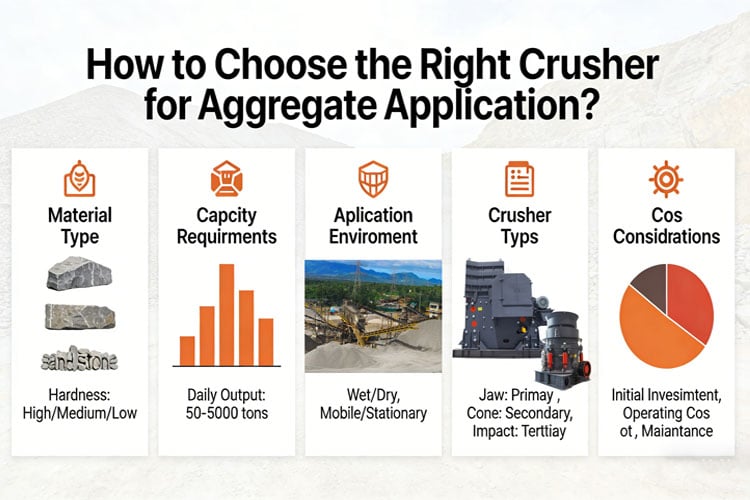
Expert guide to choosing the right aggregate crusher. Compare jaw, cone, and HSI tech based on rock hardness, capacity, and TCO to maximize your quarry's ROI.
Learn proven ways to reduce crushing plant operating costs, including equipment selection, energy efficiency, wear part control, and process optimization to lower cost per ton and improve ROI.
Fill your requirements here, and we'll send the custmized solution and quotation to you by the reserved contact information.
Copyright ©2000-2026 SHANGHAI ZENITH MINERAL CO.,LTD.

 WhatsApp

 24/7 Online