In the global construction and infrastructure sector, aggregate production is the backbone of development. Whether it is for high-strength concrete, asphalt road base, or railway ballast, the quality of the final stone product is dictated by the efficiency of the crushing circuit.
Choosing the right crusher for an aggregate application is not merely about buying a machine; it is about designing a high-yield system that balances mineralogy, throughput, and final product specifications. This article serves as a professional technical guide for quarry owners and project managers to navigate the selection process.
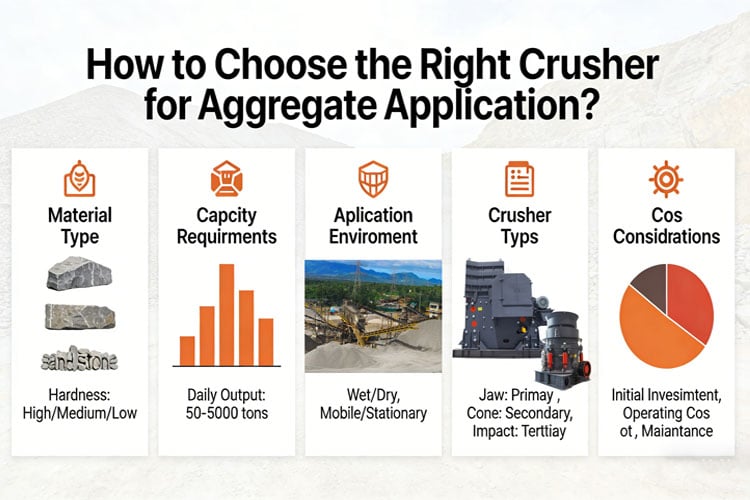
The first step in selection is a cold, hard look at the rock you are processing. No two quarries are identical, and "general-purpose" machines often lead to specialized failures.
Read Also:Materials Crushing Processes: Limestone, Granite, and Basalt
What do you intend to sell? The end-use of your stone dictates the machinery.
| Crusher Type | Best Stage | Ideal Material | Typical Materials | Key Advantage |
|---|---|---|---|---|
| Jaw Crusher | Primary | Hard & Abrasive | Granite, Basalt, Quartzite, Iron Ore, River Stone | Reliable, handles large feed, low maintenance cost. |
| Cone Crusher | Secondary | Hard & Abrasive | Granite, Diabase, Pebble, Iron Ore, Copper Ore | Consistent output size, high efficiency in hard rock, lower wear cost. |
| HSI Crusher (Impact) | Primary / Secondary | Soft to Medium Hard | Limestone, Gypsum, Coal, Concrete Recycling, Dolomite | High reduction ratio, excellent cubicity (superior product shape). |
In aggregate applications where sand is the primary product, a VSI is often the "final touch." Known as a "Sand Maker," the VSI uses rock-on-rock crushing to shape the material and create high-quality fines that meet strict building codes.
Calculate your required Tons Per Hour (TPH) based on your daily sales targets, but always build in a safety margin.
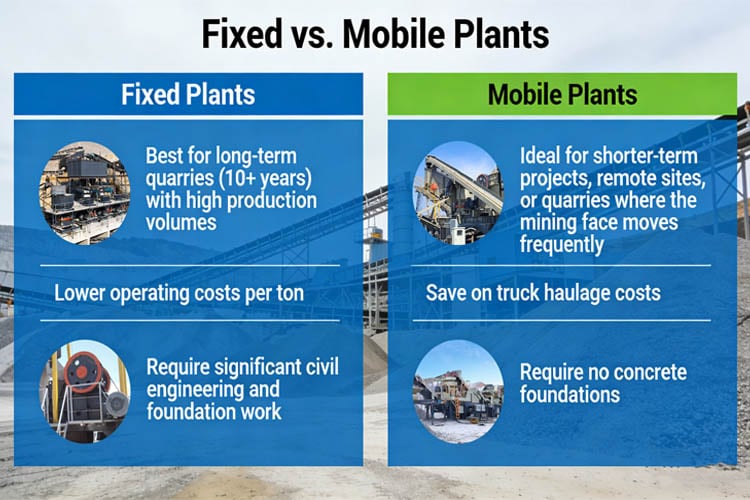
The cheapest crusher at the time of purchase is often the most expensive over a five-year period. A professional selection process includes an analysis of:
Selecting the right crusher for an aggregate application is a balance of geological science and economic strategy. By matching your crusher technology to your rock's hardness, focusing on the cubicity of your final product, and choosing a configuration that offers the lowest total cost of ownership, you turn a machine into a profit engine.
At the end of the day, the aggregate market doesn't just pay for crushed stone—it pays for consistency. The right crusher ensures you deliver that consistency every time the belt runs.


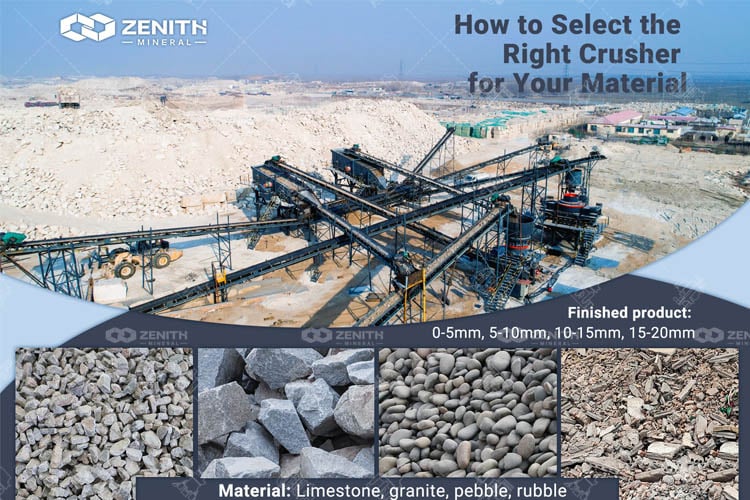
Discover how to pick the right crusher for soft, medium-hard, hard, or very hard rocks. Learn key factors like rock hardness, product shape, capacity & TCO to boost efficiency and cut costs in mining, construction & recycling.
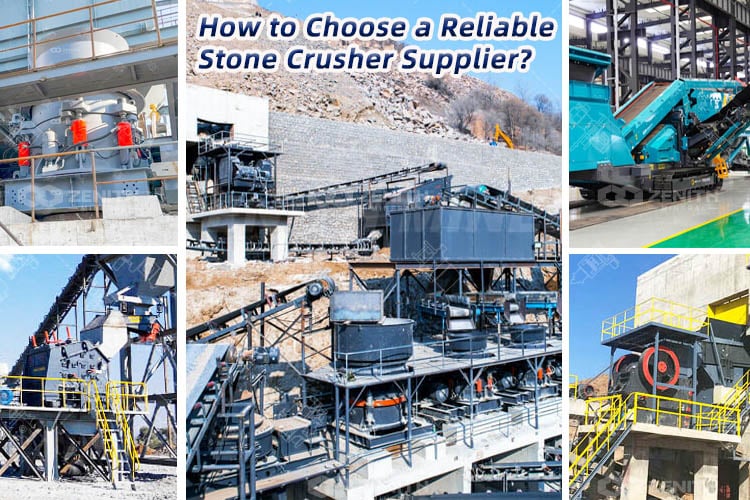
Choose a reliable stone crusher supplier with this professional guide. Learn key steps: assess needs, check reputation, product quality, after-sales support, and cost-efficiency for optimal operations
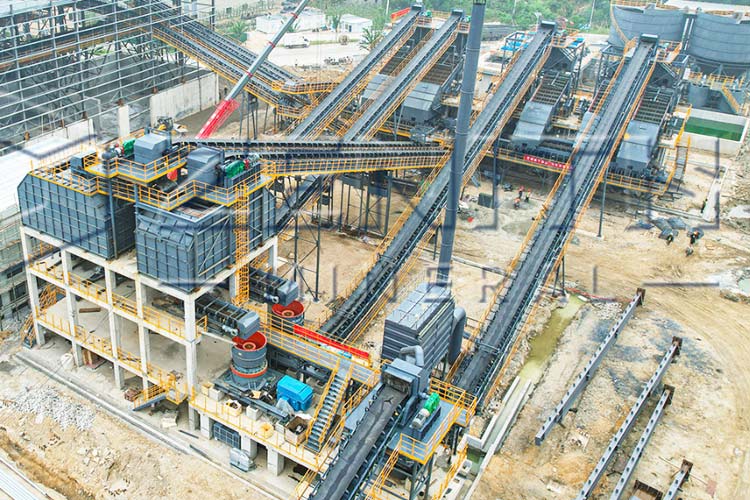
Stone crushers are machines designed to reduce large rocks into smaller rocks, gravel, or rock dust. They are commonly used in the mining, construction, and recycling industries.
Fill your requirements here, and we'll send the custmized solution and quotation to you by the reserved contact information.
Copyright ©2000-2026 SHANGHAI ZENITH MINERAL CO.,LTD.

 WhatsApp

 24/7 Online