
 WhatsApp
Widely adopted in infrastructure, basalt is a key material for high-performance concrete and manufactured sand. With high hardness, strong abrasiveness and great compressive strength, it calls for dedicated process design and equipment matching for crushing production lines.
Nevertheless, numerous basalt crushing plants suffer from unqualified aggregate outputs and insufficient rated throughput shortly after commissioning in real-world projects. Root-cause analysis consistently points to insufficient comprehensive evaluation at the design stage. From the decision-making standpoint of plant operators, this paper systematically sorts out the critical factors that must be prioritized in the design of basalt crushing production lines.
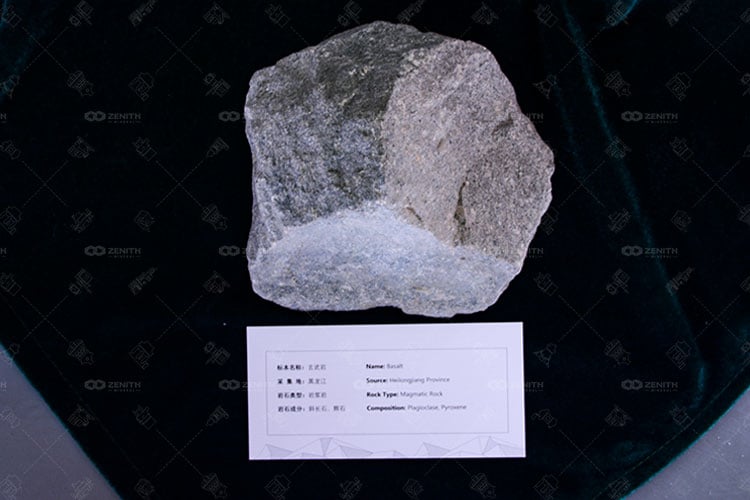
I. Product Specification Positioning: The Starting Point of Basalt Crushing Plant Design
The starting point for designing a basalt crushing plant does not lie in selecting equipment at the initial stage, but in clarifying target finished aggregate specifications. Different downstream end-market applications impose vastly different requirements on the particle size and quality of basalt aggregates, which directly determines the overall layout of the crushing line and the total project investment.
1. High-grade concrete aggregate
Typically used in specialized engineering projects such as high-rise buildings and bridge construction, with stringent standards. Flaky and elongated particle content must be ≤5% (JG/T 568-2019, Aggregates for High-Performance Concrete), and the crushing value must be ≤10% (GB/T 14685-2022, Pebble and Crushed Stone for Construction, Class I). Under such conditions, the basalt crushing plant typically requires a shaping stage and closed-circuit circulation, with high-precision screening. These configurations add a certain level of investment, but omitting them may prevent the final product from entering the high-end market.
2. Highway subgrade fill
Product specification requirements are relatively lenient, with no strict requirements on particle shape. Under such conditions, intensive shaping is unnecessary. Even with the same basalt raw material, different end-market applications result in noticeably different production line architectures and investment scales.
3. High-quality manufactured sand
Requires a stable fineness modulus, controllable stone powder content, and flaky particle content ≤10% (GB/T 14684-2022, Sand for Construction). Under such conditions, the basalt crushing plant must be equipped with a dedicated sand-making stage and fine screening.
Premature discussion of equipment and investment without clear aggregate standards and end-market demands tends to cause project deviations. Basalt crushing plant design must first confirm target aggregate sizes based on end-use requirements, which guides all subsequent equipment layout.
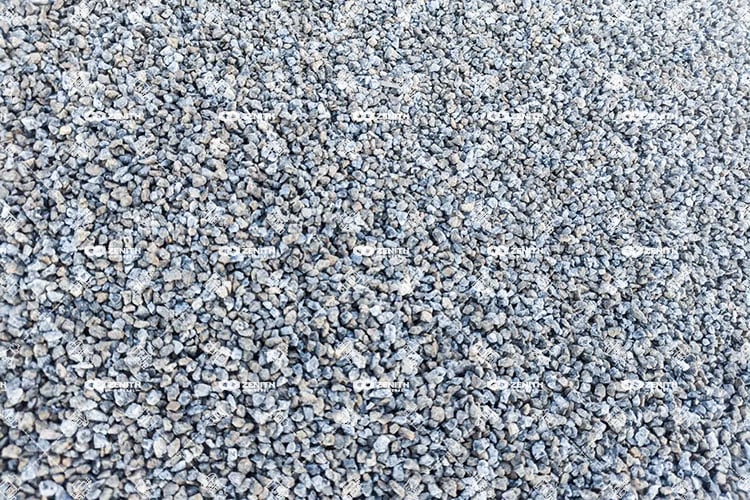
II. How to Determine Crushing Stages: Processing Route from Raw Stone to Finished Aggregates
Once target aggregate standards are set, designers shall confirm the quantity of crushing stages. Blasted basalt lumps are large while finished aggregates are fine. Due to the huge particle size difference, basalt crushing lines mostly adopt multi-stage crushing, and each stage completes graded particle size reduction.
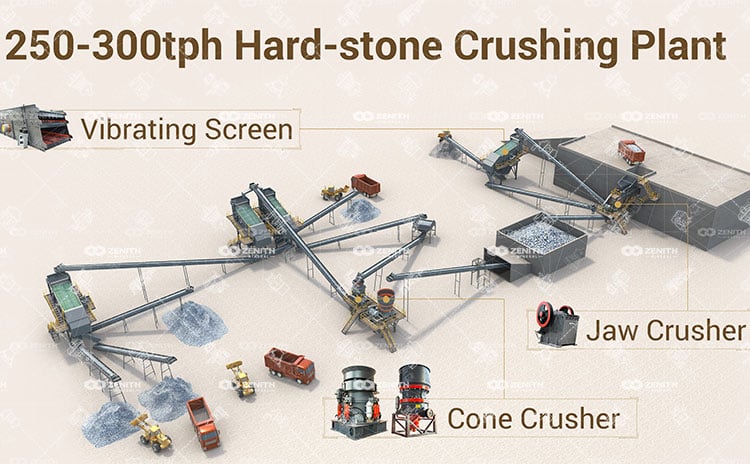
1. Primary crushing (Stage 1): Breaks blasted basalt raw material from large blocks to medium particle size, creating suitable feed conditions for the subsequent secondary crushing. Primary crushing equipment must have a large feed opening and processing capacity — typically a jaw crusher.
2. Secondary crushing (Stage 2): Secondary crushing equipment must accommodate the hardness and abrasiveness of basalt — typically a cone crusher.
3. Fine crushing / Sand making & shaping (Stage 3): Further refines and optimizes the particle shape of material from secondary crushing, producing finished aggregates or manufactured sand that meet high standards. If the target market has strict particle shape requirements, a VSI-series sand maker is typically added for shaping.
Screening units are reasonably arranged between every two crushing stages. Materials that meet finished size standards are separated in a timely manner to prevent over-crushing and reduce useless energy consumption.
It should be noted that insufficient crushing stages in basalt crushing plant design will fail to produce aggregates that meet target specifications. Conversely, an excessive number of crushing stages will generate unnecessary power consumption, pushing up both initial investment and daily operating costs. Therefore, the determination of crushing stages requires comprehensive consideration of raw material characteristics, target aggregate specifications and equipment processing capacity.
III. Open-Circuit vs. Closed-Circuit Crushing: Quality Assurance for Basalt Aggregates
In the design of a basalt crushing plant, how material flows between crushing stages is a decision that directly impacts the quality of the final aggregate—an aspect that must not be overlooked during the design phase.
There are generally two forms of material flow:
1. Open-circuit crushing: Material passes through the crusher and proceeds directly to the next crushing stage without recirculation. This requires fewer pieces of equipment and involves relatively lower investment, but the product has a wide particle size distribution. It is generally suitable for applications where product specifications are not demanding.
2. Closed-circuit crushing: A screening stage is introduced between crushing stages. Material that does not meet specifications after screening is returned via belt conveyor to the crusher for re-crushing until compliant material is produced. This is generally suitable for applications with high product specification requirements.
For basalt crushing plants targeting end-markets with high aggregate standards, closed-circuit crushing is the more common choice. While closed-circuit design adds the investment of return belt conveyors and other auxiliary equipment, if the end-market demands high product quality, this stage should not be omitted.
IV. Screening System Configuration: A Key Factor in Actual Capacity
The design of the screening system directly affects the actual capacity of the production line and is a critical consideration during the design phase.
The screening system serves two primary functions in a basalt crushing plant: first, classifying crushed material by different specifications to produce finished aggregates of various particle sizes; second, diverting material in closed-circuit crushing—routing compliant material to the finished product storage and returning non-compliant material to the crusher.
Beyond these functions, the screening system configuration must also match the material characteristics. When selecting screening equipment, the following must be clearly defined:
1. Number of screening decks: Determined by the number of product specification types.
2. Screening area: Determined by processing capacity and screening efficiency. Insufficient screening area is a common cause of substandard capacity.
3. Screen mesh aperture: Must strictly match the target product specifications, directly affecting product classification precision.
V. Equipment Selection for Basalt Crushing Plants
A complete basalt crushing plant process design generally includes the following stages: feeding — primary crushing — secondary & fine crushing — screening & closed-circuit — shaping & sand making — final product screening. Selecting professional, high-quality equipment can better empower basalt crushing operations.
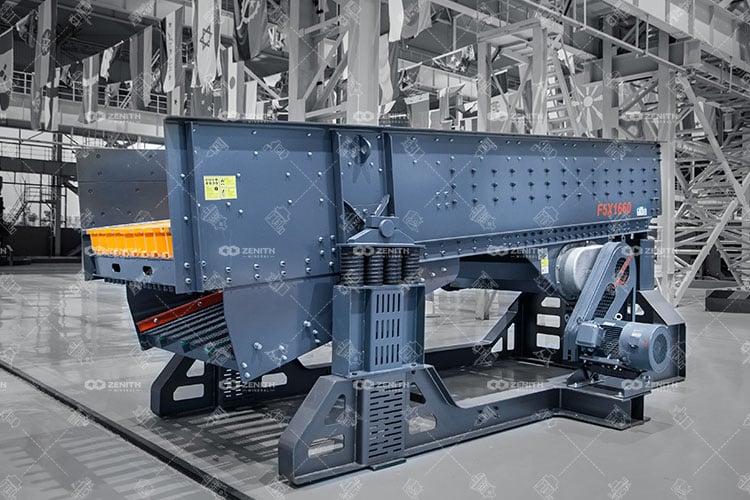
1. Feeding: ZENITH F5X Series Vibrating Feeder. High vibration intensity and large processing capacity. The ultra-heavy-duty trough structure can withstand high bin pressure and large impact from falling material, ensuring continuous and stable feeding during the basalt pre-processing stage.
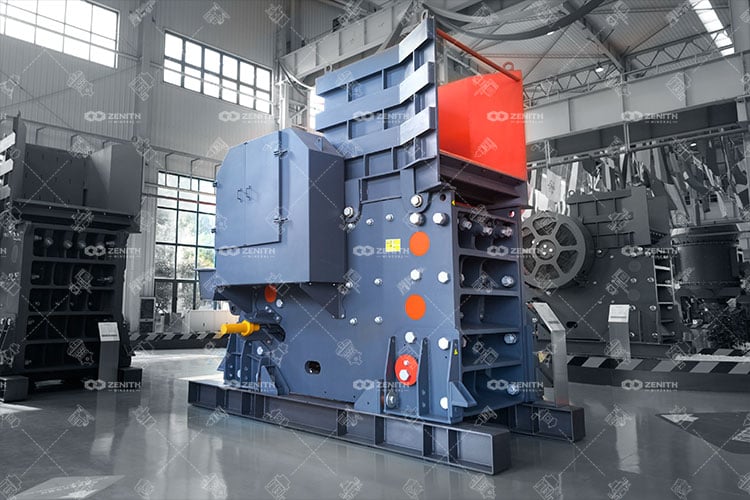
2. Primary crushing: ZENITH C6X Series Jaw Crusher. Maximum feed size up to 1,200 mm, processing capacity of 80–1,510 t/h, meeting the requirements for large-block basalt raw material and high-throughput feed crushing.
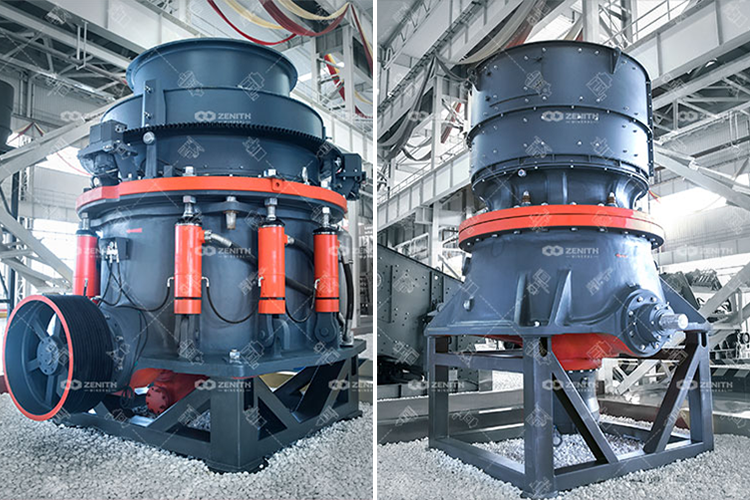
3. Secondary / Fine crushing: ZENITH HST/HPT Series Cone Crusher. Lamination crushing principle, suited to basalt's high hardness and high abrasiveness. Multiple cavity types can be flexibly switched to adjust according to product specifications.
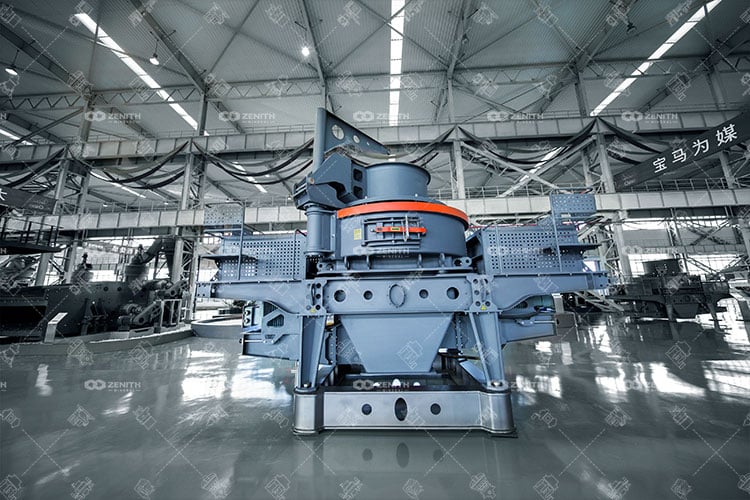
4. Shaping & Sand making: ZENITH VSI6X Series Vertical Shaft Impact Sand Maker. A professional sand-making and shaping machine that further optimizes basalt products after secondary and fine crushing, meeting the demands of high-quality aggregate markets.
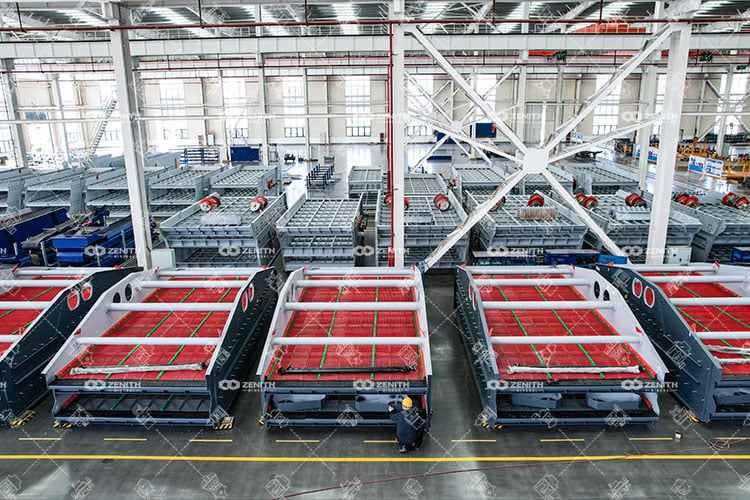
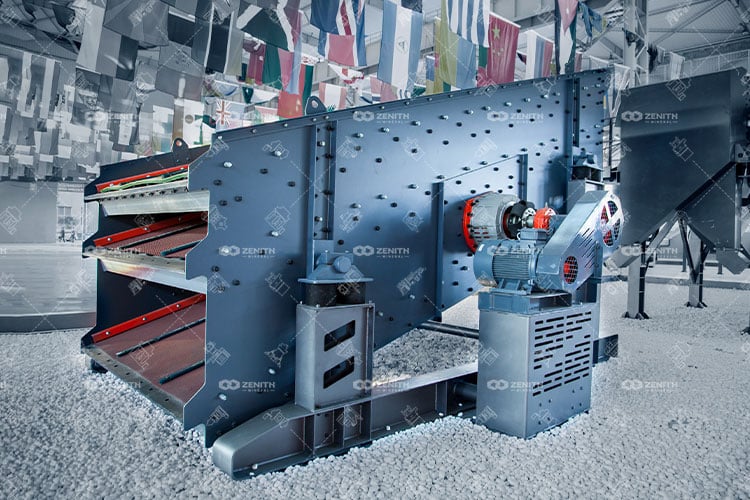
5. Screening: ZENITH S5X Series Vibrating Screen. Modular SV super-energy exciter, high throughput and high screening efficiency, meeting the screening requirements for various specifications of finished basalt products.
The ZENITH series of high-performance main and auxiliary equipment is perfectly suited to the configuration requirements of every stage in a basalt crushing plant.
The End
Designing a basalt crushing plant is a systematic decision-making process that requires comprehensive consideration of multiple factors. If you are planning a basalt crushing plant and would like more professional, detailed solution recommendations, please contact ZENITH.




 24/7 Online