
 WhatsApp
Why Southeast Asia Demands a Different Crusher Playbook
Southeast Asia is not just another construction market. It is now the world's fastest-growing infrastructure frontier — and if you are buying a crusher here, the rules are different.
The Asia-Pacific crusher market is projected to grow at an 8.62% CAGR from 2025 to 2035, driven by urbanization, highway expansion, mining development, and aggressive infrastructure spending across the ASEAN bloc. Indonesia alone accounted for 39.62% of regional construction equipment demand in 2025, with Vietnam posting the fastest growth rate of over 5.6% CAGR through 2031.
But here is what most generic buying guides miss: the same crusher that runs flawlessly in a temperate European quarry can fail catastrophically within six months in a Sumatran limestone operation. Humidity above 80%, monsoon-driven flooding, 30-40% grid voltage fluctuation, and salt-laden coastal air are not edge cases here — they are baseline operating conditions.
This crusher brand selection in southeast asia guide is written for quarry operators, mining procurement managers, and construction equipment buyers who need a decision framework — not a brochure. We cover the crusher brands actually present and supported in the region, the selection factors that matter most under tropical conditions, and the country-specific nuances you cannot afford to ignore.
Section 1: Understanding the Southeast Asian Operating Environment
Before comparing brands, you need to understand what you are comparing for. The operating environment in SEA is qualitatively different from Europe, North America, or even China.
1.1 Climate: The Silent Equipment Killer
| Factor | Typical Range | Operational Impact |
|---|---|---|
| Ambient temperature | 28°C – 45°C | Hydraulic oil overheating, reduced motor efficiency, accelerated rubber seal degradation |
| Relative humidity | 70% – 95% year-round | Electrical corrosion, bearing contamination, control panel condensation |
| Monsoon rainfall | 1,500 – 4,000 mm/year | Site flooding, material moisture spike, conveyor belt slippage |
| Coastal salt spray | Up to 5 km inland | Structural steel corrosion, fastener seizure, electrical contact failure |
What this means for brand selection: A crusher brand that ships standard-carbon-steel frames with basic epoxy paint will start showing rust bloom within months on a coastal site in Vietnam or the Philippines. You need brands that offer — or can be configured with — C5-M marine-grade coating systems, SS316 stainless steel fasteners and bearing housings, and IP65/IP66-rated electrical enclosures with positive-pressure ventilation.
Key takeaway: Do not evaluate brands on baseline specifications. Evaluate them on their climate-adaptive configuration options and whether those options are factory-standard or expensive custom add-ons.
1.2 Power Infrastructure: Assume Instability
Across Indonesia's outer islands, rural Vietnam, and the Philippine archipelago, grid power volatility is a daily reality. Voltage swings of 30-40% are common, and complete outages during monsoon season are expected.
Your brand evaluation must include dual-power capability:
- Diesel-electric hybrid drive systems that auto-switch within 15-30 seconds of grid failure
- Onboard 200-300kW diesel generators as standard or optional configuration
- Motors rated for wide voltage tolerance (380V ± 15% minimum)
Chinese manufacturers like SBM and ZENITH have led the market in offering dual-power configurations at competitive price points. European premium brands (Metso, Sandvik) offer the same but often as a higher-cost engineering package.
1.3 Material Characteristics: It Is Not Pure Granite
Southeast Asian feed material is notoriously "dirty." Unlike the clean quarried stone common in developed markets, SEA feed often contains 15-30% clay, silt, and laterite mixed with the target rock. This creates three problems:
- Chamber clogging in standard crusher geometries
- Screen blinding on conventional vibrating screens
- Accelerated wear from abrasive silica embedded in clay matrices
Your equipment configuration must include:
- Pre-screening stages (trommel or vibrating grizzly) before primary crushing
- Self-cleaning crusher chambers with discharge angles ≥ 45°
- Vibratory-isolated screening decks with automatic ball-deck cleaning systems
- Hardox 450 or equivalent wear plates on all material-contact surfaces in feed hoppers and transfer chutes
Section 2: Crusher Types — Matching Equipment to Your Material and Market
A brand might make excellent cone crushers but mediocre impact crushers. Your selection must start with what type of crusher you need, then narrow to which brand excels at that type.
2.1 Jaw Crushers — The Workhorse Primary Stage
Best for: All material types in primary (coarse) crushing, 100–1,500 tph
What to look for in SEA-spec jaw crushers:
- Ni-resist or high-chrome cast iron jaw plates for abrasive tropical materials
- Hydraulic toggle adjustment (not manual shim) for rapid gap changes when material characteristics shift
- Protected eccentric shaft bearings with labyrinth seals and auto-lubrication
Brand strengths — jaw crushers:
- Metso Nordberg C-Series: Industry benchmark for reliability; modular design simplifies transport to remote SEA sites
- Sandvik CJ Series: Excellent deep-symmetrical crushing chamber design; strong in hard-rock applications
- ZENITH C6X Series: High-end primary crushing solution featuring a detachable non-welded frame and an optimized crushing chamber geometry; delivers high throughput and exceptional fatigue resistance on heavy-duty aggregate sites
- SBM PE Series: Price-competitive with growing parts availability in Indonesia and Vietnam; widely deployed in ASEAN quarry operations
- Terex / Powerscreen Premiertrak: Strong dealer network across Thailand and Malaysia; good mobile jaw options
2.2 Cone Crushers — Precision Secondary and Tertiary Crushing
Best for: Medium to hard rock (granite, basalt, diabase, high-silica stone), 50–1,000 tph
What to look for in SEA-spec cone crushers:
- Hydraulic overload protection (tramp release) — critical when feed contamination is unpredictable
- Carbide-impregnated manganese liners for high-silica ores common in Indonesia and the Philippines
- Remote monitoring capability, since skilled technicians may be hours away from remote sites
Brand strengths — cone crushers:
- Metso HP Series: The global reference standard; exceptional parts interchangeability across models reduces inventory costs
- Sandvik CH/CS Series: Hydroset system provides consistent CSS under varying load; strong automation (ASRi)
- Terex / Cedarapids MVP: Good mid-market option; simpler hydraulics mean easier local maintenance
- Propel Industries (India): Growing ASEAN presence; cost-competitive AVJ series with short lead times to SEA
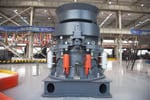
- ZENITH HPT/HST Series: Advanced hydraulic cone crushing solutions featuring a multi-cylinder (HPT) and single-cylinder (HST) design; highly favored in large-scale aggregate lines for their stable performance, optimized stroke, and excellent lamination crushing efficiency
2.3 Impact Crushers — Best-Shape Aggregates for Soft-to-Medium Rock
Best for: Limestone, dolomite, recycled concrete, 100–800 tph
What to look for in SEA-spec impact crushers:
- Low-speed rotors (to reduce dust in humid conditions)
- Quick-change blow bar systems (minimize downtime during monsoon when every dry hour counts)
- Hydraulic hood opening for fast access during frequent cleaning cycles
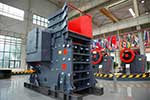
Brand strengths — impact crushers:
- Sandvik Prisec CI Series: Excellent reduction ratios; modular blow bar design
- Metso Lokotrack LT Series (mobile impactors): Dominant in SEA mobile crushing circuits
- Kleemann (Wirtgen Group): Strong dealer presence in Thailand; German engineering with localized support
- SBM CI5X Series: Heavy-duty rotor design; growing aftermarket support in Vietnam
2.4 VSI Crushers — Sand and Shaping
Best for: Manufactured sand, aggregate shaping, 50–500 tph
Brand strengths — VSI Crusher:
- Metso Barmac: The original; rock-on-rock crushing chamber minimizes wear costs
- Sandvik CV Series: Bi-flow cascade system for precise product grading
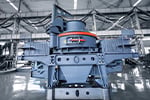
- ZENITH VSI5X/VSI6X: Aggressive pricing; good for greenfield sand plants
2.5 Mobile vs. Stationary: The SEA Preference
SEA's fragmented quarry landscape — many small-to-medium sites rather than few mega-quarries — plus challenging terrain and monsoon-driven site access interruptions, make mobile crushing plants disproportionately valuable. Mobile plants can reduce inter-site relocation time by 30-50% compared to dismantling and reassembling stationary installations.
Leading mobile crusher brands in SEA:
- Metso Lokotrack: Market leader; widest model range from compact urban recycling units to 600 tph jaw plants
- Sandvik QJ/QH/QI Series: Advanced remote monitoring; strong in tracked mobile configurations
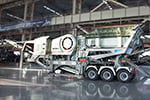
- ZENITH: Highly flexible tracked and wheeled mobile stations engineered for rapid site deployment
- Terex Finlay: Good dealer coverage across Thailand, Malaysia, Philippines
- Keestrack: Growing niche in hybrid diesel-electric mobile plants
- SBM NK Series: Price-competitive mobile solutions; expanding ASEAN dealer network
Section 3: The Brand Landscape — Who Is Actually Operating in Southeast Asia
Crusher brand selection in SEA is not just about engineering specifications. It is about who has boots on the ground.
3.1 Tier 1: Global Premium Brands
| Brand | Headquarters | SEA Strengths | SEA Weaknesses |
|---|---|---|---|
| Metso (now Metso Outotec) | Finland | Largest installed base; dedicated ASEAN subsidiaries; comprehensive parts warehouses in Singapore, Jakarta, Bangkok | Premium pricing; lead times for custom configurations can exceed 16 weeks |
| Sandvik | Sweden | Strong automation and digital monitoring (SAM by Sandvik); excellent hard-rock cone crushers | Smaller dealer footprint in secondary Indonesian cities and provincial Vietnam |
| Terex (Powerscreen, Cedarapids, Finlay) | USA/UK | Broad dealer network; strong mobile equipment range; competitive mid-market pricing | Parts availability less consistent than Metso/Sandvik in remote locations |
3.2 Tier 2: Chinese Manufacturers — The Growth Story
Chinese crusher brands have captured a significant share of the SEA market over the past decade. Their value proposition centers on 30-50% lower capital cost, shorter lead times (4-8 weeks vs. 12-16 weeks for European brands), and increasingly credible after-sales infrastructure.
| Brand | Headquarters | SEA Strengths | What to Verify |
|---|---|---|---|
| SBM (Shibang) | Shanghai | Largest Chinese exporter; established agents in Jakarta, Ho Chi Minh City, Manila; dual-power configurations as standard | Confirm spare parts stock depth at your local agent — do not assume |
| ZENITH | Shanghai | Strong in Vietnam limestone market; competitive mobile crusher range | After-sales service consistency varies by country |
| Baichy | Zhengzhou | Aggressive pricing; growing Philippines and Indonesia presence | Factory audit recommended for large orders; validate ISO certifications |
| Dongmeng | Shanghai | Specialized in mobile crushing; branded "DMI" series with growing ASEAN market share | Newer brand; verify local reference sites |
| Liming | Zhengzhou | Strong in Indonesia grinding mill and crusher market; long-established export history | Comprehensiveness of the crusher product line |
3.3 Tier 3: Regional and Niche Players
- Propel Industries (India): Competitive cone crushers; short sea-freight to Myanmar, Thailand; growing ASEAN dealer network
- Puzzolana (India): Well-established in Sri Lanka and expanding into Myanmar; strong in semi-mobile configurations
- Nakayama (Japan): Premium Japanese engineering; small but dedicated following in the Philippines
- Kawasaki / EarthTechnica (Japan): Gyratory crushers for mega-quarry applications
3.4 The Distributor Layer: Your Real Relationship
In SEA, your day-to-day experience with a crusher brand is determined less by the manufacturer's headquarters and more by the local distributor or dealer. Before selecting a brand, evaluate the distributor on:
- Parts inventory depth: Do they stock wear parts locally, or order from China/Europe per incident?
- Field service response time: Can they deploy a technician within 48 hours to your site?
- Workshop capability: Do they have the facilities to rebuild major components (crusher shafts, bearing housings) locally?
- Language capability: Can their engineers communicate directly with your operators in Bahasa Indonesia, Vietnamese, Thai, or Tagalog?
Section 4: 7 Critical Factors for Crusher Brand Selection in SEA
These are not generic buying guide items. Each factor is adapted to the specific realities of operating a crusher in tropical Southeast Asia.
Factor 1: After-Sales Support and Parts Availability
The single most important factor — period.
Evaluation checklist:
- Does the brand have a physical parts warehouse in your country? (Not just a sales office)
- What is the lead time for critical wear parts — jaw plates, cone mantles, blow bars?
- Can you audit the parts inventory? (Credible distributors will let you visit)
- Is there a local service engineer who speaks your operators' language?
- Does the brand offer remote diagnostics (telemetry) to reduce troubleshooting time?
Factor 2: Climate-Adaptive Engineering
Not "can we paint it better" — but factory-engineered corrosion protection as a design philosophy.
| Component | Minimum Acceptable Standard | Premium Standard |
|---|---|---|
| Frame and structural steel | Epoxy zinc-rich primer + polyurethane topcoat, ≥ 200μm DFT | Three-coat C5-M system, ≥ 320μm DFT, 15,000+ hour salt-spray resistance |
| Fasteners and small parts | Zinc-plated (HDG minimum) | SS316 stainless steel throughout |
| Electrical enclosures | IP65 | IP65 + positive-pressure ventilation + temperature-controlled cooling fans |
| Bearing seals | Labyrinth (standard) | Triple-stage labyrinth + automatic grease lubrication + desiccant breather |
| Hydraulic system | Standard hydraulic oil | High-temperature synthetic hydraulic oil with moisture-tolerant additive package |
Factor 3: Total Cost of Ownership — Not Just Purchase Price
A Chinese crusher at $80,000 vs. a European crusher at $130,000 is not an apples-to-apples comparison. Calculate 5-year TCO:
TCO = Purchase Price
    + Freight & Import Duty (8-20% across ASEAN, varies by country and HS code)
    + Installation & Commissioning
    + Energy Cost (annual kWh × local electricity rate × 5 years)
    + Wear Parts Replacement (estimated annual cost × 5)
    + Scheduled Maintenance Labor
    + Unscheduled Downtime Cost (estimated hours/year × hourly production value)
    - Residual Value at Year 5
In SEA, the three biggest TCO differentiators are:
- Wear parts consumption rate — Clay-contaminated feed accelerates wear by 20-40% over clean stone. A brand with better wear metallurgy pays back its premium within 18 months.
- Energy efficiency — In countries like the Philippines (among the highest electricity rates in SEA), motor efficiency differences of 3-5% translate to tens of thousands of dollars over five years.
- Uptime percentage — A brand with solid local support might operate at 90% annual uptime. A brand without it might operate at 75%. That 15% gap is the difference between profitable and break-even.
Factor 4: Dual-Power Capability
For any location in SEA outside major industrial zones, dual-power is not a luxury — it is insurance.
Evaluate:
- Does the brand offer factory-integrated diesel-electric hybrid drive, or is it a third-party retrofit?
- What is the auto-switchover time? (Target: ≤ 30 seconds)
- Is the generator sized for full-load operation or only essential functions?
- Can it cold-start in under 10 seconds in tropical ambient temperatures?
Factor 5: Material Handling Integration
Your crusher does not operate in isolation. The brand's ability to provide (or integrate with) pre-screening, feeding, and conveying systems designed for sticky tropical materials significantly impacts overall circuit performance.
- Does the brand design its feed hoppers with steep wall angles and Hardox liners to prevent clay bridging?
- Can their vibrating feeders handle high-moisture fines without blinding?
- Are transfer chutes engineered for self-cleaning flow (angled, non-rectangular cross-sections, UHMW polyethylene liners)?
Factor 6: Training and Documentation
In remote SEA locations, your operators may have limited formal training in crushing equipment. A brand that provides:
- On-site commissioning support with hands-on operator training (not just a manual)
- Video-based training modules in local languages
- Clear, illustrated maintenance checklists (laminated, wall-mountable)
- WhatsApp-based technical support (the de facto business communication channel in SEA)
Factor 7: Regulatory Compliance and Import Feasibility
Each ASEAN country has distinct import regulations:
- Indonesia: SNI certification may be required; local content (TKDN) regulations favor brands with Indonesian assembly or fabrication partnerships
- Vietnam: Equipment registration with the Ministry of Construction; emission standards increasingly enforced
- Thailand: Industrial Standards Institute (TISI) certification; strong preference for brands with Thai-language documentation
- Philippines: Bureau of Customs valuation can be unpredictable; brands with established import brokerage relationships clear faster
- Malaysia: SIRIM certification; duty exemption possible under specific infrastructure project categories
Section 5: Approximate Price Ranges
Note: Prices are indicative ranges for mid-size equipment (200-400 tph capacity). Actual quotes depend on configuration, negotiation, and freight.
| Crusher Type | Chinese Brands (FOB China) | European/US Brands (FOB/CIF) |
|---|---|---|
| Jaw Crusher (primary, 200 tph) | $35,000 – $70,000 | $80,000 – $150,000 |
| Cone Crusher (secondary, 200 tph) | $45,000 – $90,000 | $120,000 – $220,000 |
| Impact Crusher (200 tph) | $40,000 – $85,000 | $100,000 – $180,000 |
| VSI Crusher (150 tph) | $30,000 – $60,000 | $80,000 – $140,000 |
| Mobile Jaw Plant (tracked, 300 tph) | $150,000 – $280,000 | $350,000 – $600,000 |
| Mobile Cone Plant (tracked, 250 tph) | $180,000 – $320,000 | $400,000 – $700,000 |
Section 6: Common Mistakes to Avoid
Mistake 1: Buying on Price Alone
The most expensive mistake in SEA crusher procurement. A $50,000 price advantage can evaporate in six months of downtime and accelerated wear. Always calculate TCO.
Mistake 2: Ignoring Material Testing
Never assume your deposit is "standard granite." Commission a proper material test — compressive strength, abrasion index (AI), moisture content, clay/silt percentage — before specifying equipment.
Mistake 3: Underestimating Logistics Costs
Shipping a 40-ton crusher from Jakarta to a Kalimantan site can cost $15,000-25,000. From Shanghai to Manila: $8,000-12,000. Factor this in during brand comparison — a brand with a regional warehouse may save you more than any unit-price discount.
Mistake 4: Skipping the Factory Visit
For Chinese brands, a 48-hour factory visit is the highest-ROI due diligence you can perform. For European/US brands, visit a regional reference site instead.
Mistake 5: Neglecting Operator Training
A Metso cone crusher operated by an untrained crew will underperform a Baichy cone crusher operated by a well-trained crew. Budget for training — it is not optional.
Mistake 6: Overlooking Regulatory Hurdles
A crusher stuck in customs for six weeks because of missing SNI or TISI certification is a crusher not producing revenue. Resolve compliance before shipping.
Section 7: Your Decision Framework — A Step-by-Step Process
- 1. Characterize your material. Get a lab test report: hardness (Mohs), abrasion index, moisture content, clay content.
- 2. Define your production requirements. Target tph, product sizes, product shape quality, annual operating hours.
- 3. Determine crusher type(s). Use the material → crusher type mapping from Section 2.
- 4. Assess your site conditions. Grid power reliability, site accessibility, distance from coast, monsoon exposure.
- 5. Shortlist 3-4 brands.Select at least one premium pioneer (Metso/Sandvik), one leading Chinese manufacturer (SBM/ZENITH), and one highly reliable mid-market alternative (Terex/Propel).
- 6. Request tropical-configuration quotes. Specify your material test data, site conditions, and required uptime guarantees.
- 7. Evaluate distributors — not just brands. Visit the dealer's warehouse, meet the service team, call reference sites.
- 8. Calculate 5-year TCO for each shortlisted option.
- 9. Verify import feasibility. Confirm tariff classification, certification requirements, and clearance timeline with a local customs broker.
- 10. Negotiate a comprehensive package. Machine + commissioning + operator training + first-year wear parts + service agreement.
Maximizing Lifespan and ROI on Your Crusher Investment
Crusher brand selection in Southeast Asia is ultimately a bet on long-term equipment reliability and structural durability. The best crushing circuit is one that delivers consistent, low-cost-per-ton production day after day, regardless of whether you are navigating the heavy monsoons of Indonesia or the highly abrasive terrains of Vietnam.
Industry leaders win in this market by engineering equipment specifically for heavy-duty tropical environments and backing it with an efficient, globalized supply network. When you evaluate and compare crusher brands, your focus should look past the initial purchase price and look directly at the total cost of ownership (TCO) and the engineering integrity built into the machinery.
To further support your decision-making for crusher investment and long-term operation in Southeast Asia, are you looking for a comprehensive overview of the regional crushing & screening industry, including local challenges, tailored equipment solutions and typical project cases?
We have compiled all practical insights into our exclusive ebook: Analysis of the Southeast Asian Crushing and Screening Industry and Tailored Solutions. Download it now to access full industry analysis and on-site application cases.
Frequently Asked Questions
Q: Are Chinese crusher brands reliable for long-term operation in SEA?
A: Yes, when purchased through established distributors with verified local parts inventory. The top-tier Chinese brands (SBM, Zenith) have thousands of units operating across ASEAN. The key variable is distributor quality, not manufacturing quality.
Q: How much should I budget for annual wear parts?
A: As a rough rule of thumb, budget 8-15% of the crusher purchase price per year for wear parts (jaw plates, cone mantles, blow bars, liners). High-abrasion materials (granite, basalt with high silica) push this toward the upper end.
Q: Diesel or electric — which is better for SEA?
A: Primary electric with diesel backup. Pure diesel is viable for remote sites but adds $15-25/hour in fuel costs at current SEA diesel prices. Pure electric is acceptable only on reliable industrial-grid sites.


 24/7 Online