Sand and gravel aggregate is the most basic component of concrete. It plays an important role in concrete buildings. In modern construction and concrete engineering, evaluating the quality of sand, gravel, and aggregate is critical for ensuring concrete compressive strength, durability, and project lifespan in 2026. High-quality aggregate—whether natural river gravel or manufactured sand (M-sand)—must adhere to strict physical, chemical, and mechanical standards, including precise particle gradation (sieve analysis), low silt/mud content (<5%), ideal cubical particle shape, and low Los Angeles abrasion values.
The table below summarizes the 5 mandatory quality control parameters for sand and gravel aggregates according to international ASTM / ISO standards:
| Quality Parameter | Standard Limit / Target Value | Impact on Concrete & Engineering | Recommended Testing Method |
|---|---|---|---|
| Silt & Mud Content | < 3.0% – 5.0% (by weight) | Excessive clay/silt reduces cement bonding, increases water demand, and causes cracking. | Silt Test / Jar Settlement Test |
| Particle Shape & Flakiness | Flakiness & Elongation Index < 10%–15% | Flat and needle-like particles weaken workability; cubical aggregates improve compressive strength. | Flakiness and Elongation Gauge |
| Gradation & Fineness Modulus | FM 2.3 – 3.1 (Fine to Coarse Sand) | Proper particle size distribution optimizes packing density and minimizes cement paste volume. | Sieve Analysis (ASTM C136) |
| Los Angeles (LA) Abrasion Value | < 30% – 40% mass loss | Measures resistance to crushing and degradation under heavy traffic or mechanical loading. | Los Angeles Abrasion Test (ASTM C131) |
| Alkali-Aggregate Reaction (AAR) | Inert (No reactive silica) | Prevents internal expansive gel formation and catastrophic concrete cracking over time. | Petrographic Examination (ASTM C295) |
Quarry operators and site engineers can perform three rapid field tests to verify aggregate quality before pouring concrete:
The quality control of sand and gravel aggregates must be selected and controlled from the selection of raw materials to produce sand and gravel aggregates that meet the requirements.
(1) The quality of the mother rock directly affects the quality of the machine-made sand. Therefore, the qualified mother rock should be selected first before the production of machine-made sand and gravel aggregate. The mother rock must first pass the radioactive test and the qualified mother rock of the alkali-aggregate reaction experiment;
(2) First, choose the mother rock with medium hardness and low SiO2 content such as limestone and dolomite; secondly, choose hard and brittle mother rock such as granite and tuff; try not to choose basalt, high-hard quartzite, etc. with high compressive strength and high toughness, large abrasive mother rock.
(3) Try to choose the mother rock with fewer impurities such as soil and light substances.
Mother rock mining method:
Underground mining: excavating natural sand and gravel materials from river beds or river beaches should use cable shovel excavators and sand mining boats;
Onshore mining: mainly using excavators.
Mountain mining: use chamber blasting and deep-hole blasting.
According to the local climate characteristics and the characteristics of sand mother rock, try to choose dry processing technology and cost-effective crushing equipment.
For medium and soft materials like limestone, impact crusher can be used instead of hammer crusher. This is because products processed by hammer crusher have high needle flake content, many dark cracks inside the sand and gravel aggregate, low crushing value and loss of firmness.
For the medium and fine crushing of hard materials like granite, we should adopt multi-cylinder cone crusher with lamination crushing function to minimize the needle-like content of sand and gravel aggregates and reduce the pressure of subsequent aggregate shaping.
Because the raw material of parent rock is mixed with soil and weathered rock surface, these impurities with low compressive strength are generally small in particle size. The combination of bar feeding screen and soil removing screen is used to remove them in advance before coarse crushing, so as to improve the quality of finished sand and gravel aggregate.
The maximum size of raw material for shaping sand should not exceed 40 mm; for sand production, pre-screen the soil in the raw material.
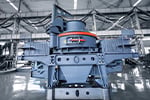
The sand making machine adopts the crushing cavity type of "rock on rock", the rotor edge line speed is 60-70 m/s, the aggregate shaping effect is good, the sand forming rate is moderate, and the amount of stone powder is less.
The screening load of the vibrating screen should be moderate, and the screen mesh with more than two layers should be used. The screen mesh should be in the form of square holes as much as possible, and the size of the screen hole should be appropriate;
For dry method sand making, it is necessary to select the fine powder separator or the fan speed of the dust collector with variable frequency speed regulation, which can adjust the stone powder content in the finished sand;
For wet method sand making, reasonably choose the amount of flushing water in the sand washing machine and the screw speed of the sand washing machine.
1) When producing sand for high-performance concrete or dry-mixed mortar sand without drying, on the basis of meeting various requirements, the soil in raw materials should be removed in advance, and the tower-like sand-making system is used as much as possible;
2) When the finished sand is used as raw material for concrete mixing station, the moisture content of parent rock should be less than 3%, and the soil content should be less than 1%; When the finished sand is used as dry mixed mortar raw material, the moisture and soil content of parent rock is less than 1%, so as to ensure that the moisture content of finished sand is less than 0.5%;
3) While the sand making machine and the screening fine powder separation system are in place, reasonably adjust the proportion of 4.75-2.36 mm in finished sand, and the excess part is returned to the circulating sand making; according to the different uses of the high-quality sand, the stone powder in the finished sand is adjusted from 3-10%, meeting the middle value of the particle size distribution curve of high-quality machine-made sand in the second zone of medium sand.
In the process of aggregate production, washing measures are mainly taken to solve the problem of aggregate powder coating. Install a regulating valve on the flushing pipeline, and control the amount of flushing water according to the condition of the wool to ensure that the flushing water pressure is 24.5-29.4Pa.
In the process of sand and gravel aggregate production, the control of oversize diameter is mainly to meet the aggregate grading requirements by increasing the inspection frequency of aggregate and adjusting the width of processed material opening. The main engineering measures are:
(1) For coarse aggregates, it is necessary to set a slow-down device at the end of the machine of the discharging belt to prevent the fall from being too large to break the coarse diameter and lead to aggregate gradation separation.
(2) Set isolation walls between various finished aggregates to avoid excessive coarse diameter of aggregate caused by mixing.
(3) Choose a reasonable screen aperture, check the screen once per shift, and replace it in time according to the wear situation.
(4) The stockpiles of various finished product silos should be regularly used and cleared in time to avoid the accumulation of scraps and powders. .
(5) The aggregate pulling and loading truck should take the material evenly, and do not take all the materials along the periphery, so as to avoid the separation of the aggregate caused by the loading.
In order to ensure the long-term stability of the quality of machine-made sand, an online testing facility is installed at the discharge opening of machine-made sand finished products to detect the quality of machine-made sand in real time, and realize wireless networking for remote monitoring. When it is found that the quality of the aggregate does not meet the requirements, consult immediately, propose solutions, adjust the equipment, and complete the controllability of the quality of the aggregate.
Selecting a reliable aggregate supplier is just as important as testing the material itself. When evaluating sand and gravel companies for your construction or concrete production project in 2026, consider these 5 essential factors:
Ensure the supplier provides up-to-date batch testing certificates (sieve analysis, LA abrasion, and silt content tests) showing compliance with local ASTM or EN standards. Reliable suppliers routinely verify aggregate performance to guarantee strength and durability.
Verify that the supplier’s crushing and screening plant has sufficient daily output (TPH capacity) and long-term raw material reserves. This guarantees uninterrupted material delivery during peak construction seasons and prevents costly project delays.
Choose suppliers equipped with modern VSI sand makers and Cone Crushers. Advanced crushing technology ensures consistent particle shape (cubical aggregate) and controlled fineness modulus (FM) batch after batch, optimizing your concrete mixing ratio.
Aggregate transportation costs (freight per ton-mile) often exceed the base material price. Evaluate the supplier’s delivery fleet capacity, nearby railway/barge access, and geographic proximity to your project site to minimize total land cost.
Confirm that the quarry or sand processing facility holds valid environmental permits, land clearance, and legal mining licenses. Partnering with a fully compliant supplier eliminates the risk of sudden site shutdowns by government authorities.
In summary, producing and procuring high-quality sand and gravel aggregate comes down to three essentials: precise physical grading (cubical particle shape and low silt <5%), efficient processing equipment (cone crushers and VSI sand makers), and reliable supplier partnership with certified production capacity and low freight logistics costs. Balancing these factors ensures sustainable, high-performance concrete for any modern engineering project.


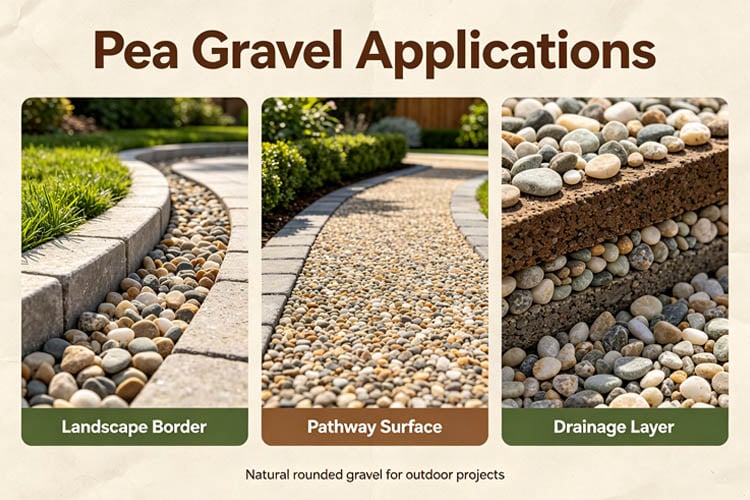
Pea gravel is one of the most versatile and widely used landscaping materials in North America. Its smooth, rounded stones—typically about the size of a g
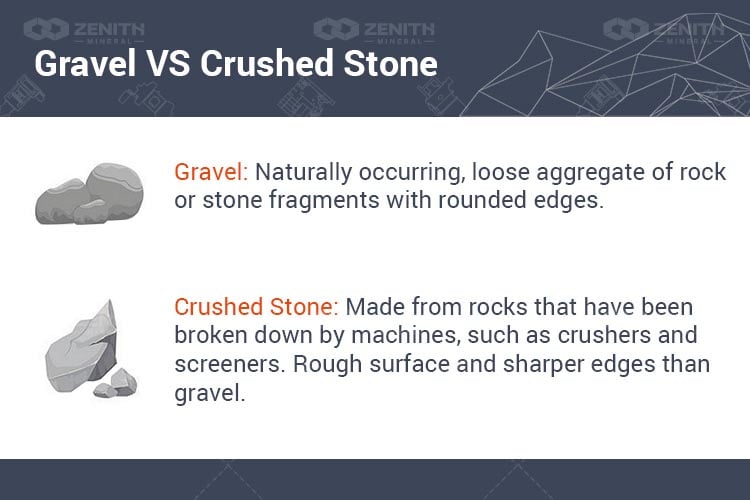
A complete guide to crushed stone and gravel sizes, ASTM grades (#57, #411, #8), applications, and selection tips for construction and landscaping projects.
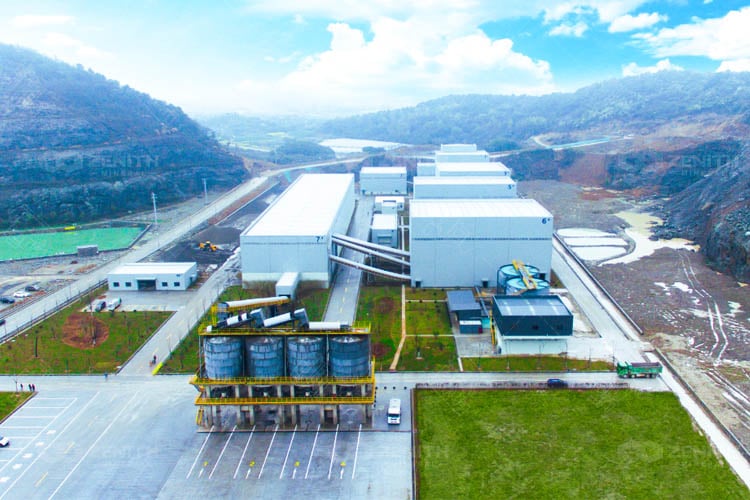
The good development prospects and huge market space of the industry have attracted capital from all walks of life, and the modernization and intelligent development of the sand and gravel industry has become a trend.
Fill your requirements here, and we'll send the custmized solution and quotation to you by the reserved contact information.
Copyright ©2000-2026 SHANGHAI ZENITH MINERAL CO.,LTD.

 WhatsApp

 24/7 Online