With a well-designed aggregates production line, overall equipment effectiveness (OEE) can reach over 85%. Conversely, an improperly configured aggregates crushing line with frequent downtime can reduce actual production capacity by 30% to 50%. Investing in reliable rock crushing equipment and a fully integrated aggregates production solution is the essential first step toward minimizing your cost per ton.
A successful aggregates production solution must satisfy the following criteria:
Reliable equipment: Crushers, screens, and conveyor systems must run continuously and stably under severe conditions including high temperatures, heavy dust, and heavy loads, to eliminate unplanned downtime.
Reliable process flow: From raw material analysis to final aggregate gradation, the entire line requires rigorous process logic and seamless transition between stages.
Reliable services: Manufacturers must provide true lifecycle support, spanning initial solution design and commissioning to long-term spare parts supply.
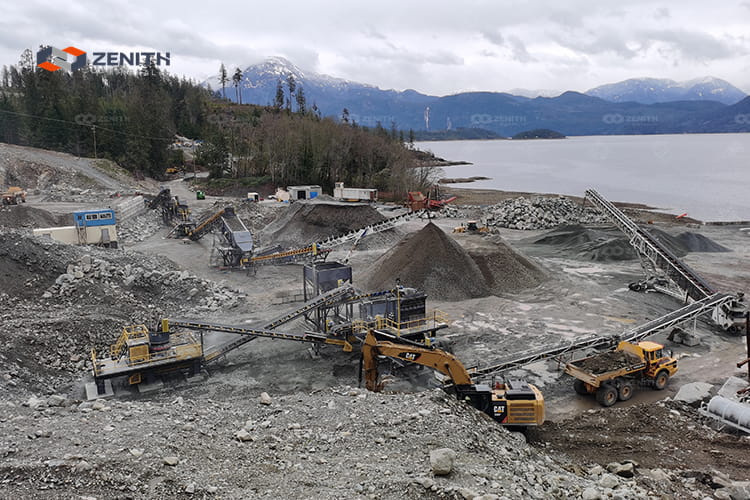
Rock crushing is a step-by-step reduction process that transforms large stones into smaller, finer aggregates. Each crushing stage requires specific types of rock crushing equipment; selecting the proper combination is essential to balance production capacity, particle shape, and power consumption.
Below are the primary types of rock crushing equipment commonly used in aggregate production lines:
As the first stage of material reduction in aggregates production line, jaw crusher serves as the primary rock crushing equipment. It reduces raw ore (typically 800‑1,500 mm or larger) into coarse material with a maximum size of roughly 150‑300 mm; actual discharge size depends on the closed‑side setting.
Jaw crushers offer outstanding material adaptability. Their compression crushing principle reduces wear on wear-resistant parts, giving them a longer service life. Under identical throughput requirements and similar feed/discharge size specs, jaw crushers operate with lower installed power, making them the most cost-effective primary rock crushing equipment available.
Key Advantages: Simple structure, easy maintenance, high adaptability, and superior performance with high-hardness rock processing.
Popular ZENITH Jaw Crusher Models: C6X Series, C5X Series, PEW Series, PE Series.
Gyratory crushers are heavy-duty primary rock crushing equipment primarily deployed in large- to mega-scale aggregate quarrying operations. Engineered for high throughput and large feeding capacities, gyratory crusher exhibits superior adaptability to diverse raw materials. For large‑scale projects, dump‑truck direct feeding is feasible and vibrating feeders may be omitted in certain conditions. Apron feeders are still recommended for sticky or wet ore to ensure stable feeding.
However, gyratory crushers carry notable drawbacks:
Consequently, for lower-margin aggregate quarries, a gyratory crusher is rarely an economical choice unless processing hard rock at extreme capacities exceeding thousands of tons per hour.
Popular ZENITH Gyratory Crusher Models: HGT Series
Impact crushers utilize high-speed blow bars on a rotor to strike incoming rock, flinging it against impact plates for repeated collision and reduction. Ideal for low-to-medium hardness rock (such as limestone), this high-efficiency rock crushing equipment delivers a high reduction ratio and excellent cubical particle shape, thus it’s widely adopted for secondary and fine crushing in aggregate plants, including large‑scale projects processing limestone and other medium‑low‑hardness rock.
While impact crushers offer an affordable upfront price tag and produce superior final product shape, their crushing efficiency drops significantly when processing harder materials, leading to rapid wear on consumable parts.
Key Advantages: High reduction ratio, exceptional cubical shape, lower initial investment, and easy maintenance for medium-hard rock processing.
Popular ZENITH Impact Crusher Models: CI5X Series, PFW Series, PF Series
Cone crushers are the optimal rock crushing equipment for secondary and tertiary crushing of medium- to high-hardness materials. They offer exceptional adaptability across a wide range of ores, along with an extended wear-life for wear-resistant parts.
There are three main categories: single-cylinder hydraulic, multi-cylinder hydraulic, and spring cone crushers.
Multi-cylinder hydraulic cone crushers deliver higher crushing forces, making them ideal for processing hard rocks like basalt or granite and for maximizing final product yields. Conversely, single-cylinder hydraulic cone crushers of equivalent size accommodate larger feed opening dimensions and offer higher throughput capacity.
Key Advantages: High reduction ratio, exceptional production capacity, and high automation.
Popular ZENITH Cone Crusher Models: HPT Series, HST Series, S Series
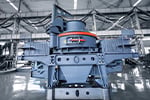
When high-grade aggregates with superior particle shape and precise gradation are needed, vertical shaft impact crusher (also called sand maker) is the essential rock crushing equipment. Combining both shaping and manufactured sand production functions, it operates on the "rock-on-rock" or "rock-on-anvil" principle. By accelerating material through a high-speed rotor to collide at high velocities, sand maker produces well-rounded, cubical aggregate particles with an optimal gradation.
As a highly cost-effective machine for producing premium manufactured sand and shaped aggregates, vertical shaft impact crusher offers key technical advantages:
Popular ZENITH Vertical Shaft Impact Crusher Models: VSI6X Series, VSI Series, B Series
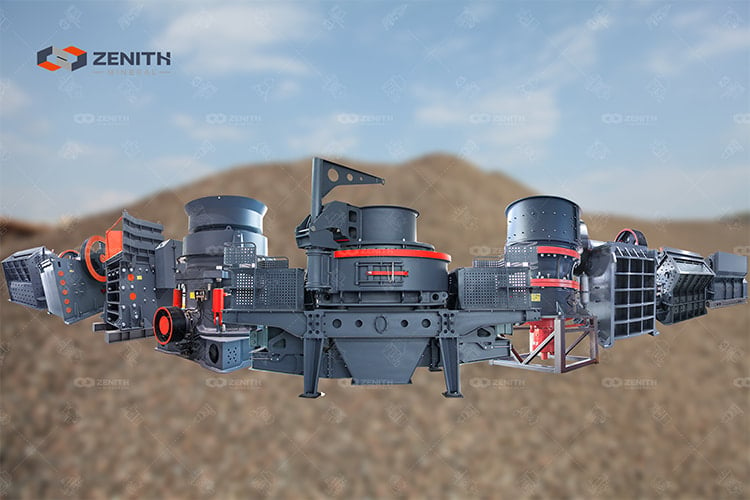
In addition to the primary rock crushing equipment mentioned above, a complete aggregate production solution requires seamless integration with reliable auxiliary equipment to maintain continuous workflow and product quality.
| Equipment Type | Function | Key Selection Criteria |
|---|---|---|
| Vibrating Feeder | Uniformly and continuously feeds raw materials into jaw crusher | Feeding rate adjustment range, grizzly bar pre-screening capability |
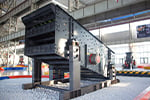
| Vibrating Screen | Classifies and sizes crushed rocks after crushing | Number of screen decks, mesh size, throughput capacity |
| Sand Washer | Removes clay, silt, and ultra-fine dust from manufactured sand | Washing cleanliness, water consumption, fine sand recovery rate |
| Belt Conveyor | Transfers bulk materials between processing stages | Belt width, inclination angle, conveyor distance, dust-proof design |
| Dust Collection System | Controls dust emissions generated during crushing and screening | Dust extraction efficiency, emission concentration compliance |
A complete aggregate production line can be understood as an integrated combination of crushing, screening, storage, and finished product dispatch. Depending on the final product, the configuration varies significantly. From the perspective of the general layout, the entire production process can be divided into three stages:
Stage 1: Primary crushing and soil-removal screening.
Stage 2: Multi-stage crushing and screening combinations to produce finished products.
Stage 3: Finished product storage and dispatch.
"More screening, less crushing" is a core design philosophy in high-efficiency aggregate production line. Although pre-screening increases the complexity of the crushing plant layout, screening equipment requires lower initial capital investment and has significantly lower wear parts consumption than crushers. Adopting this strategy optimizes total cost of ownership (TCO) and reduces ongoing operating expenses (OpEx).
Product quality must not merely satisfy national standards; it must directly align with market and commercial application demands. High-grade aggregate quality is primarily evaluated through three key criteria:
High-quality manufactured sand must meet not only the standards for commercial Ready-Mix Concrete (RMC), but also the more stringent requirements for pre-mixed mortar applications. A continuous, well-proportioned particle size distribution is essential to satisfy high-performance concrete demands.
Furthermore, high-strength concrete demands increasingly strict standards regarding the clay & silt content of aggregates. Geological conditions at quarry sites differ significantly—some deposits feature minimal surface overburden, while others contain heavy clay layers, overburden soil, or interlayered dirt seams. Tailored aggregate production solutions must be implemented according to specific geological conditions; otherwise, projects risk operational failure or substantial secondary retrofit expenses.
In aggregate production, crushing and screening are critical stages that dictate final product quality. Selecting the right crushing and sand-making equipment requires a balanced evaluation of material properties, product shape requirements, and market demand.
Below are 4 mainstream design schemes to help you optimize equipment selection, avoid common pitfalls, and maximize ROI.
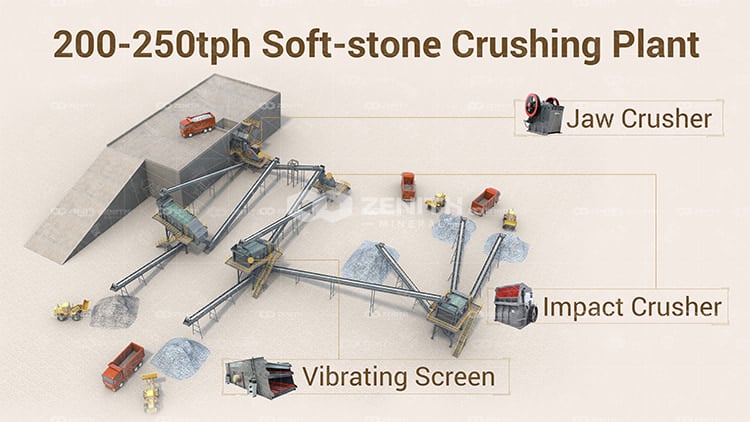
System Configuration: Jaw Crusher (Primary Crushing) → Impact Crusher (Secondary/Fine Crushing) → Vibrating Screen (Check Screening /Grading)
Key Advantages:
Limitations:
Best Suited For: Medium- and small-scale aggregate production lines processing materials with moderate hardness that require flexible product gradation adjustments.
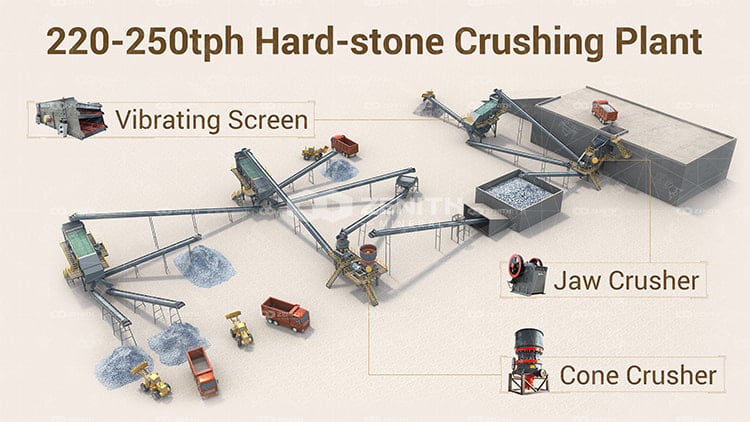
System Configuration: Jaw Crusher (Primary Crushing) → Cone Crusher (Secondary/Fine Crushing) → Vibrating Screen (Check Screening /Grading)
Key Advantages:
Limitations:
High-capacity requirements may necessitate tertiary crushing or multi-machine parallel processing, increasing flow complexity and initial CAPEX.
Best Suited For: Highly abrasive hard rock quarries and projects prioritizing low operating costs and premium-grade aggregate output.
System Configuration: Based on Scheme 1, adding a Vertical Shaft Impact (VSI) Crusher for aggregate shaping and sand making.
Key Advantages:
Limitations:
More complex process flow, higher initial capital investment, and increased specific energy consumption (building upon Scheme 1).
Best Suited For: Projects requiring both premium aggregate shape and manufactured sand, such as commercial ready-mix concrete plants and large-scale infrastructure projects.
System Configuration: Based on Scheme 2, adding a second-stage Cone Crusher.
Key Advantages:
Limitations: Increased process layout complexity and higher initial plant investment.
Best Suited For: Large-capacity, scale-driven mining and quarrying projects.
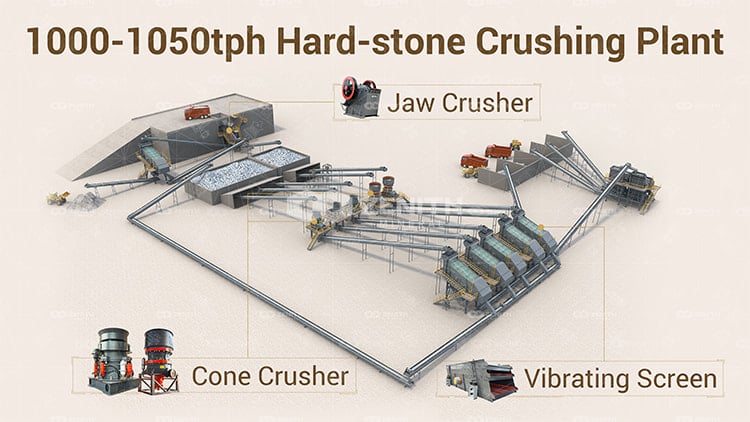
Selecting the optimal plant layout for aggregate production line requires a comprehensive assessment of site geology, raw material characteristics, target product shape, and local market demand. Right equipment selection is the crucial first step—get it right, and every stage that follows becomes simpler and more cost-effective.
From geological survey, process design, and equipment selection to primary machine supply, installation guidance, and commissioning, ZENITH provides full-process, one-stop solutions.
Planning to set up an aggregate production line? Contact ZENITH today for a free consultation:
Custom 1-on-1 Flowsheet Design: Tailored plant layouts based on your quarry conditions and production targets.
Complete Equipment List & CAPEX Calculation: Transparent budgeting so every dollar is accounted for.
Cases References: Real-world benchmark projects across 180+ countries and regions matching your exact specifications.


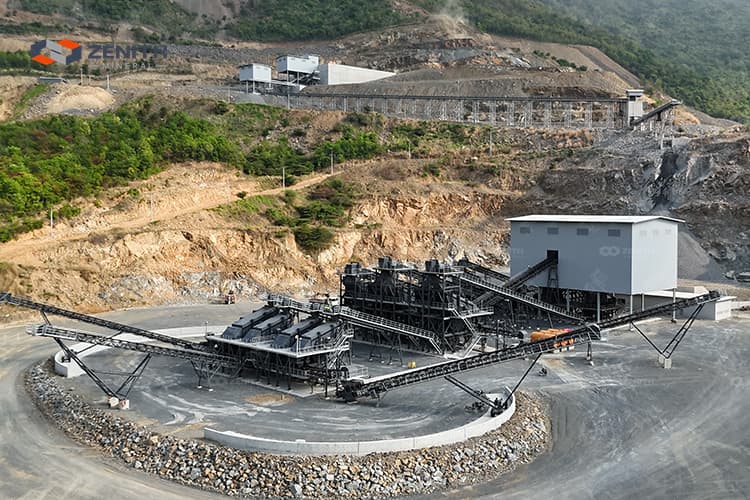
Crushing is the first step of mining operation, and the choice of crushing circuit directly determines the efficiency of the entire crushing line. This article explains what a crushing circuit is, how open and closed circuits work, and how to select the best option across different scenarios.
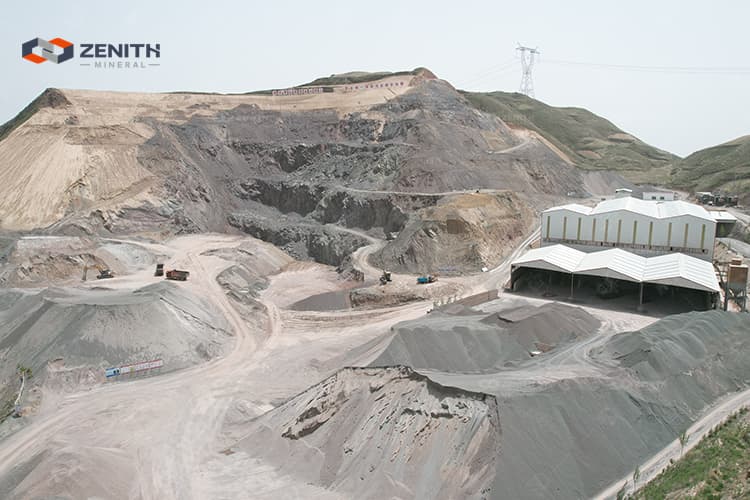
Starting a quarry business is a major undertaking that offers substantial returns but involves a complex process; this article guides you step by step, from preliminary research to the commencement of formal production.
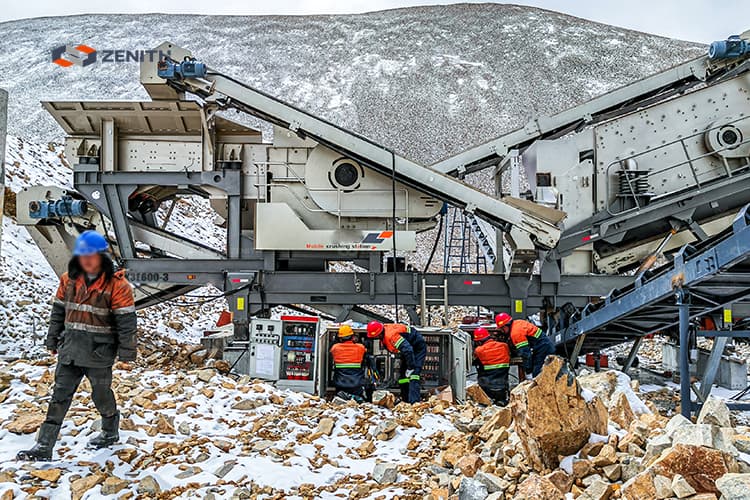
At high altitudes, thin air, extreme day-night temperature swings, short construction window are the most common challenges need to be solved. To achieve high performance and stable operation, ZENITH delivers high-performance, modular mobile crushing plants engineered specifically for the rigors of high-altitude environments.
Fill your requirements here, and we'll send the custmized solution and quotation to you by the reserved contact information.
Copyright ©2000-2026 SHANGHAI ZENITH MINERAL CO.,LTD.

 WhatsApp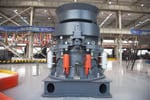

 24/7 Online