
 WhatsApp
In the high-stakes world of mineral processing, the difference between a profitable operation and a costly failure often hinges on a single decision: selecting the right equipment supplier. Whether you are extracting gold in West Africa, copper in Chile, or iron ore in Australia, your processing plant is the heartbeat of your investment. With hundreds of manufacturers claiming to offer the "best" technology, how do you conduct due diligence that protects your capital and ensures long-term recovery rates?
Choosing a supplier is not merely a purchase, it is a long-term partnership that will dictate your Operational Expenditure (OPEX), throughput efficiency, and ultimate recovery rates for the next 15 to 20 years. This guide outlines the critical criteria for evaluating and selecting a world-class mineral processing equipment supplier.
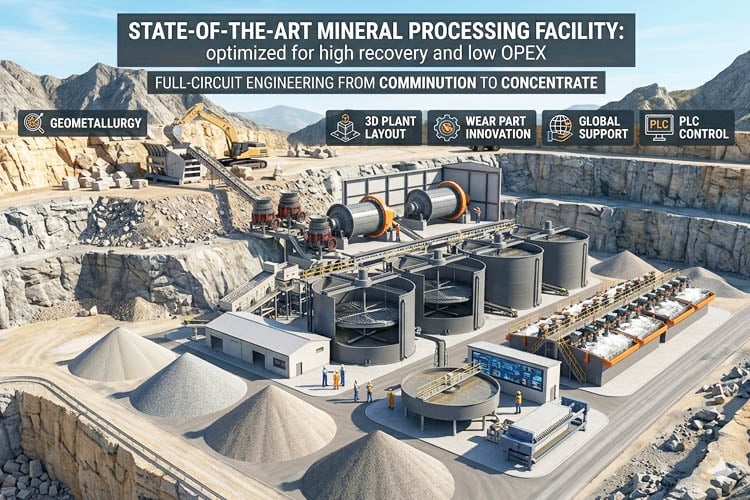
5 Steps to Choose a Reliable Mineral Processing Equipment Supplier
1. Engineering Depth: From Catalog Selling to Process Design
A mediocre supplier sells machines from a catalog; a reliable partner designs a solution based on your specific ore body.
- Metallurgical Testing Capability: Does the supplier offer or require ore samples for testing? A reliable supplier must understand the Bond Work Index (BWI), abrasiveness, and mineralogy of your ore before recommending a crusher, ball mill, or flotation cell.
- Customized Flowsheet Design: Avoid "one-size-fits-all" solutions. Ensure the supplier provides detailed 3D plant layouts and process flow diagrams (PFDs). The equipment should be sized correctly to prevent "bottlenecking"—a common issue where an undersized screen or conveyor limits the capacity of a high-performance crusher.
2. Manufacturing Excellence and Material Science
The harsh environment of a mine site—characterized by extreme abrasion, impact, and often corrosive chemicals—demands superior metallurgy.
- In-House Manufacturing: Suppliers who control their own casting and machining facilities offer better quality control. Ask about their ISO 9001 certifications and non-destructive testing (NDT) procedures for critical components like mainshafts and gears.
- Wear Part Innovation: The "hidden cost" of mineral processing is the frequency of liner changes. Inquire about the manganese and chromium content in their wear parts. Leading suppliers, such as those producing HPT series cone crushers, utilize specialized alloys that extend the life of liners by 20–30% compared to generic alternatives.
3. Proven Regional Experience and "Ambient" Engineering
A machine that performs well in a temperate climate may fail in the humid tropics of Southeast Asia or the high altitudes of the Chilean Andes.
- Environmental Adaptation: Ask the supplier for case studies in your specific geographic region. Do they offer "tropicalized" electrical cabinets? Do they have high-altitude cooling solutions for hydraulic systems?
- Reference Sites: A reliable supplier will have a portfolio of active sites. If possible, request a site visit or a video testimonial from a client processing similar material (e.g., gold ore in Africa or copper in South America).
4. The Lifecycle Support Ecosystem (After-Sales)
In mining, unplanned downtime can cost upwards of $10,000 to $50,000 per hour. The reliability of a supplier is defined by what happens when a machine stops.
- Global Service Network: Does the supplier have localized service hubs? A reliable partner maintains engineers in key mining regions (e.g., Peru, Indonesia, Nigeria, South Africa) to provide 24/7 technical support.
- Spare Parts Logistics: Verify their spare parts inventory. A supplier is only as good as their ability to deliver a critical bearing or a mantle within 48 to 72 hours. Ask about their "consignment stock" options for large-scale projects.
5. Technological Integration and Industry 4.0
Modern mineral processing requires more than just heavy steel; it requires intelligence.
- Automation and Monitoring: Top-tier suppliers now integrate PLC (Programmable Logic Controller) systems and remote monitoring tools. These systems allow operators to track oil pressure, vibration, and TPH (tons per hour) in real-time from a smartphone or control room.
- Sustainability and Energy Efficiency: With rising energy costs and ESG (Environmental, Social, and Governance) pressures, prioritize suppliers whose equipment reduces the "carbon per ton." High-efficiency motors and optimized crushing chambers can reduce energy consumption by up to 15%.
The Mineral Processing Workflow: From Run-of-Mine to Concentrate
Understanding the journey of the ore helps in selecting the right equipment for each stage. A reliable supplier optimizes the entire "circuit" rather than just individual machines.
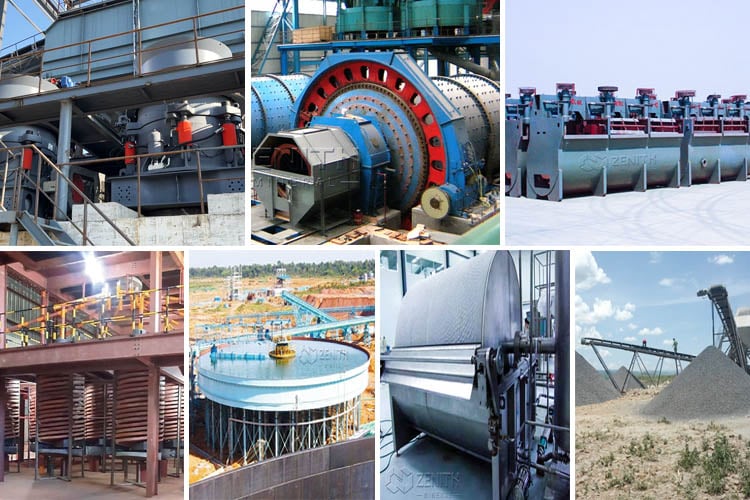
- 1. Comminution (Crushing & Grinding): The process of reducing the ore size to liberate valuable minerals. This typically involves a primary Jaw Crusher, followed by secondary and tertiary Cone Crushers, and finally Ball Mills or SAG Mills.
- 2. Sizing and Classification: Using Vibrating Screens and Hydrocyclones to ensure only the correctly sized particles move to the next stage, while oversized material is returned to the crushers (closed-circuit).
- 3. Concentration (Separation): This is where the "magic" happens. Depending on the mineral's properties, this involves:
- Gravity Separation: For heavy minerals like gold or tin (using Shaking Tables or Centrifugal Concentrators).
- Flotation: Using chemical reagents and air bubbles to lift sulfide minerals (like Copper or Lead) to the surface.
- Magnetic Separation: For iron ore or removing magnetic impurities.
- 4. Dewatering: Removing water from the final concentrate using Thickeners and Filter Presses to prepare it for transport or smelting.
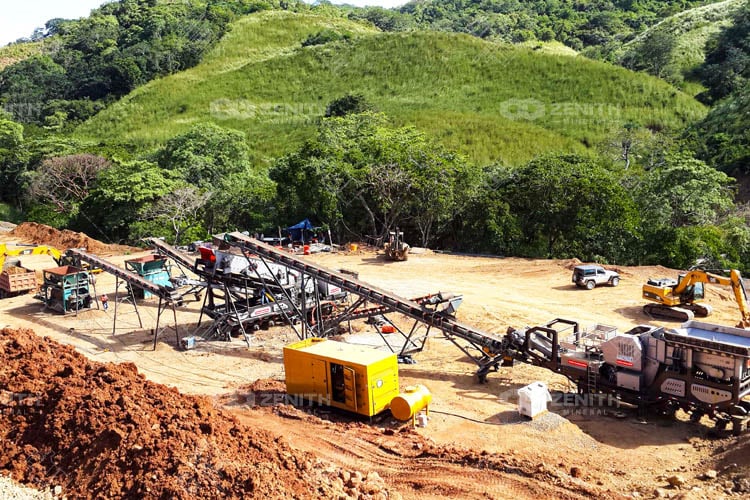
Mexico 1200-1400TPH Magnetite Crushing Line
Essential Mineral Processing Equipment Categories
When auditing a supplier, ensure their portfolio includes these high-performance "industry workhorses." Each stage of the mineral processing circuit requires specific mechanical properties to handle varying ore hardness and abrasiveness.
A. Primary Crushing: The Foundation of the Circuit
The primary crusher's job is to take raw, run-of-mine (ROM) ore and reduce it to a manageable size for secondary processing.
- C6X Series Jaw Crushers: Known for their massive feed openings (up to 1200mm), these machines utilize a non-welded, bolted frame construction. This modular design eliminates the internal stress found in traditional welded frames, significantly extending the machine's life in high-vibration mining environments.
- Key Advantage: Optimized crushing chamber angle and high-inertia flywheels ensure a high reduction ratio with lower energy consumption per ton.
B. Secondary & Tertiary Crushing: Precision and Particle Shape
In this stage, the goal shifts from "size reduction" to "particle shape" and "liberation."
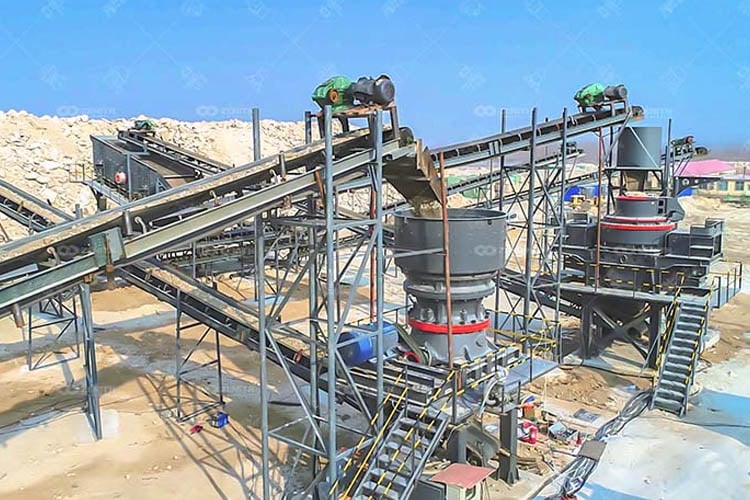
- HPT Multi-Cylinder Hydraulic Cone Crushers: These are the gold standard for hard rock like basalt or copper ore. They utilize Lamination Crushing Theory, which allows for inter-particle crushing. This doesn't just break the stone; it produces a superior, cubical final product with fewer flaky or elongated particles.
- HST Single-Cylinder Hydraulic Cone Crushers: Ideal for secondary crushing where ease of maintenance is a priority. The single-cylinder design allows for automatic discharge-opening adjustment and "tramp iron" protection, meaning the machine can automatically clear uncrushable objects (like shovel teeth) without human intervention.
C. Grinding & Fine Pulverization: The Liberation Stage
To extract minerals from the host rock, the ore must often be ground to the consistency of powder.
- Ball Mills: The workhorse of the grinding circuit. These large rotating cylinders use steel balls as the grinding media. Look for suppliers who offer energy-saving bearing designs and custom-engineered alloy liners (Mn13 or Chrome-Moly) to withstand the constant impact and abrasion.
- Vertical Roller Mills (VRM): Often used in industrial minerals or cement, these combine drying, grinding, and classifying into one unit, offering significantly higher energy efficiency than traditional ball mills for softer materials.
D. Beneficiation & Separation: The Value Extraction
This is where the target mineral (Gold, Copper, Iron) is separated from the waste rock (Gangue).
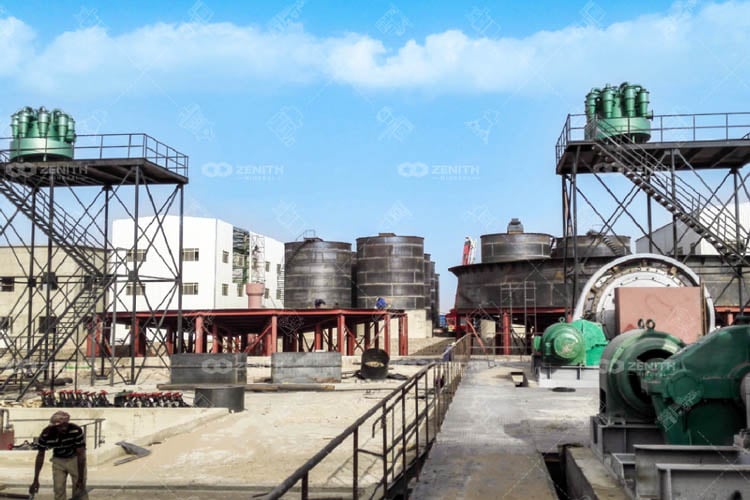
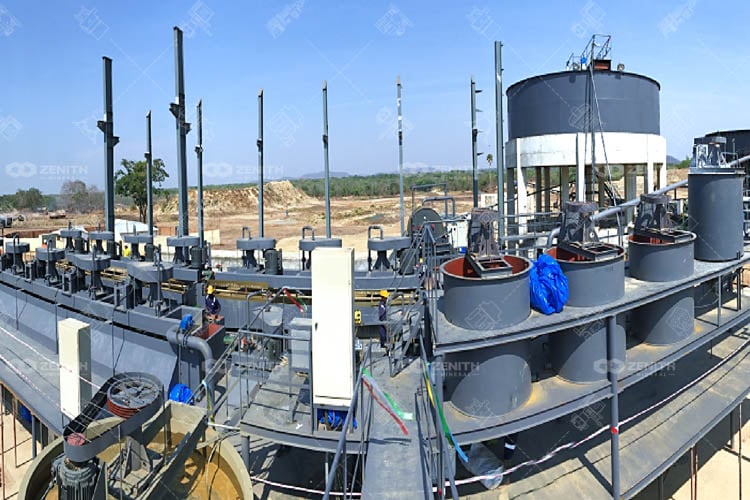
- Flotation Cells: Essential for sulfide ores. These tanks use high-velocity impellers to create a stable froth. A high-quality supplier ensures the aeration rate and pulp level can be precisely controlled via automated sensors.
- Magnetic Separators: Used for iron ore recovery or removing magnetite from other mineral streams. High-intensity magnetic drums are required to ensure maximum recovery rates with minimal mineral loss in the tailings.
- CIL/CIP Leaching Tanks: For gold recovery, these massive tanks must be engineered with high-efficiency dual-impeller agitators to ensure the carbon-in-leach process is uniform, preventing gold from settling at the bottom of the tank.
E. Screening & Classification: The Circuit Guard
Every crushing and grinding circuit needs a "gatekeeper" to ensure product quality.
- S5X High-Frequency Vibrating Screens: These use high G-force vibration to achieve high screening efficiency even with wet or sticky materials.
- Hydrocyclones: Used in closed-circuit grinding to separate fine particles (which go to flotation) from coarse particles (which go back to the mill).
F. Mobile & Portable Processing Units
For mines with short lifespans or projects that require frequent relocation, mobile units are the ultimate solution.
- Tracked Mobile Stations: Fully self-contained units on crawler tracks. They can be moved via remote control directly to the mine face, eliminating the need for expensive truck-and-shovel hauling.
- Wheel-Mounted Portable Plants: Ideal for road construction and aggregate production where the "factory" needs to follow the road's progress.
Ready to Optimize Your Mineral Processing Circuit?
At ZENITH, we don't just sell equipment; we engineer success. Whether you are processing hard-rock copper in Chile, gold ore in Africa, or high-grade iron ore in Southeast Asia, our team of expert engineers is ready to design a customized solution tailored to your specific mineralogy and site conditions.
Take the next step toward a more efficient mine site:
- Request a Free 3D Plant Layout: Visualize your future operation before you invest.
- Get a Customized ROI Analysis: See how our HPT and C6X technology can reduce your cost per ton.
- Book a Technical Consultation: Speak with our mineral processing specialists today.
A reliable supplier does more than deliver machines—they provide a roadmap to lower OPEX, higher recovery rates, and sustainable growth. By prioritizing suppliers who offer comprehensive metallurgical testing, 3D flowsheet optimization, and a global service footprint, you ensure that your plant meets its nameplate capacity from day one and remains profitable for decades to come.


 24/7 Online