In any crushing operation, the crusher itself often receives the majority of attention from plant operators and maintenance teams. Specifications, wear parts, and power draw are constantly monitored and optimized. However, one of the most critical factors influencing crusher performance is frequently overlooked: feed stability.
Feed stability—the consistency of material flow rate, particle size distribution, and feed arrangement into the crushing chamber—has a direct and profound impact on two key performance indicators: crushing chamber pressure and final product particle shape.
This article explores the technical relationship between feed stability and crusher performance, explaining why uniform feeding is not merely a recommendation but a requirement for optimal crushing results.
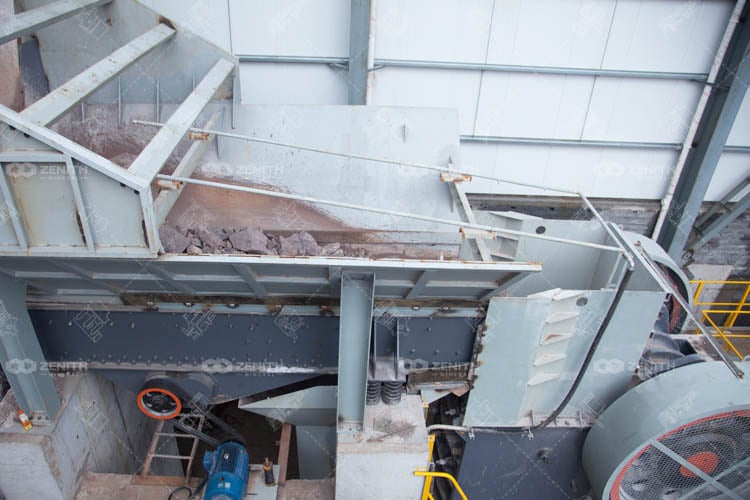
Feed stability refers to three distinct but interconnected characteristics of material entering a crusher:
| Characteristic | Description | Ideal Condition |
|---|---|---|
| Flow Rate Consistency | Steady, uninterrupted volumetric or mass flow | Variation < ±5% |
| Particle Size Distribution | Uniform gradation of feed material | Consistent P80 (80% passing size) |
| Feed Arrangement | Even distribution across the crushing chamber width | Full chamber coverage without segregation |
When any of these characteristics fluctuates, the crusher must constantly adapt—and modern crushers, despite their automation capabilities, perform best under stable conditions.
A crusher is not a standalone machine; it is part of a continuous process system. Upstream equipment—feeders, conveyors, surge bins, and screens—directly influence what enters the crushing chamber. Instability at the feed level creates a cascade of negative effects:
Understanding these effects requires a closer look at what happens inside the crushing chamber.
Crushing chamber pressure is the force exerted by the crusher on the material being processed, and equally, the resistance force exerted by the material bed back onto the crusher components. In cone crushers and jaw crushers, this pressure is directly related to:
Modern crushers measure this pressure indirectly through hydraulic system pressure (in hydraulic cone crushers) or power draw (amperage).
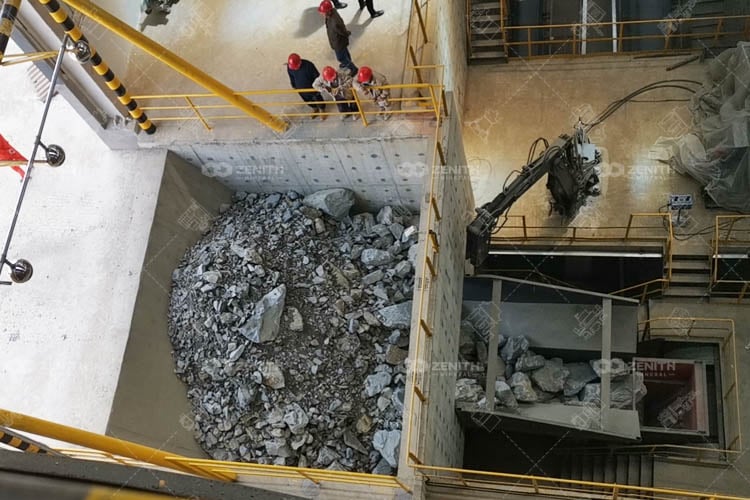
When feed flow drops below the crusher's capacity, the crushing chamber does not maintain a full material bed. The result:
When a surge of material enters the chamber from an upstream conveyor or feeder:
When particle size distribution varies significantly with time:
The most efficient crushing occurs when the crushing chamber maintains a densely packed material bed under consistent pressure. In this condition:
Feed instability destroys this ideal condition, forcing the crusher to operate in an inefficient, high-wear regime.
Particle shape is a critical quality parameter for crushed materials, particularly in:
| Application | Shape Requirement | Reason |
|---|---|---|
| Concrete Aggregate | Cubical (flakiness < 15%) | Improves workability and strength |
| Asphalt Aggregate | Cubical with low flat/elongated ratio | Enhances durability and compaction |
| Road Base | Angular with cubical shape | Provides interlocking for stability |
| Manufactured Sand | Cubical with controlled fines | Improves flowability and binder adhesion |
Flaky and Elongated Particle Formation
When feed is unstable, the crushing chamber experiences alternating periods of high and low pressure. During low-pressure periods (starved feed):
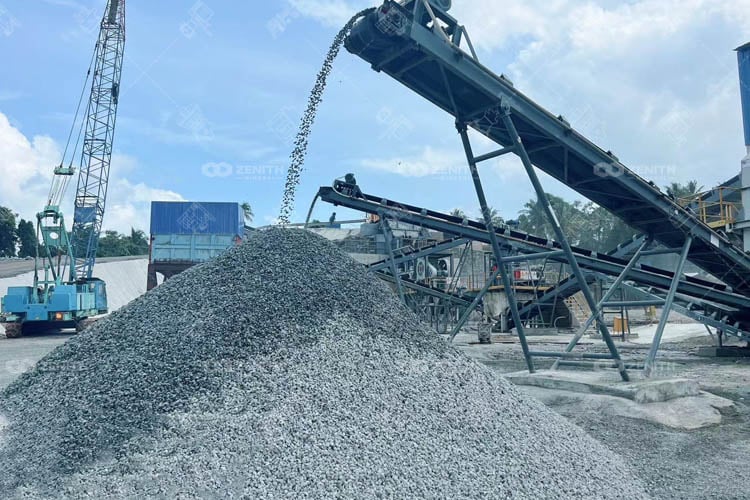
Shape Variation Over Time
With unstable feed, product shape becomes inconsistent:
This variability makes it impossible to guarantee product specifications and may result in rejected loads.
The Role of Interparticle Crushing
Interparticle crushing—where particles fracture by compression against other particles rather than against crusher liners—is the mechanism that produces superior cubical shape. This mechanism requires:
Feed instability disrupts all three requirements.
Consider a 300 hp cone crusher processing 200 tph of granite:
| Feed Condition | Chamber Pressure | Flakiness Index | Liner Life |
|---|---|---|---|
| Stable, full chamber | Consistent 1.8-2.0 MPa | 12-14% | 1,200 hours |
| Intermittent (starved) | Spikes to 2.8 MPa, drops to 1.2 MPa | 18-22% | 800 hours |
| Surge loading | Peaks to 3.5 MPa | 16-20% | 900 hours |
| Cause | Effect on Feed | Solution |
|---|---|---|
| Underfed primary crusher | Starvation at secondary crusher | Install surge bin between stages |
| Improper belt conveyor discharge | Segregation, uneven distribution | Install chute with spreader plate |
| Vibrating feeder running at incorrect speed | Variable flow rate | VFD control with feedback loop |
| Screen bypass inefficiency | Fines carryover to crusher | Optimize screening efficiency |
| Cause | Effect | Solution |
|---|---|---|
| Manual feeder control | Inconsistent flow | Implement automated feed control |
| No surge capacity | Amplifies upstream variations | Add surge bin or feed hopper |
| Batch feeding | Extreme surge/starve cycles | Convert to continuous feeding |
| Cause | Effect | Solution |
|---|---|---|
| Chute geometry causes material pile | Segregation at crusher inlet | Redesign chute with rock box |
| Insufficient feeder length | Poor material distribution | Install longer feeder or belt |
| Crusher located too close to screen | No settling/mixing time | Allow vertical drop for remixing |
A properly sized surge bin between primary and secondary crushing stages is the single most effective tool for stabilizing feed. Recommended capacity: 15-30 minutes of crusher production.
Modern control systems use:
These inputs feed back to variable frequency drives (VFDs) on feeders, automatically adjusting feed rate to maintain optimal chamber conditions.
| Principle | Application |
|---|---|
| Surge capacity between stages | 15-30 minute buffer |
| Proper chute angles | Minimum 55° for dry material, 65° for wet |
| Level sensors at crusher inlet | Real-time feed monitoring |
| VFDs on all feeders | Precise flow control |
Feed stability is not a secondary consideration in crusher operation—it is a foundational requirement for optimal performance. The relationship between uniform feeding, stable chamber pressure, and superior particle shape is well-established and economically significant.
Operators who invest in feed stability solutions—surge bins, automated controls, optimized chutes, and operator training—consistently achieve:
In an industry where every percentage point of efficiency translates directly to profitability, feed stability deserves the same attention as crusher selection and liner metallurgy.


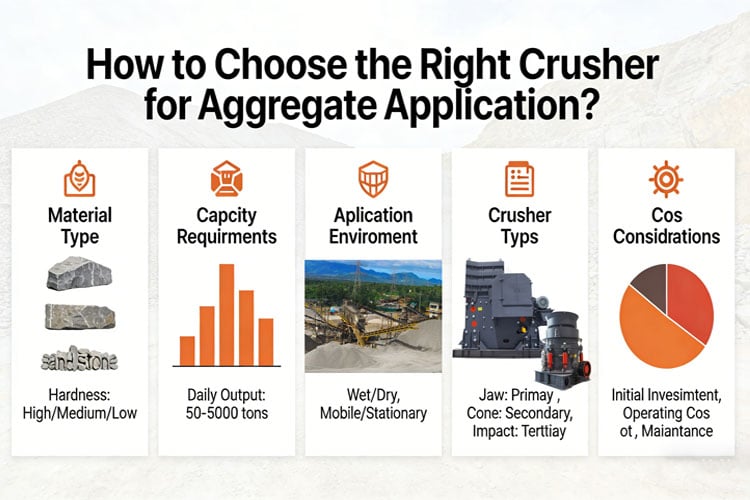
Expert guide to choosing the right aggregate crusher. Compare jaw, cone, and HSI tech based on rock hardness, capacity, and TCO to maximize your quarry's ROI.
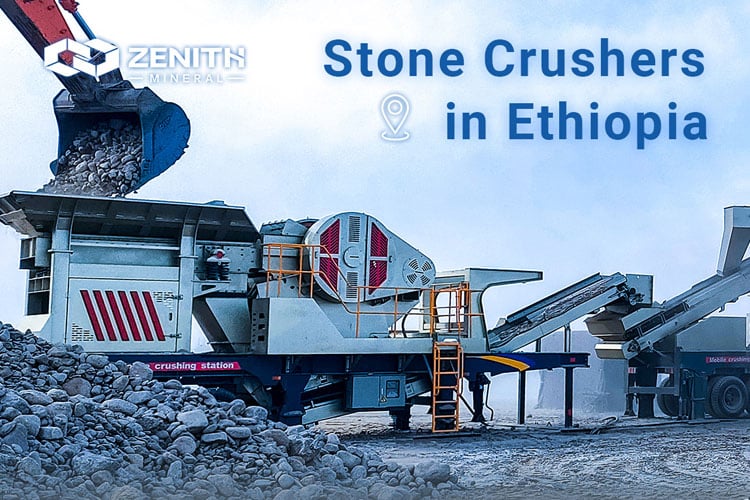
Explore the top 4 best-selling stone crushers in Ethiopia's growing mining and construction sectors. Learn about jaw, mobile, cone, and impact crushers optimized for processing local minerals like gold, tantalum, limestone, and basalt.
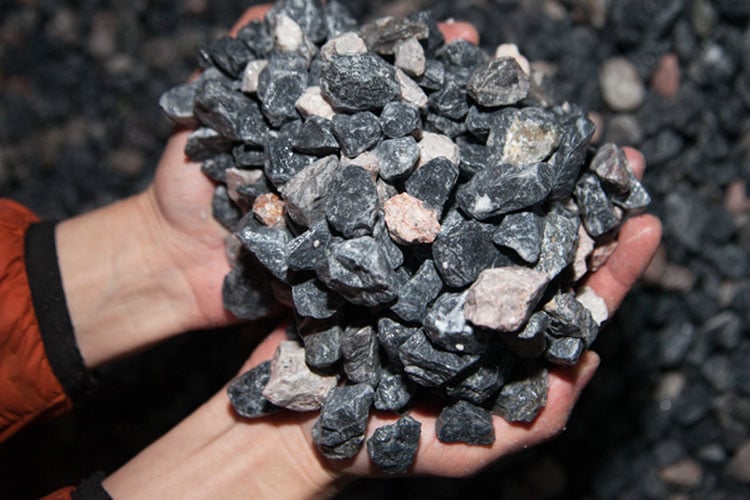
This article delves into practical methods to improve aggregate shape, covering raw material selection, optimal crushing equipment, process optimization and quality control.
Fill your requirements here, and we'll send the custmized solution and quotation to you by the reserved contact information.
Copyright ©2000-2026 SHANGHAI ZENITH MINERAL CO.,LTD.

 WhatsApp


 24/7 Online