The infrastructure boom in Bangladesh—anchored by mega-projects like the Dhaka-Ashulia Elevated Expressway, various economic zones, and deep-sea ports—has driven the demand for high-quality aggregates to an all-time high. In regions like Sylhet (Bholaganj, Jaflong) and Panchagarh, river stones (pebbles and boulders) serve as the primary raw material.
However, because these river stones are rich in quartz and granite, they are exceptionally hard and highly abrasive. Processing them requires a precise combination of heavy machinery. For investors and quarry owners in Bangladesh, understanding the technical specifications and the price ranges of these machines is the first step toward a profitable operation.
This guide provides a comprehensive overview of the main types of stone crusher machines used for river stone processing in Bangladesh—Jaw Crusher, Cone Crusher, VSI Crusher, and Mobile Crusher—their applications, advantages, limitations, and how to select the right one for your operation.
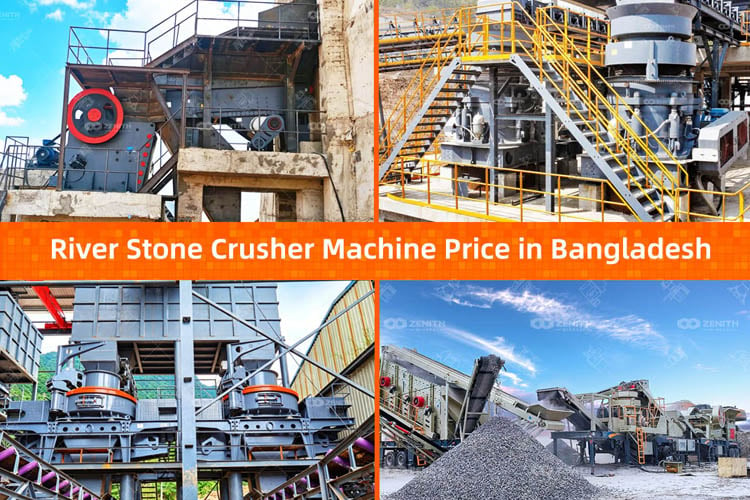
The jaw crusher is the foundation of any river stone crushing operation. During the monsoon season, river stones are often wet and muddy. High-quality primary jaw crushers utilize heavy-duty eccentric shafts and high-manganese jaw plates that can crush tough materials without clogging. It handles the initial breakdown of large boulders (up to 600mm+) into smaller, manageable sizes (typically 100-200mm). For river pebbles, a jaw crusher is essential as the first stage.
The jaw crusher uses a simple but effective mechanism: a fixed jaw plate and a movable jaw plate form a V-shaped crushing chamber. The movable jaw is driven by an eccentric shaft to perform a periodic reciprocating motion. When the movable jaw moves toward the fixed jaw, material is crushed by compression. When it moves away, crushed material falls downward by gravity and is discharged from the outlet.
The crushing action is intermittent, but the design allows for large feed sizes and high crushing forces.
For river pebbles, which are naturally round and smooth, a jaw crusher with a deep V-shaped crushing chamber and an aggressive nip angle is essential to prevent the round stones from "popping out" of the chamber.
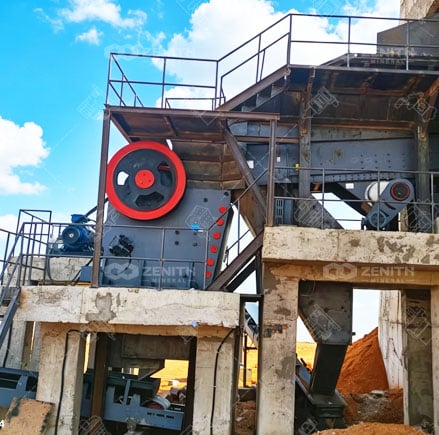
The cone crusher is the most important machine for secondary and tertiary crushing of river pebbles. This is where the battle against abrasion is won or lost. For high-silica river stone, a cone crusher is not just recommended—it is essential for profitable operation.
A cone crusher operates on a gyratory compression principle. A rotating mantle (movable cone) gyrates eccentrically inside a stationary concave (fixed bowl liner). Material enters the crushing chamber from the top and falls between the mantle and concave. As the mantle gyrates, it compresses and crushes the rock against the concave.
The key difference from jaw crushers: Cone crushers operate continuously, with material being crushed on every rotation of the mantle. This makes them more efficient and produces a more consistent product.
Impact crushers should be avoided for river stones due to the extreme wear caused by high silica content. A Hydraulic Cone Crusher (like the HST or HPT series) uses "laminated crushing" technology. It applies immense hydraulic pressure to break the stone, drastically reducing wear-part replacement costs and saving thousands of Taka in maintenance.
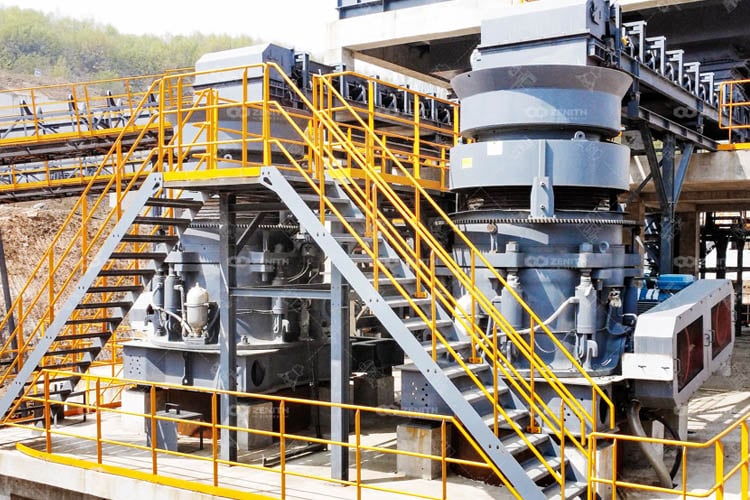
The Vertical Shaft Impact (VSI) crusher is used for tertiary crushing and shaping. While jaw and cone crushers produce good aggregate, a river sand making machine takes it further, producing perfectly cubical particles and manufactured sand (M-Sand). For Bangladesh's concrete and asphalt industries, a VSI crusher can command premium prices for high-quality aggregate.
A VSI crusher uses a high-speed rotor to accelerate material to high velocities. The material is thrown against a chamber lined with either steel anvils (rock-on-iron) or a rock shelf (rock-on-rock). Upon impact, the material fractures along natural cleavage planes, producing cubical particles.
Important note: For river pebbles, VSI crushers should only be used in rock-on-rock (autogenous) configuration, NOT rock-on-iron.
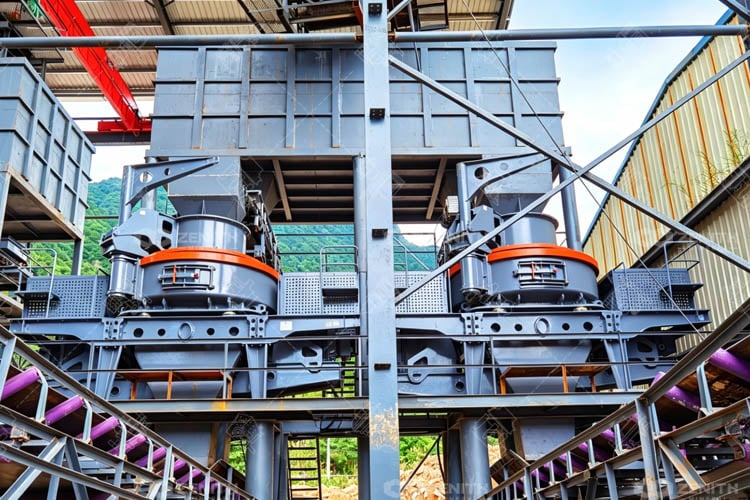
High-rise structures in Dhaka and infrastructure concrete require strict particle shapes (low elongation/flakiness). A Vertical Shaft Impact (VSI) crusher uses a "rock-on-rock" mechanism to polish the stones, eliminating sharp edges and weak points.
If you are selling to ready-mix concrete plants, a VSI is recommended because cubical shape improves concrete workability and strength. If you are selling to asphalt plants, a VSI is also recommended because cubical shape improves compaction and durability. If you are producing manufactured sand, a VSI is essential as it is the best sand-making technology available. If you are selling general fill or road base, a VSI is not necessary because a jaw-cone circuit is sufficient. If you are operating in a competitive market that requires premium products, a VSI can be a differentiator that allows you to command higher prices.
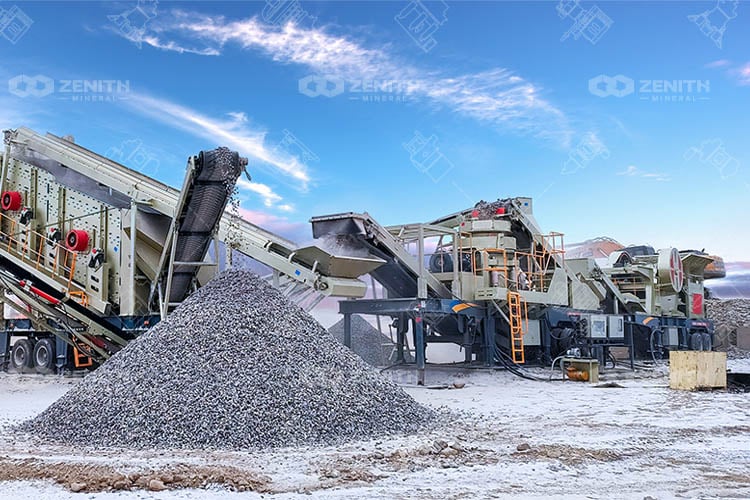
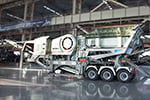
Mobile crushers are crushing plants mounted on tracked or wheeled chassis that can be moved easily between sites. They integrate feeder, crusher, screen, and discharge conveyor on one or multiple chassis. For Bangladesh, mobile crushers are gaining popularity for several reasons:
For Bangladesh's river stone collection sites (like Jaflong), track-mounted units are generally preferred due to rough, uneven terrain near riverbeds.
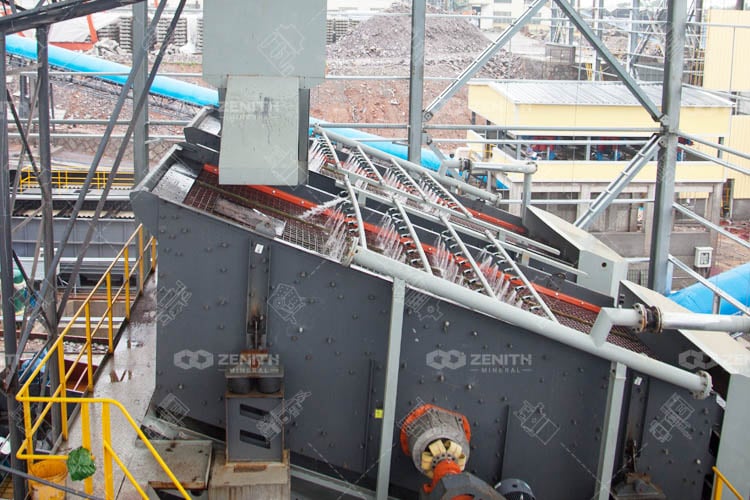
The vibrating screen separates crushed material into different commercial sizes based on project requirements. It ensures that only properly graded material reaches final products, while oversized material is returned to the crusher for re-processing.
Material moves across vibrating screen decks with mesh openings of specific sizes. Smaller particles fall through; larger particles continue to the end. Multi-deck screens (2 or 3 decks) can produce multiple size fractions simultaneously—for example, 20mm, 12mm, and 5mm aggregates from one machine.
Whether meeting Bangladesh Railway ballast specifications or local building codes for concrete aggregate, multi-deck high-frequency vibrating screens ensure clean, precisely graded fractions with zero cross-contamination. For river stones that are often wet or muddy, screens can be equipped with water sprays to wash away clay and prevent mesh blinding.
High-frequency vibration and polyurethane screen media provide efficient screening even with damp, abrasive river pebbles—delivering consistent product quality that meets customer specifications.
The price of a stone crusher in the Bangladeshi market depends heavily on capacity (Tons Per Hour - TPH), automation level, and brand configuration. High-end industrial brands like ZENITH offer specialized engineering that reduces long-term power consumption and wear costs, providing a much higher ROI than low-grade alternatives.
Below is an estimated market price guide for individual machinery and complete plant setups in the Bangladesh market:
| Equipment Type | Common Capacity Range | Estimated Price Range (USD) |
|---|---|---|
| Primary Jaw Crusher | 15 – 1510 TPH | $15,000 – $500,000+ |
| Hydraulic Cone Crusher | 27 - 2185 TPH | $50,000 - $1,000,000+ |
| VSI Sand Making Machine | 60 – 1047 TPH | $80,000 - $500,000+ |
| Circular Vibrating Screen | 45 – 2500 TPH | $8,000 – $100,000+ |
| Mobile Crushing Plant | 30 – 500 TPH | $150,000 - $1,000,000+ |
If you are looking to set up a complete, synchronized stationary plant (including feeders, conveyors, jaw crusher, cone crusher, screen, and control panels), the investment scales by total capacity:
1. Small Scale (50–80 TPH): Ideal for local contractors or residential supply.
Estimated Total Price: $60,000 – $110,000
2. Medium Scale (100–150 TPH): The most popular choice for commercial quarry operators supplying regional infrastructure projects.
Estimated Total Price: $130,000 – $240,000
3. Large Scale (200–300+ TPH): Engineered for major concrete batching plants, national highway suppliers, and mega-infrastructure investors.
Estimated Total Price: $280,000 – $550,000+
Note: Actual prices will vary based on custom configurations, sea freight rates to Chattogram port, customs duties, and specific site layout requirements.
When budgeting for a river stone crushing project in Bangladesh, keep the following operational costs in mind:
With extensive experience supporting aggregate producers in Sylhet, Panchagarh, and Dhaka, ZENITH designs customized, heavy-duty material processing production lines tailored specifically to the high-abrasion nature of Bangladeshi river stones. We balance robust machinery with smart automation to ensure maximum uptime, lower maintenance costs, and an excellent long-term ROI.
Contact our regional technical sales engineers today for a detailed configuration layout, precise tariff-inclusive price quotes, and a customized ROI analysis for your project.


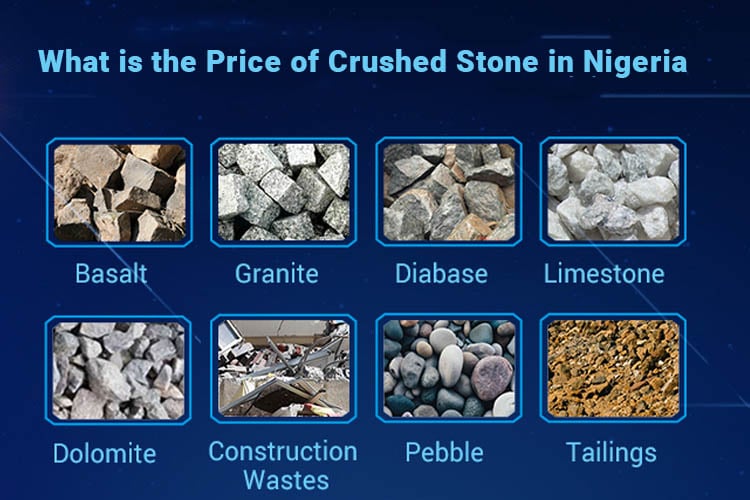
In Nigeria, the price of crushed stone typically ranges from ₦2,000 to ₦8,500 per ton, but this can vary widely based on numerous factors.
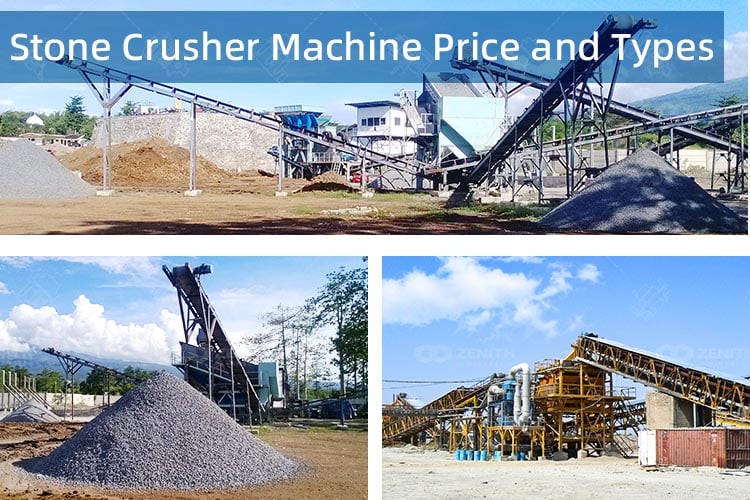
There are many types of stone crusher machines on the market. In this article, we will introduce the types and price of the stone crusher and how to select the most suitable one.
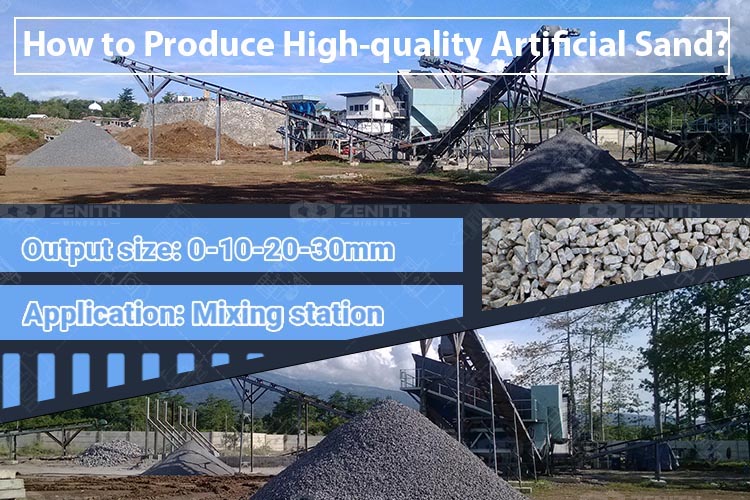
Developing high-quality machine-made sand with stable output capacity and quality to replace river sand can not only solve the imbalance between supply and dema
Fill your requirements here, and we'll send the custmized solution and quotation to you by the reserved contact information.
Copyright ©2000-2026 SHANGHAI ZENITH MINERAL CO.,LTD.

 WhatsApp

 24/7 Online