
 WhatsApp
In the mining, construction, and aggregate processing industries, selecting the right crushing plant is a critical decision that directly impacts operational efficiency, production costs, product quality, and overall profitability.
With a wide range of crushing technologies available, four types stand out as the most widely used: Jaw crushers, Cone crushers, Vertical Shaft Impact (VSI) crushers, and Mobile crushing plants. Each type is engineered to address specific processing needs, from primary crushing of large raw materials to fine shaping of high-grade aggregates, and from fixed-site operations to on-the-go processing.
This article provides a comprehensive comparison of these four crushing plants, analyzing their working principles, key advantages, limitations, ideal applications, cost structures, and selection criteria to help industry stakeholders make informed decisions.
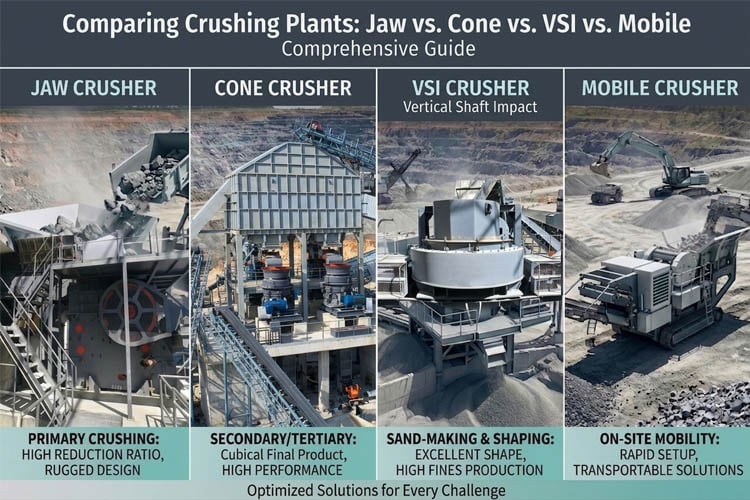
Comparison of Four Types of Crushers
1.1 Quick Overview
| Crusher Type | Primary Function | Best For | Reduction Ratio |
|---|---|---|---|
| Jaw Crusher | Primary crushing | Hard, abrasive rock | 4:1 to 6:1 |
| Cone Crusher | Secondary/Tertiary | Hard rock, cubical shape | 6:1 to 8:1 |
| VSI Crusher | Tertiary/Quaternary | Sand making, cubical shape | Up to 20:1 |
| Mobile Crusher | Any stage (on tracks/wheels) | Multi-site, short-term projects | Varies by type |
1.2 How Each Crusher Works
| Crusher Type | Operating Principle | Crushing Mechanism |
|---|---|---|
| Jaw Crusher | Compression between two jaws | Single-particle breakage |
| Cone Crusher | Compression between mantle and concave | Interparticle crushing |
| VSI Crusher | High-speed rotor throwing rock against anvil | Rock-on-rock or rock-on-iron |
| Mobile Crusher | Same as stationary, but on tracks/wheels | Varies by crusher type |
2. Overview of Each Crushing Plant Type
Before delving into detailed comparisons, it is essential to understand the core design and functionality of each crushing plant. Each type operates on distinct mechanical principles, which dictate their performance, output characteristics, and suitability for different tasks.
2.1 Jaw Crushers – The Primary Workhorse
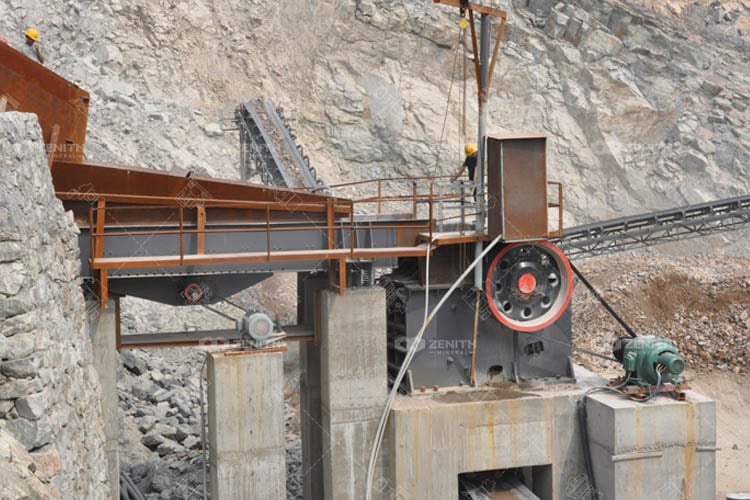
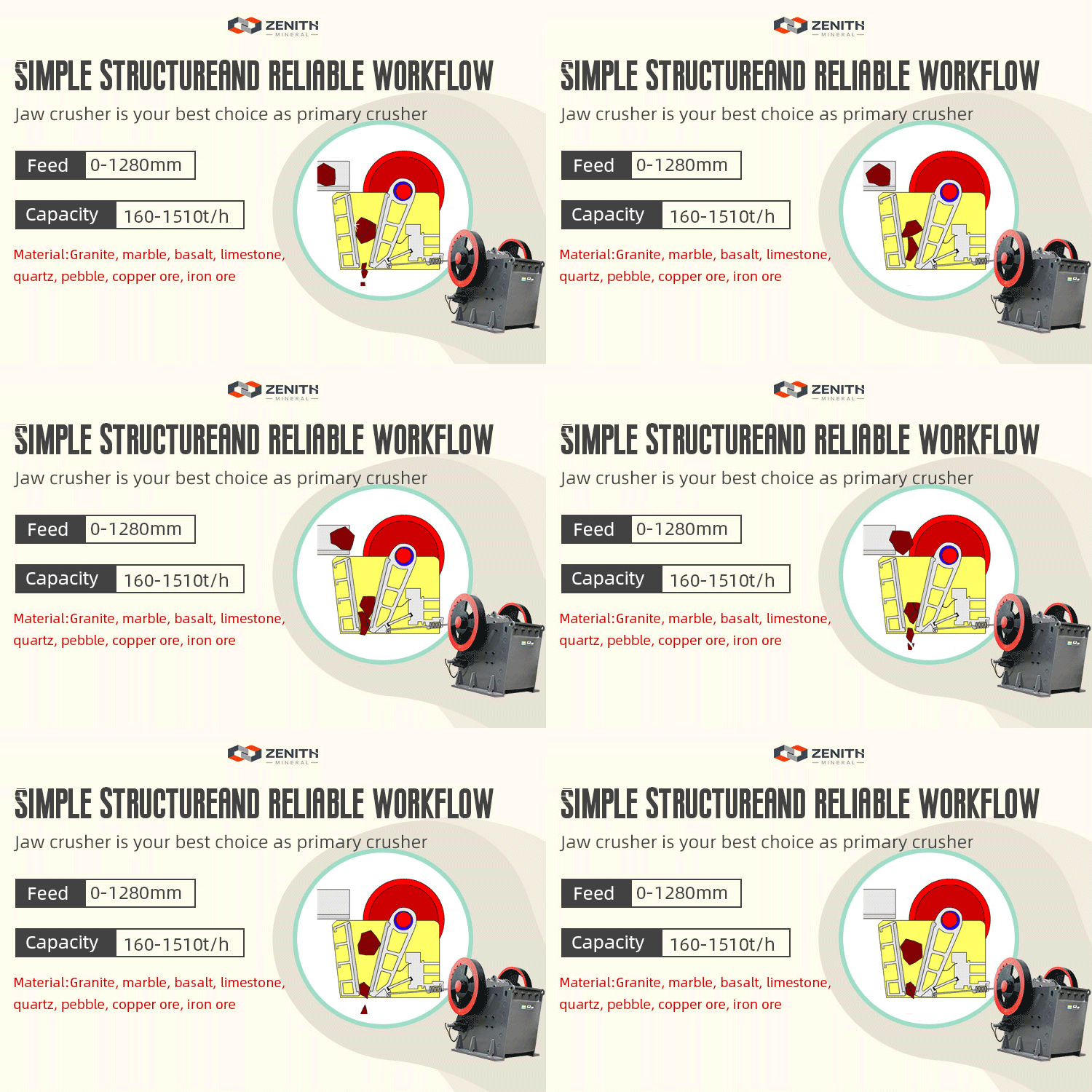
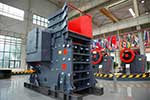
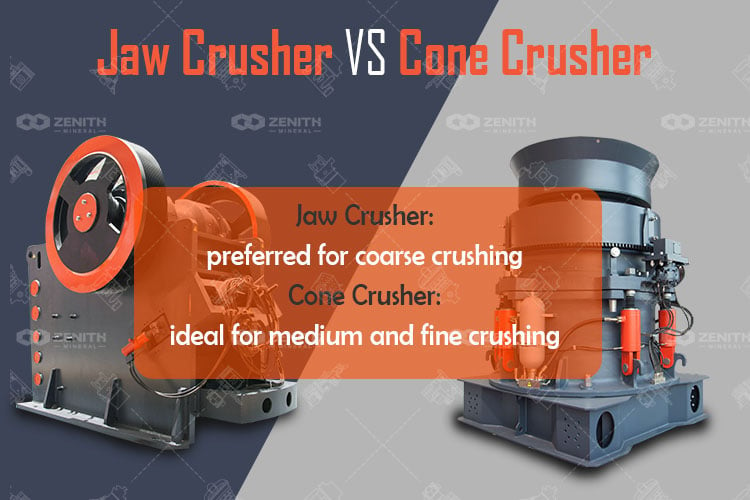
Jaw crushers are the workhorses of primary crushing, designed to reduce large, bulky raw materials (such as granite, basalt, and ore) into smaller, manageable sizes for subsequent processing. They operate on a compressive force principle: a fixed jaw plate and a movable jaw plate work together to squeeze and crush material as the movable jaw reciprocates against the fixed jaw. The gap between the two jaws (discharge setting) determines the size of the crushed output. Jaw crushing plants are typically stationary, consisting of a jaw crusher unit, feed hopper, vibrating feeder, conveyor system, and control panel. They are available in various sizes, from small-scale models (10–50 TPH) for artisanal mining to large-scale units (200+ TPH) for industrial quarries and mines.
Key design features include a robust, simple structure with fewer moving parts, making them durable and easy to maintain even in harsh operating conditions. Their ability to handle large feed sizes (up to 1,500 mm) and hard, abrasive materials makes them the foundation of most crushing circuits.
2.2 Cone Crushers – The Cubical Shape Specialist
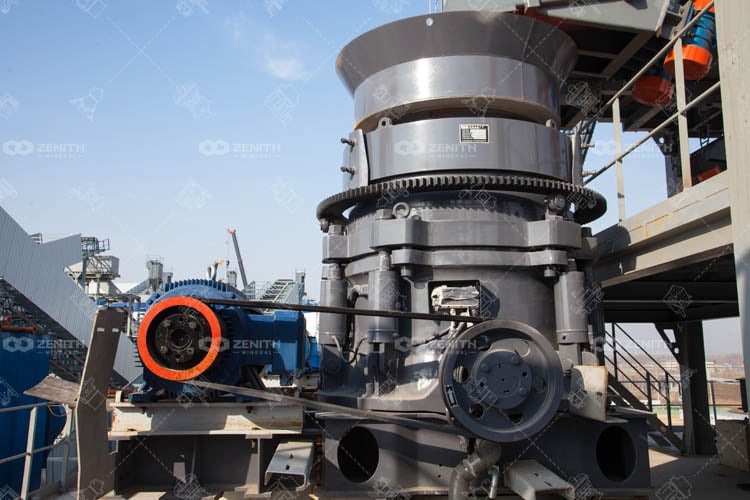
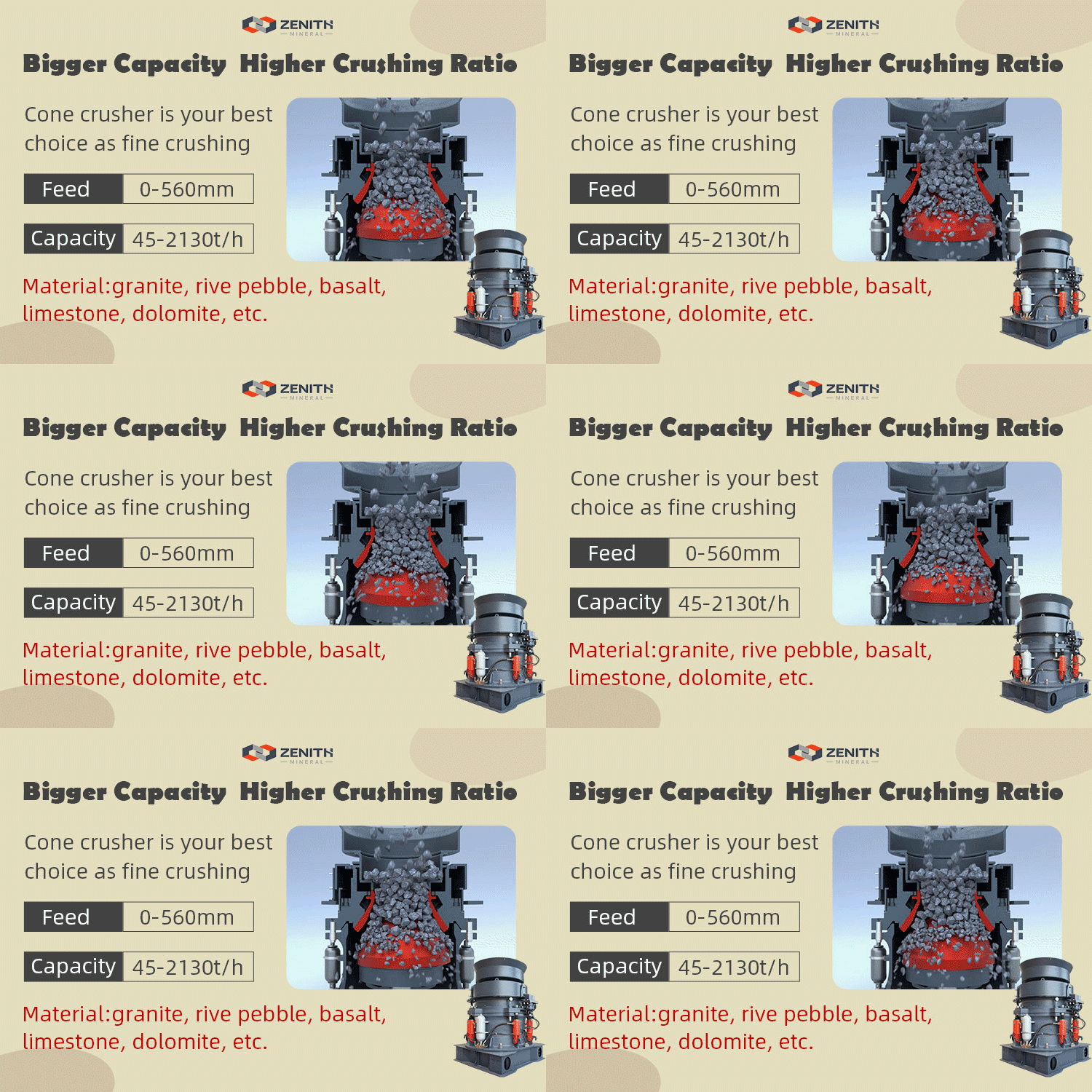
Cone crushers are primarily used for secondary and tertiary crushing, focusing on reducing already crushed material into finer, more uniform particles. They operate on a gyratory crushing principle: a rotating mantle (movable cone) presses against a stationary concave liner (fixed cone), creating a crushing chamber where material is compressed and ground into the desired size. Unlike jaw crushers, cone crushers use a continuous crushing motion, resulting in higher efficiency and more consistent particle size distribution.
Modern cone crushing plants are equipped with advanced hydraulic systems for adjusting the discharge setting, clearing blockages, and protecting against uncrushable objects (such as metal debris), minimizing downtime. They are available in three main configurations: standard (for secondary crushing), medium (for intermediate crushing), and shorthead (for tertiary crushing and fine particle production). Cone plants are typically stationary and integrated into multi-stage crushing circuits, working in tandem with jaw crushers to produce high-quality aggregates.
2.3 VSI Crushers – The Sand Maker
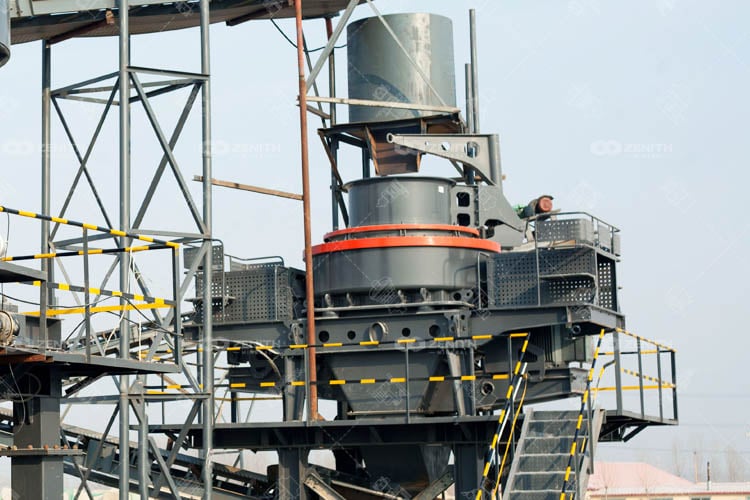
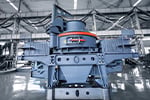
VSI crushers, also known as vertical shaft impactors, are specialized for tertiary crushing and aggregate shaping. Unlike jaw and cone crushers, which rely on compressive force, VSI crushers use high-speed impact and abrasion to break down material. A vertical shaft drives a rotor that accelerates material to high velocities, flinging it against stationary anvils or a rock-lined chamber (rock-on-rock configuration) or against other particles (rock-on-rock) to achieve precise shaping. This impact-based crushing method produces cubical, well-graded aggregates with minimal needle-like or flaky particles—critical for high-quality concrete, asphalt, and decorative stone applications.
VSI crushing plants are often integrated into advanced crushing circuits, following jaw and cone crushers, to refine the final product. They are available in both stationary and semi-mobile configurations and are valued for their ability to produce consistent, high-quality fines and aggregates. Key components include the rotor, anvils, wear plates, and a sophisticated control system to adjust rotor speed and output size.
2.4 Mobile Crusher – The Flexibility Solution
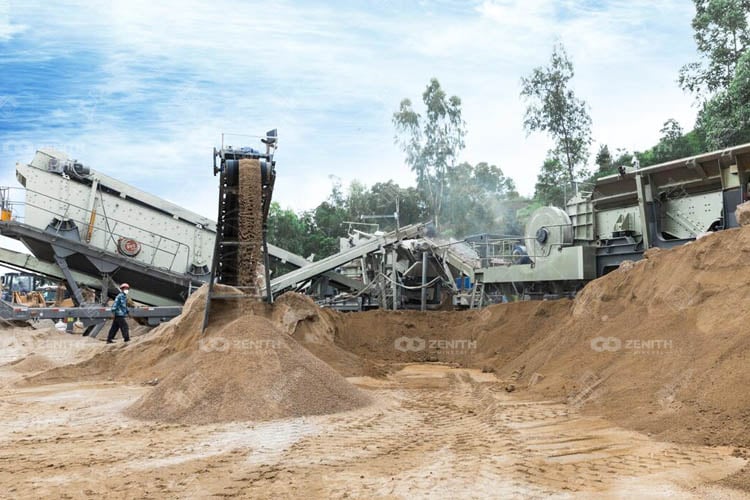
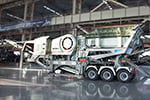
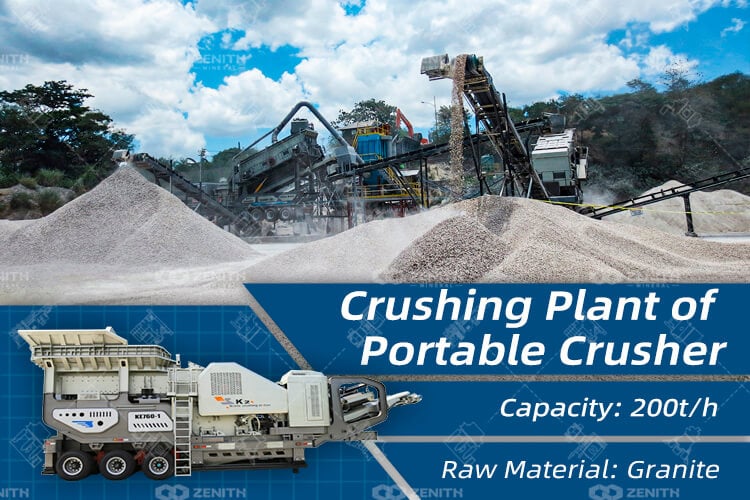
Mobile crushing plants are versatile, self-contained units mounted on wheeled or crawler chassis, designed to process material on-site, eliminating the need for costly transportation of raw materials to fixed crushing facilities. They can integrate any of the three crusher types (jaw, cone, or VSI) as the core crushing unit, along with feeders, conveyors, and screening systems, all mounted on a single or multiple trailers. Crawler-mounted mobile plants offer superior mobility on rough terrain, while wheeled models are ideal for paved roads and quick relocation between sites.
Mobile plants are engineered for flexibility, allowing operators to adjust the crushing configuration based on the material type and desired output. They are particularly valuable for remote mining sites, construction projects, waste recycling, and disaster recovery efforts, where on-site processing reduces transportation costs and improves operational efficiency. Modern mobile plants feature advanced automation, easy setup, and compact design, making them suitable for urban redevelopment projects where space is limited.
3. Detailed Comparison: Key Metrics
To evaluate the four crushing plant types effectively, we compare them across critical performance metrics: working principle, output quality, capacity range, material suitability, maintenance requirements, cost, and ideal applications. This comparison helps identify which plant type aligns with specific operational needs.
3.1 Working Principle & Output Quality
- Cone Crushers: Gyratory compressive force; output is medium to fine (5–50 mm) with uniform particle size distribution. Produces fewer flaky particles than jaw crushers, making it ideal for secondary/tertiary crushing of hard materials.
- VSI Crushers: High-speed impact (rotor + anvils/rock-on-rock); output is fine to ultra-fine (0–20 mm) with cubical, well-graded particles. The best option for aggregate shaping and producing high-quality fines for concrete and asphalt.
- Mobile Crushers: Dependent on the integrated crusher type (jaw, cone, or VSI); output quality matches the core crusher. Offers the flexibility to switch between crushing modes (primary to tertiary) based on project needs.
3.2 Capacity Range
- Jaw Crushers: 10–1,000 TPH (tons per hour). Small-scale models (10–50 TPH) for artisanal mining; large-scale units (500+ TPH) for industrial quarries and mines handling massive feed volumes.
- Cone Crushers: 50–800 TPH. Medium to large capacity, suitable for secondary/tertiary crushing in multi-stage circuits. High-capacity models (500+ TPH) are used in large-scale mining and aggregate production.
- VSI Crushers: 30–500 TPH. Lower capacity than jaw and cone crushers, as they focus on fine shaping rather than high-volume reduction. Ideal for small to medium-scale tertiary processing.
- Mobile Crushers: 10–500 TPH. Capacity depends on the integrated crusher and chassis size. Small mobile jaw crushers (10–50 TPH) for small-scale projects; large crawler-mounted cone/VSI mobile plants (200+ TPH) for industrial applications.
3.3 Material Suitability
- Jaw Crushers: Versatile, handling all material types—from soft (limestone, sandstone) to extra-hard (granite, basalt, iron ore). Ideal for primary crushing of large, abrasive, or irregularly shaped raw materials. Can process construction waste and industrial slag with minimal modifications.
- Cone Crushers: Specialized for hard, abrasive materials (granite, basalt, gold ore, copper ore). Not suitable for soft, sticky materials (e.g., clay-rich ore), which can cause blockages. Excels in processing high-abrasion ores in mining operations.
- VSI Crushers: Best for medium-hard to hard materials (limestone, granite, river pebble). Not recommended for extremely hard, abrasive materials (e.g., quartzite), as they cause excessive wear on rotor tips and anvils. Suitable for shaping aggregates and producing machine-made sand.
- Mobile Crushers: Adaptable to all material types, depending on the integrated crusher. Mobile jaw plants handle hard, large materials; mobile cone/VSI plants process medium to fine materials. Ideal for on-site processing of construction waste, quarry rock, and remote mine ore.
3.4 Maintenance & Operational Requirements
- Jaw Crushers: Low maintenance requirements due to simple structure (fewer moving parts). Key maintenance tasks include replacing wear plates (jaw liners), lubricating the movable jaw, and inspecting the eccentric shaft. Downtime is minimal, making them ideal for harsh, remote environments. Regular maintenance is required to mitigate wear from abrasive materials.
- Cone Crushers: Higher maintenance needs than jaw crushers, due to complex hydraulic systems and precision components. Key tasks include replacing mantle and concave liners, maintaining hydraulic fluid levels, and inspecting the gyratory shaft. Requires skilled technicians for maintenance, and downtime can be longer if components fail. Modern models feature hydraulic tramp release systems to reduce blockage-related downtime.
- VSI Crushers: High maintenance due to high-speed rotor and wear components (anvils, rotor tips). Wear parts need frequent replacement, especially when processing abrasive materials. Requires regular lubrication and alignment of the rotor to ensure optimal performance. Maintenance costs are higher than jaw and cone crushers but justified by the high-quality output.
- Mobile Crushers: Maintenance requirements vary based on the integrated crusher. Additional maintenance is needed for the chassis (tires, tracks, hydraulic systems) and on-board conveyors. Advantages include easy access to components for maintenance and the ability to move to maintenance facilities if needed. Quick setup and teardown reduce downtime between projects.
3.5 Cost Structure (Initial & Operational)
- Jaw Crushers: Lowest initial cost among the four types. Operational costs are also low (energy, maintenance, labor). Ideal for budget-constrained operations or small-scale projects. Large-scale jaw plants have higher initial costs but offer economies of scale in high-volume operations.
- Cone Crushers: Higher initial cost than jaw crushers, due to complex design and hydraulic systems. Operational costs are moderate (energy, maintenance parts). Long-term operational costs are lower than VSI crushers, making them cost-effective for large-scale secondary/tertiary crushing. Initial investment is 20–40% higher than same-capacity impact crushers but offset by longer wear part life.
- VSI Crushers: Highest initial cost, due to specialized impact-based design. Operational costs are also high (frequent wear part replacement, high energy consumption). Justified only for applications requiring high-quality, cubical aggregates (e.g., precast concrete, high-grade asphalt).
- Mobile Crushers: Highest initial cost (20–50% higher than stationary equivalents) due to integrated chassis, conveyors, and mobility features. Operational costs are moderate, but transportation costs are eliminated, resulting in long-term savings for remote or multi-site projects. Fuel costs are an additional operational expense for diesel-powered mobile units.
3.6 Ideal Applications
- Jaw Crushers: Primary crushing in quarries, mines, and construction sites. Processing large raw materials (e.g., boulders, ore) into smaller sizes for subsequent processing. Small-scale models for artisanal mining; large-scale units for industrial aggregate production and metal ore processing.
- Cone Crushers: Secondary/tertiary crushing in multi-stage circuits. Producing medium to fine aggregates for construction, road building, and mining. Ideal for hard, abrasive materials and high-volume production. Used in large-scale mines to process ore concentrates and in quarries to produce high-grade aggregates for infrastructure projects.
- VSI Crushers: Tertiary crushing and aggregate shaping. Producing high-quality, cubical aggregates for concrete, asphalt, and decorative stone. Used in ready-mix concrete plants, asphalt plants, and specialized aggregate production facilities. Also used for producing machine-made sand from river pebbles and limestone.
- Mobile Crushers: On-site processing in remote mines, construction sites, and waste recycling facilities. Road construction (processing aggregates on-site), disaster recovery (clearing rubble and producing reusable materials), and urban redevelopment (minimizing trucking and disruption). Multi-site contractors and remote operators benefit most from their mobility and flexibility.
4. Key Advantages & Limitations
Each crushing plant type has distinct strengths and weaknesses that influence its suitability for specific applications. Understanding these trade-offs is critical for selecting the right equipment.
4.1 Jaw Crushers
Advantages: Versatile (handles all material types); simple, robust design; low initial and operational costs; easy maintenance; high durability in harsh conditions; large feed size capacity. Can be integrated into any crushing circuit as the primary unit.
Limitations: Coarse, irregular output (requires secondary processing for fine aggregates); low efficiency for fine crushing; produces flaky particles that may not meet high-quality aggregate standards.
4.2 Cone Crushers
Advantages: High efficiency; uniform particle size distribution; handles hard, abrasive materials well; low wear costs (30–50% longer liner life than other crushers); suitable for high-volume production; advanced automation for minimal downtime. Produces high-quality aggregates with low flakiness ratios.
Limitations: High initial cost; complex maintenance; not suitable for soft, sticky materials; requires skilled technicians for operation and maintenance; sensitive to material moisture (high moisture can cause blockages).
4.3 VSI Crushers
Advantages: Produces high-quality, cubical aggregates; precise control over output size; ideal for aggregate shaping and fines production; low noise and dust emissions compared to other crushers. Suitable for meeting strict aggregate grading requirements for high-end construction projects.
Limitations: High initial and operational costs; high wear rates (especially with abrasive materials); low capacity for primary/secondary crushing; not suitable for extremely hard materials.
4.4 Mobile Crushers
Advantages: On-site processing (eliminates transportation costs); high mobility (crawler/wheeled chassis); flexible (adapts to different materials and outputs); quick setup and teardown; suitable for remote and multi-site projects; reduces environmental impact by minimizing trucking. Versatile across mining, construction, and recycling applications.
Limitations: High initial cost; higher fuel consumption (for mobile units); lower capacity than large stationary plants; maintenance of chassis and on-board systems adds complexity; may not be cost-effective for long-term, fixed-site operations.
5. How to Choose the Right Crushing Plant
Selecting the optimal crushing plant depends on a combination of operational factors, project requirements, and long-term goals. Below are key criteria to guide the decision-making process:
5.1 Material Type & Hardness
For hard, abrasive materials (granite, basalt, ore), jaw crushers (primary) and cone crushers (secondary/tertiary) are the best choices. For medium-hard materials requiring high-quality shaping (limestone, river pebble), VSI crushers are ideal. For soft materials (clay, sandstone), jaw crushers or mobile jaw plants are sufficient. Consider material moisture and impurity levels, as cone and VSI crushers are sensitive to sticky materials.
5.2 Desired Output Size & Quality
If coarse output (primary crushing) is needed, jaw crushers are optimal. For medium to fine output (secondary/tertiary), cone crushers are preferred. For high-quality, cubical aggregates (concrete, asphalt), VSI crushers are essential. Mobile plants can adapt to different output requirements by switching the integrated crusher type.
5.3 Capacity Requirements
High-volume operations (500+ TPH) require large stationary jaw or cone crushers. Medium-volume operations (50–500 TPH) can use cone or VSI crushers, or mobile plants. Small-scale operations (10–50 TPH) are best served by small jaw crushers or mobile jaw plants. Consider future capacity expansion when selecting equipment, as stationary plants offer better scalability than mobile units.
5.4 Site Conditions & Mobility Needs
Fixed-site operations (quarries, mines) benefit from stationary jaw, cone, or VSI plants, which offer higher capacity and lower long-term costs. Remote sites, multi-site projects, or construction sites requiring on-site processing need mobile crushers. Crawler-mounted mobile plants are ideal for rough terrain, while wheeled models are suitable for paved roads and quick relocation.
5.5 Budget & Total Cost of Ownership (TCO)
Budget-constrained operations should prioritize jaw crushers (low initial cost). For long-term, high-volume operations, cone crushers offer better TCO (lower operational costs). VSI crushers are justified only if high-quality output is required. Mobile crushers have higher initial costs but reduce transportation costs, making them cost-effective for remote projects. Consider maintenance costs, wear part replacement, and energy consumption when calculating TCO.
5.6 Environmental & Regulatory Requirements
VSI crushers have lower noise and dust emissions, making them suitable for urban or environmentally sensitive areas. Mobile crushers reduce trucking-related emissions by processing on-site. All plants must comply with local environmental regulations for dust, noise, and waste disposal. Consider adding dust suppression systems to jaw and cone crushers for compliance in strict regulatory environments.
6. Real-World Application Examples
To illustrate how these crushing plants are applied in practice, below are three real-world scenarios:
6.1 Large-Scale Quarry (Aggregate Production)
A large quarry producing high-grade aggregates for road construction and concrete uses a stationary crushing circuit: Jaw crusher (primary crushing of granite boulders) → Cone crusher (secondary crushing to medium aggregates) → VSI crusher (tertiary shaping to cubical aggregates). This combination ensures high capacity (500+ TPH) and high-quality output, meeting the strict standards for infrastructure projects. The jaw crusher handles the initial reduction, the cone crusher refines the particle size, and the VSI crusher shapes the final product for optimal performance in asphalt and concrete.
6.2 Remote Gold Mine (Ore Processing)
A remote gold mine uses a mobile jaw crusher for primary ore crushing, followed by a mobile cone crusher for secondary processing. The mobile plants eliminate the need to transport ore to a fixed facility, reducing transportation costs by 40%. The jaw crusher processes large ore chunks, while the cone crusher reduces the ore to a fine size suitable for leaching. The crawler-mounted mobile plants navigate the rough terrain of the mine site, ensuring continuous processing near the ore extraction point.
6.3 Urban Construction & Waste Recycling
A construction company recycling concrete and asphalt waste uses a mobile VSI crusher. The mobile plant processes waste on-site, turning it into reusable aggregates for road base and backfill. The VSI crusher shapes the recycled material into cubical particles, ensuring it meets the quality standards for construction applications. The mobile plant minimizes trucking, reduces noise and disruption in urban areas, and supports sustainable construction practices by diverting waste from landfills.
7. Choosing the Right Crushing Plant for Long-Term Profitability
Jaw, Cone, VSI, and Mobile crushing plants each play a unique role in the mining, construction, and aggregate processing industries. Jaw crushers are the reliable workhorses for primary crushing, offering versatility and low cost. Cone crushers excel in secondary/tertiary crushing of hard materials, providing efficient, uniform output. VSI crushers are the go-to for high-quality aggregate shaping, producing cubical particles for specialized applications. Mobile crushers offer unmatched flexibility, enabling on-site processing and reducing transportation costs.
The key to selecting the right crushing plant is to align the equipment’s capabilities with the specific needs of the project—material type, output quality, capacity, site conditions, and budget. By understanding the strengths and limitations of each type, industry stakeholders can make informed decisions that optimize efficiency, reduce costs, and ensure long-term profitability. In many cases, a combination of crushing plants (e.g., jaw + cone + VSI) or a mobile plant with interchangeable crusher units will provide the most flexible and cost-effective solution.
As the industry evolves, advances in automation, energy efficiency, and environmental technology are enhancing the performance of all four crushing plant types. From smart sensors that monitor wear and tear to eco-friendly designs that reduce emissions, these innovations are making crushing operations more sustainable and efficient. Ultimately, the choice of crushing plant will depend on the unique requirements of each project, but a thorough understanding of the options available is the first step toward success.
FAQs: Frequently Asked Questions about Crushing Plants
Q1: How do I choose the best combination of crushers for my project?
A: The selection depends on your raw material’s hardness and your final product requirements. Typically, for hard and abrasive rocks like granite, a combination of a Jaw Crusher (Primary) and a Cone Crusher (Secondary/Tertiary) is recommended. If you need high-quality manufactured sand or superior aggregate shaping, a VSI Crusher should be added as the final stage.
Q2: When should I choose a VSI crusher over a cone crusher?
A: Choose a VSI crusher when your priority is particle shape and sand production. VSI crushers produce the most cubical, well-graded aggregates, ideal for high-quality concrete, asphalt, and manufactured sand. Choose a Cone Crusher when your priority is high-volume secondary/tertiary crushing of hard rock with lower operating costs and longer wear life, even if particle shape is less critical.
Q3: Which crushing plant configuration has a higher ROI?
For long-term, high-volume projects (5+ years), stationary plants often have a higher ROI due to lower maintenance per ton. For short-term or multi-site contracts, mobile plants offer better ROI by saving on transportation and setup costs.
Q4: Which crusher has the lowest maintenance cost when processing highly abrasive materials like quartzite?
A: For extremely hard and abrasive materials, the Cone Crusher is the most durable choice. Its wear parts (mantle and concave) typically last 30-50% longer than those of impact-based crushers. Processing high-silica rock in a VSI or Impact crusher will lead to very frequent and costly wear-part replacements.
Q5: Can ZENITH provide a customized flowsheet for my specific site?
A: Absolutely. Our engineering team provides complimentary flowsheet audits and design services. We analyze your rock type, moisture content, desired TPH (Tons Per Hour), and final product specs to create the most efficient and profitable configuration for your operation.


 24/7 Online