
 WhatsApp
Tantalum (Ta) and Niobium (Nb) have been classified as critical strategic minerals by many countries because of their unique and irreplaceable properties, including high melting points, excellent corrosion resistance, superconductivity, and biocompatibility.
But Ta-Nb ores typically occur as low-grade deposits, as a result, Tantalum-Niobium Ore beneficiation is not easy. Here we will introduce the common processing technology that ZENITH designed in many processing plants.

Characteristics and Beneficiation Challenges of Tantalum-Niobium Ore
Complex Mineral Composition
Primary Industrial Minerals: Tantalite and columbite (often containing manganese and iron, forming a series of minerals), followed by microlite and pyrochlore.
Common Associated Minerals: Feldspar, quartz, mica (lepidolite, muscovite), spodumene, cassiterite, wolframite, scheelite, zircon, monazite, xenotime, topaz, tourmaline, and various sulfide minerals.
Gangue Minerals: Primarily silicates and aluminosilicates.
Physical and Chemical Properties
High Density: Tantalite (~7.9 g/cm³) and columbite (~5.3-6.7 g/cm³), suitable for gravity separation.
Weak Magnetism: They exhibit weak magnetism (columbite is slightly more magnetic than tantalite) and can be separated through strong magnetic separation.
Fine Dissemination Size: Often found in fine or ultrafine irregular grains, making them prone to over-grinding and sludging, which is a major reason for low recovery rates.
Good Chemical Stability: They are stable under conventional acidic and alkaline conditions.
Challenges in Ore Dressing
For tantalum-niobium ore beneficiation, there are some challenges:
- The presence of many types of minerals with similar properties (such as tantalite and columbite, cassiterite) makes separation difficult.
- Recovery efficiency is low, especially for particles smaller than 0.037mm.
- The comprehensive recovery of associated valuable minerals (such as lithium, tin, tungsten, zirconium, rare earths, etc.) is demanding.
- Some minerals (such as monazite and zircon) contain radioactive elements, requiring special handling.
Key Factors for Tantalum-Niobium Ore Beneficiation
Particle Size Control: Precise process matching for different particle size grades. For example, gravity separation for coarse particles, flotation for fine particles and centrifugal gravity separation for ultra-fine particles.
Prevention of Over-Grinding: Staged grinding and coarse grinding with rod mills to minimize the loss of ultra-fine particles.

Complete Tantalum-Niobium Ore Beneficiation Process
As a strategic rare metal mineral, tantalum-niobium ore beneficiation follows the principles of "staged grinding, staged separation, and multiple method combination." Leveraging its high density, gravity separation is used as the core technique to achieve efficient separation of low-grade, fine-grained disseminated tantalum-niobium ores.
The complete tantalum-niobium ore beneficiation process, centered on gravity separation, comprises four core stages:
Stage 1: Pre-treatment (Crushing, Screening and Washing) of Tantalum-Niobium Ore
Objective: Crush the raw ore to a suitable particle size for separation and wash out the mineral mud.
Key Operations:
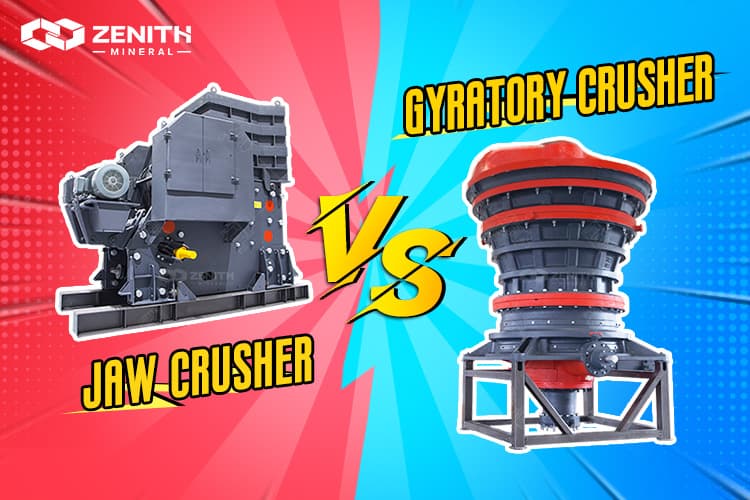
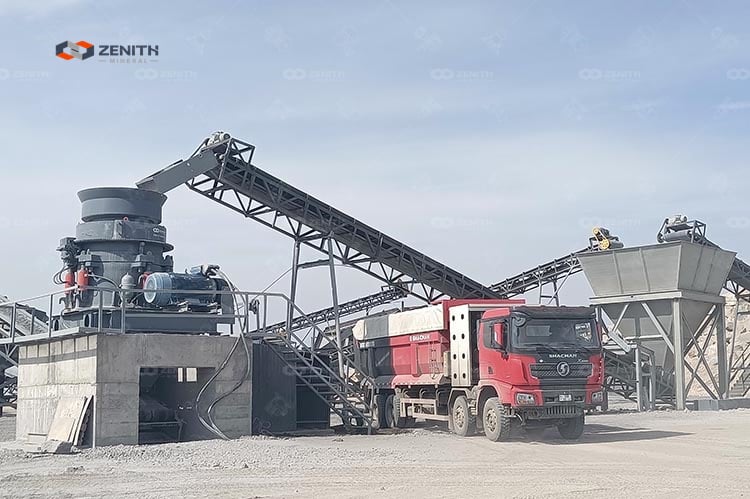
Crushing: A three-stage closed-circuit process is used (coarse crushing jaw crusher + medium crushing cone crusher + screening + fine crushing cone crusher + check screening).
Screening: A circular vibrating screen is used to control the particle size of the crushed product.
Ore Washing: A drum stone washer and dewatering screen are employed to separate and clean large particles.
Fine Sand Recovery: For fine sand contains a lot of tantalum-niobium ores, a fine sand recycling machine is used for recovery to prevent resource waste.

Stage 2: Grinding, Classification and Desliming
Tantalum-niobium ores are characterized by fine dissemination and inherent brittleness, making them prone to over-grinding; therefore, a staged grinding approach is employed.
Objective: To achieve mineral liberation and prepare ore slurry of suitable particle size for gravity separation.
Key Operations:
Coarse Grinding: Use rod mill or ball mill to grind coarse tantalum-niobium ore particles (>0.4 mm).
Classification: Adopt linear vibrating screen to control the particle size of the grinding products; particles larger than 0.4mm are returned for regrinding, while particles of the qualified size (<0.4mm) proceed to gravity separation.
Fine Grinding: Regrinding of middling, with strict time control implemented to prevent over-grinding and minimize the loss of ultrafine particles.
Desliming: For fine particles smaller than 0.4mm, a two-stage hydrocyclone cluster is adopted to remove detrimental ultrafine slimes; the overflow (fine slimes) is sent to the tailing system, while the underflow proceeds to the separation stage.
Stage 3: Gravity Separation and Enrichment
Objective:
Leverage the high-density characteristics of Ta-Nb ore to progressively enrich and isolate a concentrate product. This is the core stage in the tantalum-niobium ore beneficiation process.
Key Operations:
Roughing and Scavenging: Utilizing spiral chute to rapidly process large volumes of ore pulp, discard coarse tailings, and obtain coarse concentrate and middlings. Alternatively, jigging machine can be used to process the coarse-grained ores (particularly well-suited for placer deposits exhibiting good liberation).
Cleaning: Utilize shaking tables for multi-stage, multi-pass cleaning cycles, including roughing, scavenging, cleaning, and cleaning-scavenging, to progressively enhance the concentrate grade.
Products: The final outputs consist of concentrate (sent to the concentrate tank), secondary concentrate (sent to the secondary concentrate tank), and tailings.
The recovery rate at this stage is crucial. A complex process involving "multi-stage jigging and multi-stage shaking tables" is used to ensure that fine-grained tantalum-niobium ore is not washed away.

Stage 4: Treatment and Recycling of Middlings
Objective: To process the intermediate products that are difficult to separate and enhance the overall recovery rate.
Key Operations:
Regrinding and Re-concentration: The tailings (rich in intergrowths) from the concentrating shaking tables are re-ground in a ball mill and then returned to the re-concentration system (spiral chutes) for further processing, following the principle of “Recover valuable minerals early , discard waste rock promptly.”

Advantages of ZENITH Tantalum-Niobium Ore Beneficiation Solution
The Ta-Nb concentrate processed by ZENITH's beneficiation solution has a grade of 46%-50%, fully meeting industrial smelting requirements. This solution offers the following advantages:
- High Separation Efficiency: Jigging machines and shaking tables effectively separate tantalum-niobium minerals, with particularly significant results in the concentration of fine-grained ores.
- Low Energy Consumption: Compared to flotation, gravity separation consumes less energy, making it ideal for large-scale tantalum-niobium ore beneficiation processing.
- Environmentally Friendly: Gravity separation does not require chemical reagents, reducing environmental pollution and making it more eco-friendly.
- Strong Adaptability: The process is suitable for processing tantalum-niobium ores of varying grades and particle sizes, offering excellent adaptability.

For detailed configuration schemes of tantalum-niobium ore beneficiation solution or equipment selection quotations, please feel free to consult ZENITH!






 24/7 Online