
 WhatsApp
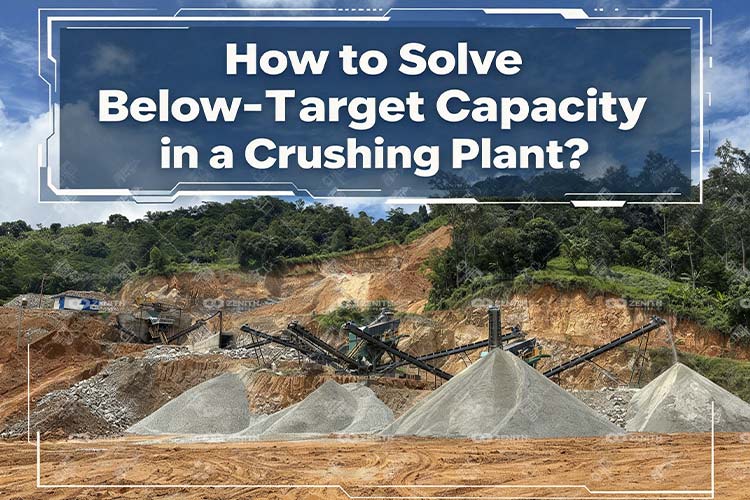
Output failing to reach the design value, or capacity declining continuously after a period of operation, is one of the most common problems encountered in the operating stage of a crushing plant. Capacity is not determined by the crusher alone. It is the joint result of material conditions, equipment settings, and upstream–downstream matching.
Therefore, the first step in addressing insufficient line capacity is not to replace equipment, but to locate the stage where the bottleneck lies.
Get Your Production Line Capacity Optimization Plan
1. Causes: Why Line Capacity Cannot Reach Target
1.1 Three Patterns: Never Reaching Target, Gradual Decline, Fluctuating Output
The first step in identifying the cause of insufficient capacity is not to disassemble equipment, but to determine which category the capacity problem belongs to. The three patterns point toward different diagnostic directions.
Never reaching the design value. Output has been low since commissioning. This is mostly related to the selection basis, feed conditions, or downstream bottlenecks: material characteristics that do not match the equipment selection, feed rate or feed size that fails to meet equipment requirements, and screening and conveying capacity lower than crushing capacity.
Gradual capacity decline. Capacity falls slowly with operating time, which usually points to progressive changes: wear parts altering the geometry of the crushing chamber, or drift in the actual discharge opening, with crushing efficiency declining accordingly.
Pronounced output fluctuation. Fluctuation-type capacity deficiency is mostly related to feed stability: interruptions in incoming material, bridging of material inside the bin, changes in mud and water content, or intermittent blockage in the chamber followed by sudden clearing.
Contact ZENITH if your crushing plant is running below target capacity.
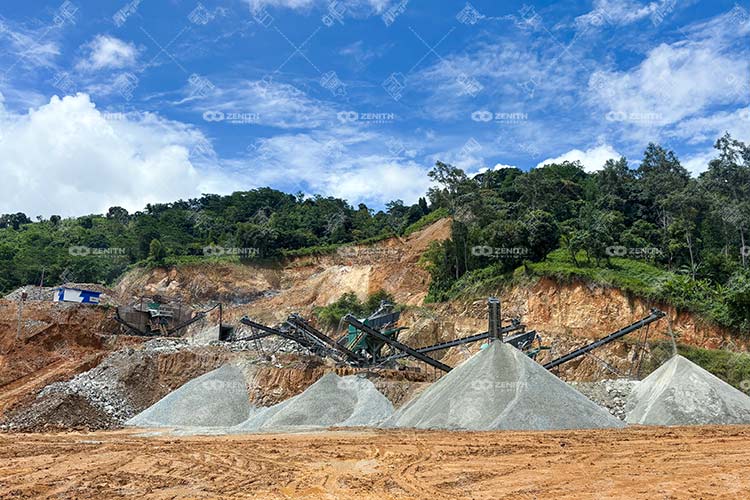
1.2 Material Conditions: Hardness, Size Composition, and Mud and Water Content Deviating from the Design Premises
A production line is designed on the basis of material samples taken at the initial stage. As the mining face advances, the seam changes, or the source of incoming material is adjusted, the hardness, abrasiveness, size composition, and mud and water content of the material may differ from the original design data. When hardness increases, throughput under the same discharge opening setting falls and wear part consumption accelerates. When mud and water content rises, material tends to stick and slip inside the chamber and at the discharge opening, and the probability of blockage increases.
This type of problem is characterized by the equipment itself being in normal condition while the input conditions have changed, with capacity changing accordingly.
1.3 Feeding Stage: Insufficient Feed Rate, Biased Feeding, or Interrupted Feed
Among the various causes of insufficient capacity, the typical symptom of feed problems is a low material level in the crushing chamber, with the main machine running at low load for extended periods and downstream equipment likewise underfed.
Common causes include: the vibrating force of the feeder set too low, so the actual feed rate is insufficient; material bridging or arching in the bin, impeding discharge; loading and transport being themselves discontinuous, so feed arrives intermittently; and biased feeding.
Contact ZENITH if your crushing plant is running below target capacity.
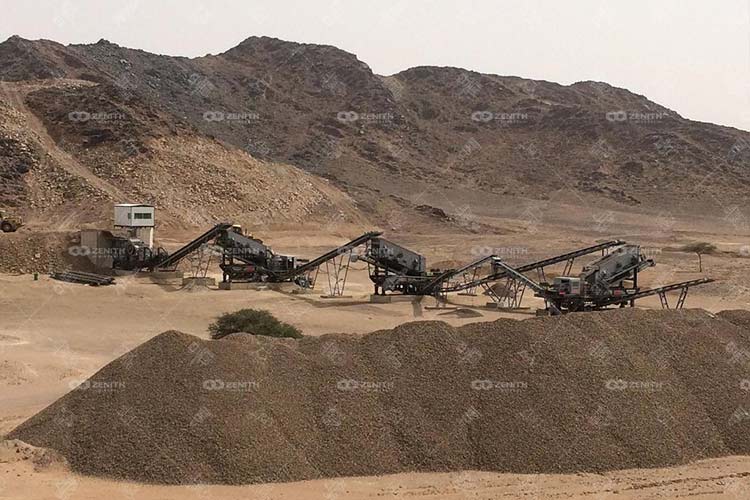
1.4 Equipment Settings: Discharge Opening Width and Chamber configuration Deviating from Their Initial State
The discharge opening setting is the core variable that determines both capacity and product size.
The problem is that after a period of operation the actual opening may deviate from the set value: wear causes the opening to drift, and resetting after maintenance may not be identical to the initial state. The chamber configuration falls within the same category of settings. Once product requirements or feed size change, the existing chamber configuration may no longer be the optimum configuration; in that case priority should be given to changing the chamber configuration rather than replacing the whole machine.
1.5 Wear Parts: Wear Alters the Crushing Chamber Shape, and Capacity Declines with Operating Time
The effect of wear on capacity is progressive. Once jaw plates, liners, blow bars, and other components in direct contact with the material are worn, the geometry of the crushing chamber changes accordingly: the chamber shape shifts, the actual discharge opening becomes larger, and the number of effective compression events the material undergoes inside the chamber decreases. The end result is lower hourly output under the same conditions and a wider product size distribution.
If replacement is delayed for a long period, the decline in capacity accelerates further.
Contact ZENITH if your crushing plant is running below target capacity.
1.6 Auxiliary Equipment: Imbalance in Capacity Matching Between Screening, Conveying, and the Crushing Stage
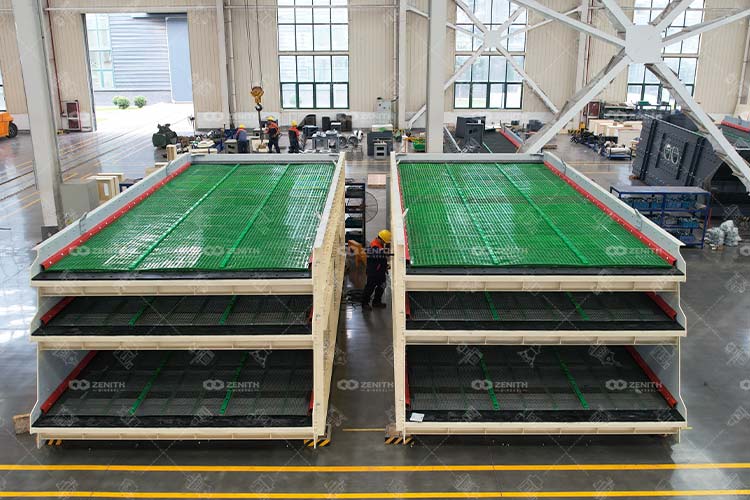
In many cases where the crushing stage shows insufficient capacity, the root cause ultimately turns out to lie in the screening and conveying stages. Insufficient screening capacity or blocked screen surfaces prevent finished material from being screened out in time, circulating load accumulates, and the upstream stage is forced to reduce feed. Insufficient belt conveyor capacity, blockage at transfer points, and material buildup make crusher discharge difficult and cause frequent stoppages for clearing, resulting in capacity losses.
2. How to Address Insufficient Capacity in a Crushing plant
2.1 Review Material Conditions: Re-sample and Compare, and Recalculate the Crushing Ratio Where Necessary
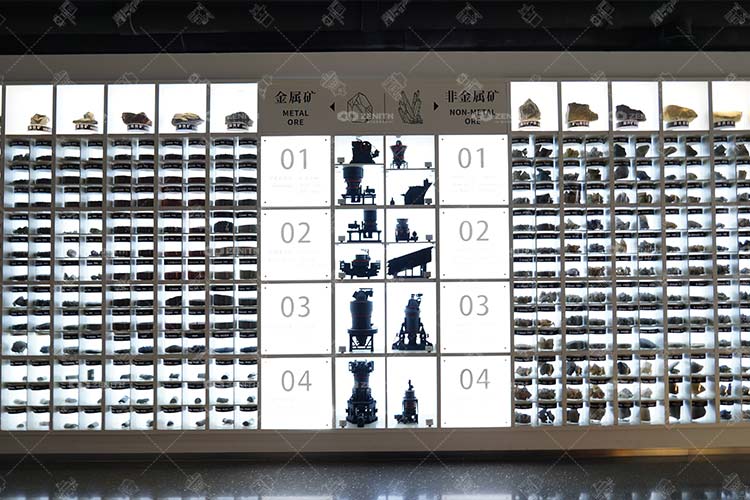
Take samples for testing, comparing the current material's hardness, abrasiveness, size composition, and mud and water content item by item against the data from the design stage. Once the differences are confirmed, recalculate the distribution of the crushing ratio and the capacity of each stage on the basis of the new material conditions.
2.2 Feeding Stage: Ensure Feed Rate, Continuity, and Uniform Distribution
Insufficient feed rate. First check the output setting of the feeding equipment and the discharge condition of the bin, deal with bridging and arching, and then consider whether the capacity of the equipment itself is the issue.
Interrupted feed. Look for the cause in the loading and transport stages; short-term fluctuations can be absorbed by installing a buffer bin between upstream and downstream stages.
Biased feeding. Adjust the feeding direction and chute structure so that material enters uniformly across the width of the chamber, avoiding long-term single-side feeding that leaves one side of the chamber running empty and causes uneven liner wear.
Contact ZENITH if your crushing plant is running below target capacity.
2.3 Match Feed Size: Keep Raw Material Dimensions Within the Equipment's Permitted Feed Size Range
Measure the current maximum lump size of the feed and compare it with the maximum feed size permitted by the equipment at that stage. Oversize lumps cannot be gripped in time and repeatedly linger and impact inside the chamber, occupying effective volume and reducing throughput per unit time, while also causing excessive localized liner wear and machine vibration.
Corrective action should be applied at the source: adjust blasting parameters to control run-of-mine size; install pre-screening ahead of primary crushing to separate oversize lumps for separate treatment.
2.4 Reset the Discharge Opening and Chamber configuration: Replace the Chamber configuration First, Not the Machine
First measure the actual discharge opening and compare it with the set value; once the deviation is confirmed, reset it. The magnitude of adjustment needs to take into account both the product size requirement and the change in circulating load in the closed-circuit system.
When product requirements or feed size change, give priority to evaluating a change of chamber configuration. For cone crushers, switching the chamber configuration usually requires only a small number of spare parts such as liners, and the investment is far lower than replacing the whole machine.
2.5 Wear Parts Management: Records and Spare Parts
Wear cannot be eliminated; the aim of management is to control its impact.
Replace as a set. Avoid mixing new and used parts, which creates an asymmetrical chamber shape and induces uneven wear.
Record. Measure wear at regular intervals and keep records; compare these against the output curve for the same period to identify the wear level at which output begins to decline noticeably, and determine the replacement interval on that basis rather than waiting until output has already dropped.
Spare parts inventory. Keep spare parts in stock according to the replacement interval, to avoid extended downtime while waiting for parts.
Contact ZENITH if your crushing plant is running below target capacity.
2.6 Calibrate Screening and Conveying Capacity: Keep the Line Running Steadily
Screening. Judge whether screening capacity matches the processing capacity of the crushing stage, and check whether the screen surfaces are blocked or damaged. In a closed-circuit system, a drop in screening efficiency raises the circulating load and forces the upstream stage to reduce feed.
Conveying. Check belt conveyor capacity, blockage at transfer points, and chute angles, and eliminate the poor discharge and frequent stoppages for clearing caused by material buildup.
3. FAQ
Q: If a crushing plant cannot reach its design capacity, does that mean the equipment was undersized?
A: Not necessarily. Capacity is determined jointly by material conditions, equipment settings, and upstream–downstream matching. Failure to reach the design value from the start of operation is mostly related to feed conditions not being met, insufficient downstream screening and conveying capacity, or material characteristics deviating from the selection basis. A gradual decline in capacity is mostly related to wear part wear and drift in the discharge opening setting. It is recommended first to locate the cause in the order material — feeding — size — discharge opening — wear parts — screening, and then judge whether the configuration needs adjusting.
Q: How should a crushing plant whose output cannot be raised be checked?
A: First confirm whether screening and conveying capacity match the crushing stage. Once screening and conveying are confirmed not to be the bottleneck, move into the crushing stage to check other potential issues such as the discharge opening, chamber configuration, and wear part condition.
Q: Where should checks start when the output of a jaw crusher falls?
A: Check in the order feed — discharge opening — wear parts. First check whether feed rate and feed size meet equipment requirements, then measure the actual discharge opening on site, and finally measure the wear on the jaw plates.
Q: If the discharge opening of a cone crusher is reduced, will output drop?
A: Yes. The discharge opening setting determines both capacity and product size; reducing it lowers throughput per unit time and produces a finer product. If the product size requirement has not changed, it is not recommended to keep reducing the discharge opening — priority should be given to evaluating a change of chamber configuration. With ZENITH cone crushers, switching the chamber configuration requires only a small number of spare parts such as liners, meeting size requirements while preserving output.
Q: How should material with high mud and water content be handled so as not to affect capacity?
A: The focus is on the feeding stage. Fines and clay balls entering the crushing chamber tend to stick and slip, raising the probability of blockage. A practical approach is to install pre-screening in the feeding stage to bypass fines and clay balls before they enter the crusher, while also ensuring that feed is continuous and uniform.
Q: When the output of a crushing plant falls short, under what circumstances should replacing the crusher be considered?
A: When material characteristics have changed materially, or the crushing ratio distribution is clearly unreasonable, and neither adjusting operating settings nor changing the chamber configuration can reach the output target. The way to judge is to re-sample for material analysis, calculate the crushing ratio and equipment capacity of each stage, and then decide whether the crusher needs replacing.
Contact ZENITH if your crushing plant is running below target capacity.
Conclusion
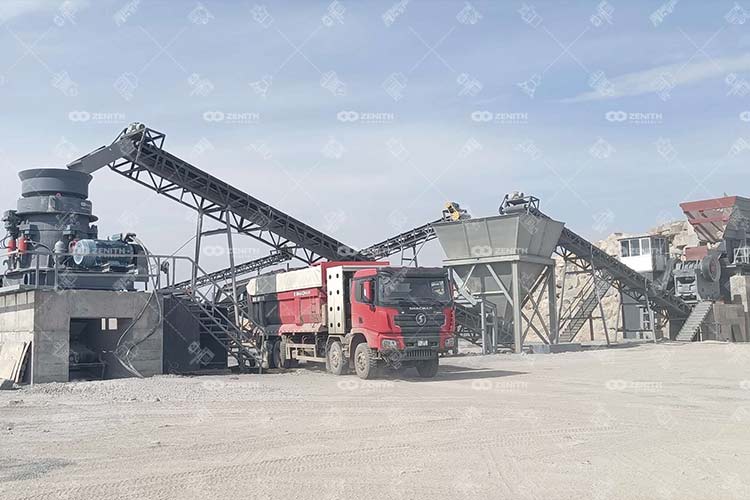
Below-target capacity in a crushing plant is not simply an equipment failure; it is a signal sent by the operating condition of the entire line.
If your production line needs its capacity recalculated, its chamber configuration and line configuration reviewed, or a systematic assessment of the whole line carried out, you are welcome to contact ZENITH. ZENITH provides full-lifecycle services ranging from feasibility study, material analysis, site survey, and solution design to equipment and spare parts supply, installation and commissioning, operation training, and process optimization.
Contact ZENITH if your crushing plant is running below target capacity.


 24/7 Online