Steel balls are the core grinding media widely used in mining ball mills, cement plants, thermal power stations, and industrial mineral processing. Among all types, cast steel balls and forged steel balls are the two most mainstream choices. Although both look identical in appearance, they differ fundamentally in raw materials, manufacturing technology, internal microstructure, mechanical performance, service life, and applicable working conditions.
Many mill operators only compare the unit price and ignore internal quality differences, resulting in high breakage rates, fast wear loss, frequent shutdowns, and increased overall operation costs. Here is the ultimate guide to understanding the differences between cast and forged grinding balls, and how to choose the exact right media for your operation.
Forged steel balls are manufactured through solid-state mechanical deformation. Instead of melting the steel into a liquid, the process relies on intense physical pressure to reshape solid steel, resulting in an incredibly dense internal structure.
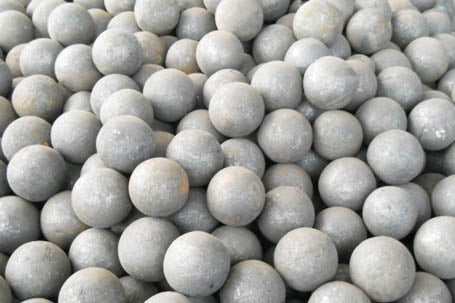
As the premier choice for forged grinding balls in the mining sector, their production relies on strict metallurgical control:
Cast steel balls are created through liquid metallurgy. This method allows manufacturers to essentially "bake" a customized steel recipe, making it highly adaptable to specific abrasive and corrosive environments.
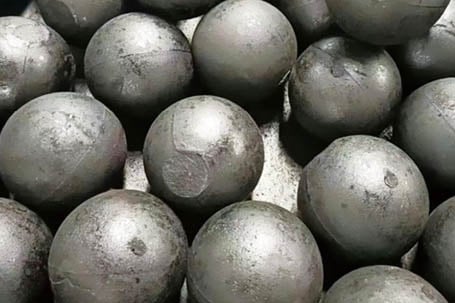
Cast grinding balls are universally categorized by their Chromium (Cr) percentage, which dictates their hardness and application:
| Comparison Item | Forged Steel Balls | Cast Steel Balls |
|---|---|---|
| Raw Material | High-quality alloy round steel | Scrap steel + ferrochrome |
| Production Tech | Hot forging + integral heat treatment | Molten metal pouring |
| Microstructure | Dense, fine, streamlined grain | Loose, porous, uneven grain |
| Impact Toughness | High, low breakage | Low, easy cracking |
| Hardness Uniformity | Excellent | Average |
| Service Life | Long, stable wear performance | Relatively short, faster consumption |
| Suitable Mill | SAG, large ball mill | Cement, coal mill |
| Cost | Lower long-term cost | Lower initial price |
The single biggest difference lies in how the media handles heavy drops. In large-scale mining mills (over 4 meters in diameter), steel balls are lifted high and dropped with tremendous kinetic energy. Forged balls absorb this shock, boasting an impact toughness of ≥ 12 J/cm². They can survive over 10,000 drops from an 8-meter height in fatigue tests, keeping their volumetric breakage rate under 1%.
Conversely, cast balls (especially high-chrome variants) are inherently more brittle, with an impact toughness hovering between 3 to 6 J/cm². Under heavy, direct impact, they may only survive 3,000 to 5,000 drops before fatigue sets in, causing the breakage rate to spike to ≈ 3%.
Because forged balls undergo massive mechanical compression, their density reaches ≥ 7.8 g/cm³, completely eliminating internal voids. A denser ball carries more kinetic weight, delivering a more powerful crushing blow to hard ores. Cast balls, formed from a cooling liquid, naturally develop microscopic shrinkage pores, resulting in a slightly lower density of 7.5 - 7.7 g/cm³.
A grinding ball must remain spherical as it wears down; if it becomes oval, milling efficiency plummets. Forged balls feature high hardness uniformity, maintaining less than a 2 HRC drop from the surface directly to the core. This ensures they wear down perfectly round. Cast balls often have an incredibly hard exterior (thanks to rapid mold cooling), but the hardness can drop significantly toward the softer core, which can lead to uneven wear rates over time.
Forged balls are restricted by the chemical composition of the raw steel billets purchased from steel mills. Casting, however, offers ultimate metallurgical flexibility. Foundries can easily adjust the chemical recipe in the furnace on the fly, adding specific percentages of Chromium, Manganese, or Carbon to tailor the balls to a client's exact corrosive or abrasive requirements.
The financial breakdown of grinding media goes beyond the initial price tag. Cast steel balls generally offer a lower upfront capital expenditure (CAPEX). Because foundries can utilize recycled scrap steel and the mold-pouring process is highly scalable, cast balls are highly cost-competitive.
Forged steel balls require premium alloy steel billets and an energy-intensive mechanical forging process, resulting in a higher initial purchase price. However, in high-impact hard rock mining, forged balls dramatically lower the operational expenditure (OPEX) by eliminating breakage and extending the wear cycle. Ultimately, cast balls are the budget-friendly choice for low-impact milling, while forged balls are a long-term investment to reduce the overall cost-per-ton in heavy-duty environments.
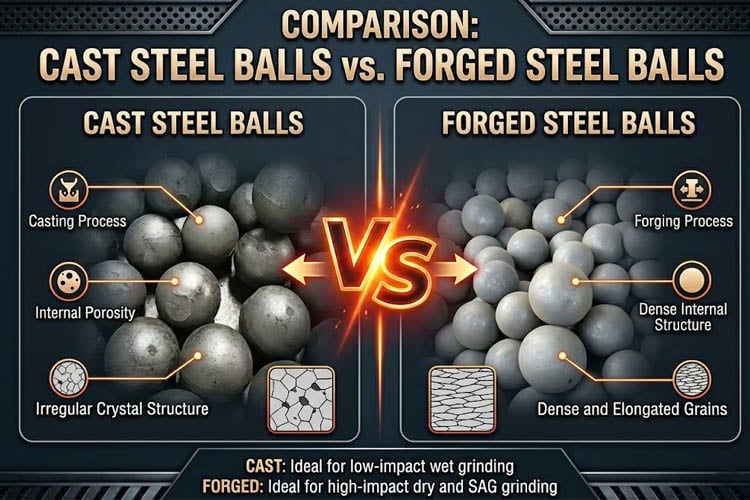
Selecting the wrong grinding media can lead to catastrophic mill downtime or skyrocketing consumable costs. Use this simple matrix to guide your procurement:
Choose Forged Steel Balls If:
Choose Cast Steel Balls If:
The essential difference between cast and forged steel balls lies in raw material purity, forging microstructure, and impact toughness. Cast balls are suitable for low-impact and budget-limited scenarios, while forged steel balls are the reliable choice for high-impact mining and large-scale grinding projects.
When purchasing steel grinding balls, do not only compare the unit price. It is more reasonable to evaluate from breakage rate, wear consumption, downtime loss, and total life cycle cost, so as to match the most suitable steel ball type for your mill working conditions.
Q1: What is the main difference between cast and forged steel balls?
A: The main difference lies in the manufacturing process. Cast steel balls are made by melting scrap steel and pouring it into molds, while forged steel balls are manufactured by heating round steel bars and hammering or rolling them into shape, giving them higher density and better impact toughness.
Q2: Which steel ball is better for ball mills, cast or forged?
A: It depends on the working conditions. Forged steel balls have higher impact resistance and lower breakage rates, making them ideal for large-scale SAG or ball mills with high impact force. Cast steel balls (especially high-chromium ones) offer excellent surface hardness and wear resistance, suitable for wet grinding and smaller mills.
Q3: Do forged steel balls break easily during operation?
A: No, forged steel balls generally have a lower breakage rate compared to cast steel balls because the forging process refines the metal's grain structure, eliminating internal defects like blowholes and porosity.
Q4: Which industries commonly use cast and forged grinding balls?
A: Cast grinding balls (especially high-chrome) are predominantly used in Cement Manufacturing, Thermal Power Plants for coal grinding, and Wet Grinding operations in metal mines because of their exceptional abrasive wear resistance. Forged grinding balls are widely preferred in Large-scale Metal Mining (such as copper, gold, and iron ore mines) for SAG and ball mills, and Quartz/Silica processing, where high impact forces require extreme toughness to prevent breakage.
Q5: Where can I find high-quality cast and forged grinding balls?
A: High-quality grinding media can be sourced directly from heavy equipment manufacturers and industrial solutions providers like ZENITH. We offer tailored wear-resistant grinding balls with optimized hardness and low breakage rates to maximize your mill efficiency.

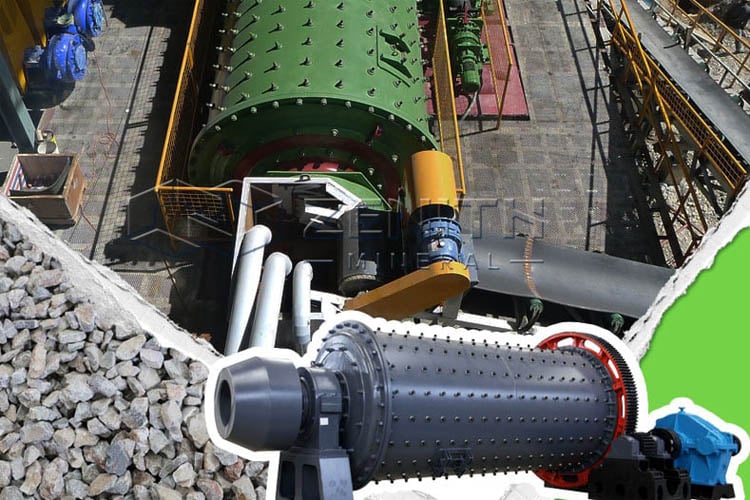
Effective ball mill cost management is crucial for copper mine profitability. By optimizing energy use, grinding media, maintenance, and labor, mines can achieve significant savings.
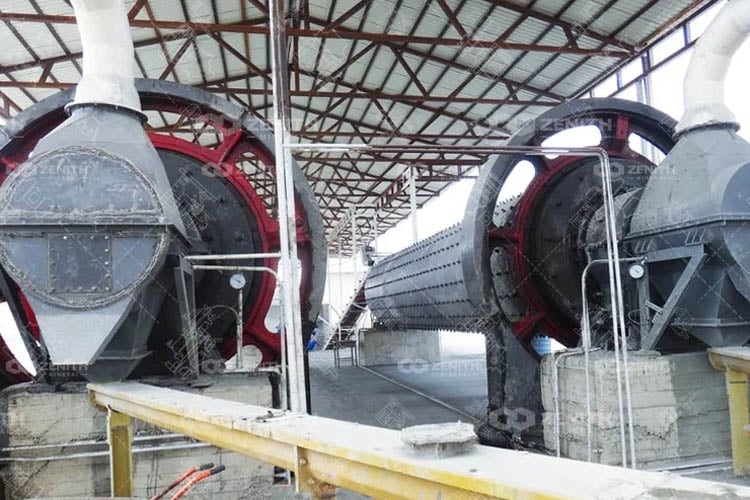
The versatility and efficiency of ball mill make it indispensable in various stages of gold ore beneficiation plant, from crushing and grinding to the final recovery of gold from the ore.
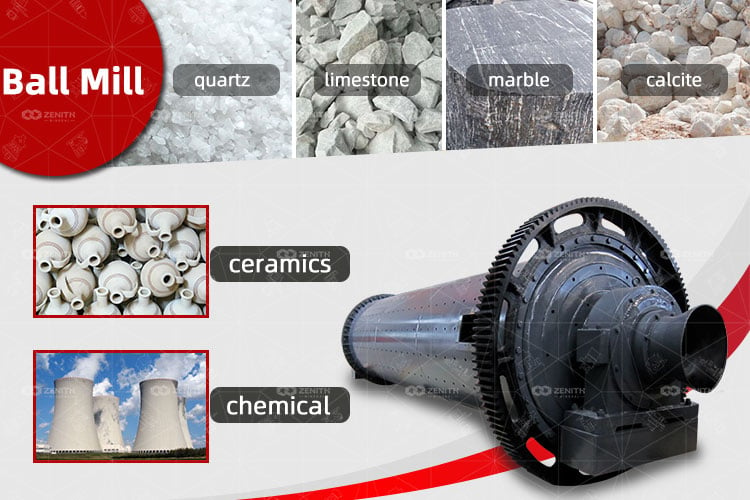
As professional Chinese ball mill manufacturers in India, ZENITH summarizes some key factors of ball mill in the production process.
Fill your requirements here, and we'll send the custmized solution and quotation to you by the reserved contact information.
Copyright ©2000-2026 SHANGHAI ZENITH MINERAL CO.,LTD.

 WhatsApp

 24/7 Online