
 WhatsApp
Placer gold is one of the most accessible types of gold deposits because the gold has already been liberated from its original host rock through natural weathering and erosion. However, recovering placer gold efficiently is not as simple as washing gravel. Gold particles can vary significantly in size, shape, and distribution, while clay, silt, and other heavy minerals can make separation more difficult.
A well-designed placer gold processing plant typically combines screening, washing, classification, and gravity separation. The specific equipment configuration depends on the deposit characteristics, gold particle size, processing capacity, and site conditions.
This guide explains how to process placer gold, introduces the main recovery methods and equipment, and discusses how to improve gold recovery in different operating conditions.
1. What Is Placer Gold?
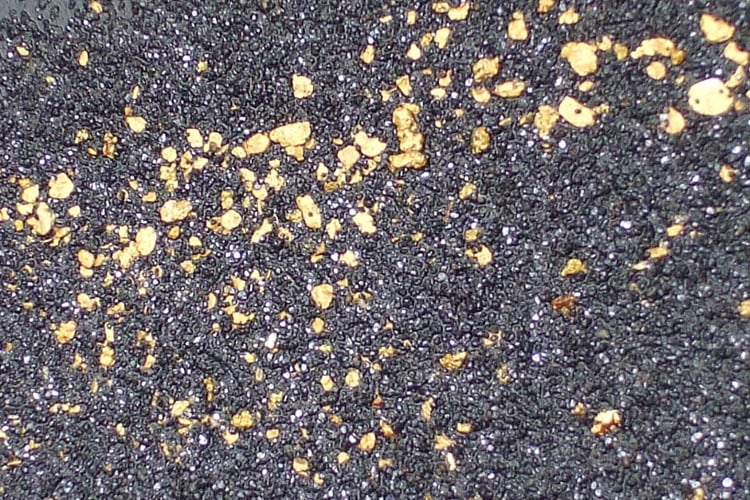
Placer gold refers to gold particles that have been released from their original rock formations by weathering and erosion, then transported and deposited by water, gravity, or other natural processes.
Because gold has a high density and is chemically resistant, it tends to accumulate in locations where lighter materials are washed away. Common placer gold deposits include:
- River placer deposits: Gold accumulates in riverbeds, gravel bars, and areas where water flow slows down.
- Alluvial deposits: Gold is distributed in unconsolidated sediments transported and deposited by rivers or streams.
- Beach and coastal placers: Wave and current action concentrate gold together with other heavy minerals.
- Eluvial and colluvial deposits: Gold accumulates near its original source through weathering and relatively short-distance movement.
Unlike most hard rock gold ores, placer deposits often contain at least some naturally liberated gold particles. This makes gravity separation the primary recovery method in many operations.
2. Characteristics of Placer Gold Deposits
Understanding the deposit is the first step in selecting the right processing method.
2.1 Gold Particle Size and Shape
Placer gold may occur as coarse nuggets, flakes, fine particles, or very fine gold. Its shape also varies. Some particles are rounded after long-distance transportation, while others remain relatively flat or irregular.
These differences affect recovery:
- Coarse gold is generally easier to recover through gravity separation.
- Fine gold requires more careful control of water flow and separation conditions.
- Flat gold flakes may behave differently from compact particles of the same mass.
- Very fine gold can be lost with tailings if the equipment is not properly selected or operated.
2.2 Clay and Slime Content
Some placer deposits contain significant amounts of clay. Sticky clay can bind gold particles to gravel, form lumps, block screens, and reduce the efficiency of gravity separation.
When clay content is high, scrubbing and washing become essential parts of the process.
2.3 Heavy Mineral Content
Placer deposits may contain magnetite, ilmenite, garnet, and other heavy minerals. These minerals can concentrate together with gold during gravity separation.
The presence of heavy minerals does not necessarily prevent gold recovery, but it can increase the workload of concentrate cleaning and require additional separation stages.
2.4 Deposit Distribution and Water Conditions
Gold distribution can be highly irregular. A deposit may contain rich layers or localized pay streaks rather than uniform gold grades.
Water availability, seasonal changes, sediment characteristics, and environmental restrictions also influence plant design.
3. Placer Gold Processing Flow
A typical placer gold processing plant follows several stages. The exact configuration should be determined through representative sampling and processing tests.
3.1 Feeding and Screening
Raw material is delivered to the plant by excavators, loaders, or other feeding equipment. A grizzly screen or vibrating screen removes oversized rocks and separates material into suitable size fractions.
Screening helps protect downstream equipment from large stones and improves the consistency of the feed.
For deposits containing large quantities of gravel, a trommel screen may be used to combine screening and washing in one unit.
3.2 Washing and Scrubbing
Washing removes soil, clay, and other contaminants from the gravel. If the feed contains sticky clay, a log washer or rotary scrubber may be needed to break down clay lumps and release trapped gold particles.
The washing stage is particularly important because gold locked inside clay-rich aggregates cannot be recovered efficiently by downstream gravity equipment.
The required scrubbing intensity depends on clay content, feed size, and the degree of material consolidation.
3.3 Classification and Desliming
After washing, the material may be classified by particle size. Hydrocyclones, vibrating screens, or other classification equipment can separate different size fractions.
Desliming removes excessive fine clay and silt when these materials interfere with gravity separation. However, operators should avoid discarding fine fractions without testing them, because very fine gold may report to the same stream.
The classification cut size should be selected according to the gold particle-size distribution and the capabilities of the downstream equipment.
3.4 Primary Gravity Separation
Gravity separation is the core recovery stage in most placer gold plants. It uses the density difference between gold and lighter gangue minerals.
Common equipment includes:
- Sluice boxes: Use flowing water and riffles or matting to trap gold particles. They are relatively simple and widely used for coarse and medium-sized gold.
- Jig separators: Use pulsating water to separate particles according to density. They are suitable for recovering gold from appropriately sized feed.
- Centrifugal concentrators: Apply enhanced centrifugal forces to recover fine and small gold particles that may be difficult to capture using conventional gravity equipment.
- Shaking tables: Provide a more controlled separation process and are often used for cleaning gravity concentrates.
In some plants, two or more gravity separation devices are combined to improve recovery across a wider range of particle sizes.
3.5 Fine Gold Recovery
Fine gold recovery is often one of the most challenging parts of placer gold processing. Small particles may be carried away by water, especially when the feed contains high levels of clay or the operating conditions are unstable.
Centrifugal concentrators can improve the recovery of fine gold by creating stronger effective gravity forces. Their performance depends on feed preparation, particle size, pulp density, water pressure, and operating parameters.
Fine gold recovery should be evaluated through tailings sampling and testing rather than assumed from equipment specifications alone.
3.6 Gold Concentrate Cleaning
The gravity concentrate may still contain magnetite, other heavy minerals, and residual gangue. Additional cleaning is used to produce a higher-grade gold concentrate.
Depending on mineral composition, cleaning may involve:
- Shaking tables for further gravity separation.
- Magnetic separators to remove magnetic minerals.
- Repeated gravity concentration to upgrade the concentrate.
- Manual or specialized finishing methods for small-scale operations.
The final concentrate is then prepared for the appropriate gold recovery or refining route.
4. Key Equipment for Placer Gold Processing
The equipment selected for a placer gold processing plant depends on feed characteristics, production capacity, and the required recovery performance.
| Equipment | Main Function | Application |
|---|---|---|
| Grizzly feeder | Removes oversized rocks and regulates feeding | Coarse raw material |
| Trommel screen | Screens and washes gravel | Alluvial deposits with mixed particle sizes |
| Vibrating screen | Separates material by size | Screening and classification |
| Log washer or scrubber | Breaks down clay and washes material | Clay-rich deposits |
| Sluice box | Captures gold using gravity | Coarse and medium gold |
| Jig separator | Separates minerals by density | Suitable coarse and medium fractions |
| Centrifugal concentrator | Recovers fine gold | Fine and small gold particles |
| Shaking table | Upgrades gravity concentrates | Concentrate cleaning |
| Magnetic separator | Removes magnetic minerals | Concentrates containing magnetite or similar minerals |
Not every plant needs all of these machines. For example, a relatively clean deposit with coarse gold may require a simpler washing and gravity separation circuit. A clay-rich deposit containing fine gold may need more intensive scrubbing, classification, and fine-gold recovery equipment.
5. Placer Gold Processing Plant Design and Configuration
A placer gold processing plant should be designed around the actual characteristics of the deposit rather than a standard equipment list.
5.1 Small-Scale Placer Gold Processing Plant
A small plant may use a simple combination of:
- Hopper or grizzly feeder.
- Trommel screen or vibrating screen.
- Sluice box.
- Small jig or centrifugal concentrator, if required.
This configuration can be suitable for relatively clean feed with a manageable clay content and a favorable gold particle-size distribution.
5.2 Medium-Scale Placer Gold Processing Plant
A medium-capacity plant may include a more complete washing and recovery circuit:
- Feeding and screening system.
- Rotary scrubber or trommel washing system.
- Classification equipment.
- Sluice boxes or jigs for primary recovery.
- Centrifugal concentrators for fine gold.
- Shaking tables for concentrate cleaning.
The goal is to balance processing capacity with recovery efficiency while keeping water consumption and operating costs under control.
5.3 Large-Scale Placer Gold Processing Plant
Large operations generally require integrated feeding, washing, screening, and recovery systems. Depending on the deposit, the plant may use multiple washing units and parallel gravity separation lines.
A large plant should also consider:
- Stable and continuous feed delivery.
- Water circulation and recycling.
- Tailings management.
- Equipment accessibility and maintenance.
- Power supply and site infrastructure.
- Seasonal changes in water availability.
A modular or mobile plant may be appropriate where deposits are spread across a large area or the operation needs to relocate as mining progresses.
6. Factors Affecting Placer Gold Recovery
Several factors influence the performance of a placer gold processing plant.
6.1 Gold Particle Size Distribution
The size distribution of gold determines which gravity separation equipment is most suitable. A circuit designed mainly for coarse gold may lose fine particles, while equipment optimized for fine gold may not be the most economical solution for a deposit dominated by nuggets.
Representative sampling and particle-size analysis are essential.
6.2 Clay Content and Washing Efficiency
Insufficient washing can leave gold trapped in clay aggregates. Excessive or poorly controlled washing may also create operational problems, including high water consumption and unnecessary fines generation.
Scrubbing intensity and washing time should be adjusted to the actual feed.
6.3 Feed Rate and Equipment Capacity
Overloading screens, sluices, jigs, or centrifugal concentrators can reduce separation efficiency. A stable feed rate is important for maintaining consistent operating conditions.
6.4 Water Flow and Pulp Conditions
Water flow affects particle movement and separation. Excessive flow may carry fine gold into the tailings, while insufficient flow can cause sediment buildup and reduce throughput.
Water pressure, pulp density, and equipment settings should be optimized for the target particle size.
6.5 Tailings Management and Monitoring
Tailings are an important source of information about plant performance. Regular sampling can identify whether gold losses are related to particle size, poor liberation, clay contamination, or equipment operation.
A plant should monitor both concentrate grade and overall gold recovery. A high-grade concentrate does not automatically mean that the operation is recovering most of the gold in the feed.
7. How to Improve Fine Gold Recovery
Fine gold losses can significantly affect the economics of a placer operation. The following measures can help improve recovery:
- Conduct gold particle-size analysis: Determine the proportion of coarse, medium, and fine gold before selecting equipment.
- Improve washing and scrubbing: Ensure clay lumps are broken down and gold particles are released before separation.
- Use suitable classification: Separate feed into size fractions where this improves the performance of downstream gravity equipment.
- Add fine-gold recovery equipment: Consider centrifugal concentrators or other suitable fine-particle gravity devices after testing.
- Optimize water flow: Adjust water conditions to reduce the risk of fine gold being carried into tailings.
- Monitor tailings regularly: Test tailings to identify gold losses and determine whether the process needs adjustment.
- Maintain stable feeding: Avoid sudden changes in feed rate that can disrupt separation performance.
The best improvement strategy depends on the gold particle size, mineral composition, and existing plant configuration.
8. FAQs About Placer Gold Processing
Q1: What is the best method for processing placer gold?
Gravity separation is the primary method for most placer gold deposits because gold is naturally liberated and has a much higher density than common sand and gravel minerals. The specific equipment combination depends on gold particle size, clay content, and deposit characteristics.
Q2: What equipment is used in a placer gold processing plant?
Common equipment includes grizzly feeders, trommel screens, vibrating screens, scrubbers, sluice boxes, jigs, centrifugal concentrators, and shaking tables. Not every plant requires all of these machines.
Q3: How can fine placer gold be recovered?
Fine gold may be recovered using centrifugal concentrators, properly designed gravity circuits, and carefully controlled water and classification conditions. Tailings tests are necessary to confirm whether the equipment is capturing the target particle sizes.
Q4: Is a trommel screen necessary for placer gold processing?
Not always. A trommel screen is useful when the feed contains mixed-size gravel and requires washing and screening. Other screening equipment may be more suitable for deposits with different material characteristics.
Q5: Can placer gold be processed without chemicals?
Many placer gold deposits can be processed primarily through physical methods such as washing, screening, and gravity separation. Whether additional treatment is necessary depends on the mineralogy and the condition of the recovered concentrate.
Q6: How do I choose the right placer gold processing plant?
Start with representative ore sampling and testing. Evaluate gold particle size, clay content, feed size, expected capacity, water availability, and site conditions. Then select a plant configuration that matches the deposit rather than choosing equipment based only on nominal capacity.
Conclusion
Processing placer gold mainly involves washing, screening, classification, and gravity separation. However, efficient recovery depends on understanding the gold particle-size distribution, clay content, and characteristics of the surrounding sediments.
A properly designed placer gold processing plant should recover both coarse and fine gold while maintaining stable operation and reasonable water and energy consumption. Before selecting equipment, conduct representative sampling and processing tests to identify the most suitable process flow.
If you are planning a placer gold processing project, evaluating the deposit characteristics first is the most reliable way to determine the right equipment configuration and improve overall gold recovery.


 24/7 Online